
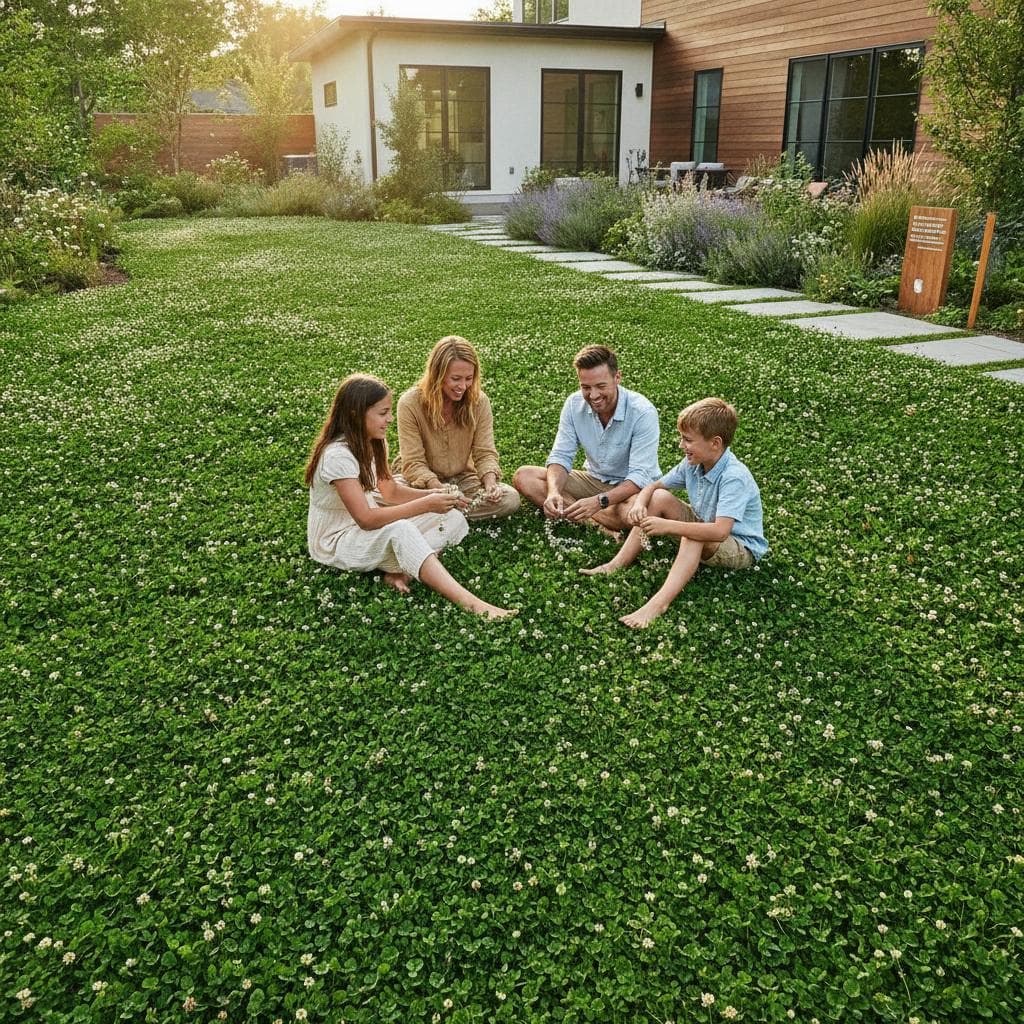
Benefits of Clover Lawns
Clover creates a dense ground cover that requires far less irrigation than conventional turf. Homeowners report watering only during extended dry spells of more than three weeks. The plants fix nitrogen naturally, eliminating the need for synthetic fertilizers throughout the growing season.
Clover forms a cushiony surface that resists wear. It recovers quickly from foot traffic and pet play. Its small leaves hide imperfections, so the lawn always looks even.
Clover flowers attract bees and other beneficial insects. Many homeowners choose microclover because it produces fewer blooms, balancing aesthetics with ecological benefit.
Once established, clover crowds out most weeds. Its dense foliage shades the soil, preventing weed seeds from germinating.
Sustainable Materials Selected
Every part of the project focused on sustainability and low maintenance. The seed mix combined microclover with tall fescue from Outsidepride Seeds. Compost came from a local municipal program to improve soil structure before seeding.
Edging used reclaimed limestone blocks. Pathways incorporated reused clay brick from an old patio. A drip line with a digital timer supplied water only when needed. Border plants included Lavender Hidcote, blue fescue, and dwarf yarrow.
These materials create harmony between structure and softness. The warm tone of the brick contrasts with the deep green of clover, while the silver foliage of lavender adds brightness. Everything was chosen for durability and ecological value.
Clover Compared with Traditional Grass
Traditional lawns have long been prized for their uniform appearance, but that uniformity comes at a cost. Clover changes the equation.
| Feature | Traditional Grass | Clover Lawn |
|---|---|---|
| Water Needs | High | Low |
| Fertilizer | Required | None |
| Mowing Frequency | Weekly | Biweekly or less |
| Drought Resistance | Moderate | Excellent |
| Weed Resistance | Moderate | High |
| Pollinator Support | Minimal | Strong |
| Foot Traffic Recovery | Moderate | High |
Clover does have a few tradeoffs. It can stain clothing slightly when wet, and it does not handle heavy, constant foot traffic like sports turf. For families who host frequent games or events, combining clover with durable grass species can offer balance.
Daily Experience After Installation
Months after installation, the yard still looks lush and inviting. The kids run barefoot across the clover, and the dog lounges in the shade. They no longer worry about brown patches or fertilizer schedules. The yard feels natural yet refined, with a texture that shifts subtly in the light.
Every time I look out, I feel calm, Hannah said. It is green, even when the neighbors lawns dry out. It feels alive in a way our old grass never did.
For the designer, the project demonstrates how small material changes can redefine everyday spaces. Clover lawns are not a trend, Tate said. They are a return to something that works with nature instead of against it.
Long-Term Soil and Ecosystem Benefits
Clover lawns continue to evolve season by season. As the plants mature, they enrich the soil and support surrounding vegetation. Their roots improve drainage, which benefits nearby shrubs and perennials. Over time, the lawn becomes a balanced ecosystem rather than a single-species surface.
Homeowners find that maintenance habits shift too. Instead of constant vigilance against weeds or drought, care becomes occasional and intentional. Some add stepping stones or low plant borders to define use areas. Others expand the concept into meadow gardens, combining clover with native flowers for a more textured effect.
For those considering an eco-friendly lawn alternative, clover offers one of the simplest transitions. It is affordable, adaptable, and compatible with most climates.