
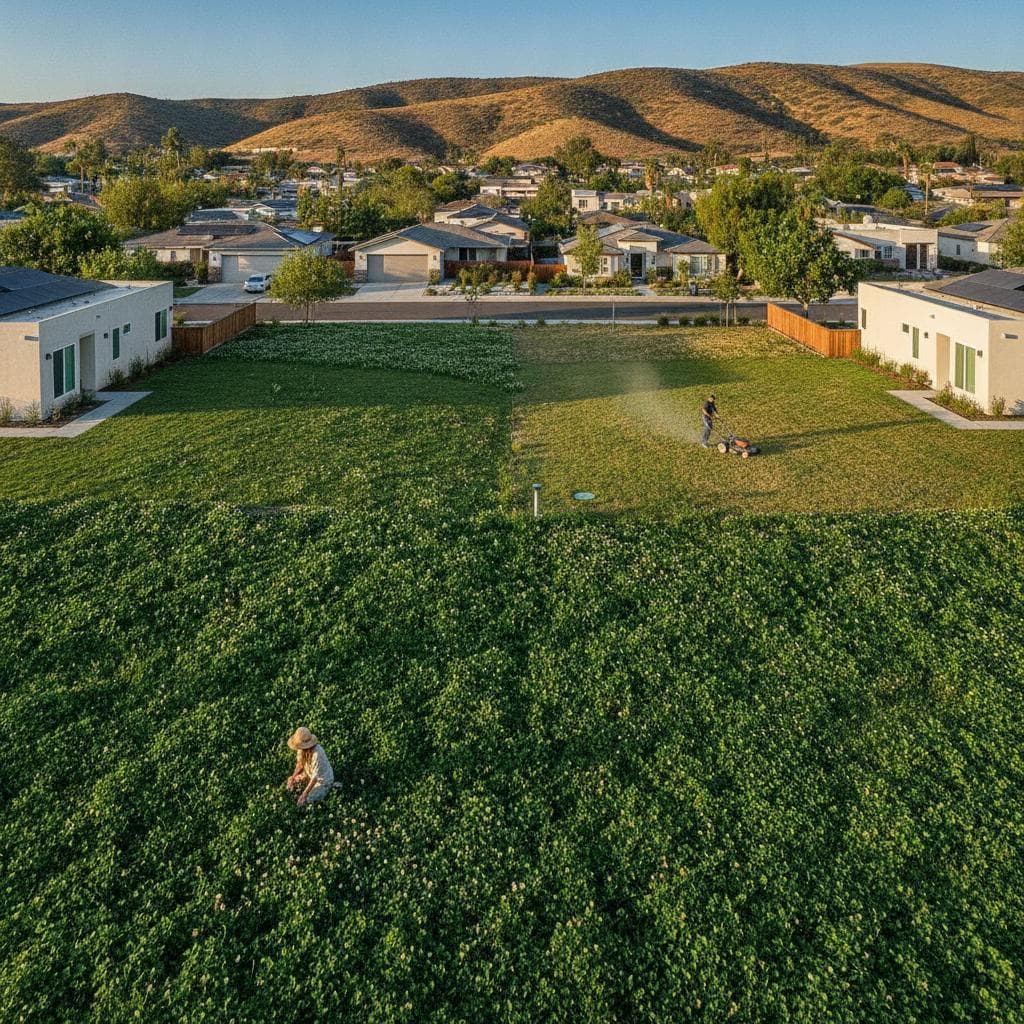
Why California Homeowners Are Choosing Clover Lawns Over Traditional Grass
Homeowners across California are rethinking what a perfect lawn should look like. Traditional turf has long been seen as a sign of care and pride. Yet maintaining it often means high water bills, frequent mowing, and a steady diet of fertilizers. In contrast, clover lawns are quietly reshaping the definition of a healthy, sustainable yard.
They stay green with less water, resist pests naturally, and feel soft underfoot. The shift toward clover lawns reflects not just a trend but a long term investment in smarter, more resilient landscapes.
The New Standard for Sustainability
Clover lawns thrive in conditions that leave grass struggling. Unlike most turf varieties that depend on constant irrigation, clover roots reach deeper into the soil. This allows them to stay lush through California dry stretches with far less watering.
Clover also draws nitrogen from the air and stores it in the soil, acting as a natural fertilizer. This self sustaining quality means less chemical input and a healthier environment for pollinators, pets, and people. For homeowners, that translates into fewer maintenance cycles and reduced costs.
Once established, a clover lawn can cut water use by up to half compared with conventional turf. In regions where drought restrictions are common, this is more than a convenience. It is a necessity.
Beauty and Practicality Combined
Clover lawns have a unique texture and color that many find more inviting than the uniform look of grass. The soft, cushiony surface feels pleasant to walk on. The small white or pink flowers add seasonal charm without looking unkempt.
Because clover grows lower and more evenly than grass, mowing becomes an occasional task rather than a weekly obligation. For families with children or pets, clover durability is another advantage. It bounces back quickly from foot traffic and resists the brown patches that often plague traditional lawns.
Even in shaded areas where grass tends to thin out, clover maintains a fresh, full appearance.
A Solution to Common Lawn Problems
Clover lawns solve many of the headaches that come with conventional turf. They naturally deter many pests, which reduces the need for insecticides. Their dense cover helps suppress weeds, limiting the use of herbicides.
Because they enrich the soil with nitrogen, they improve the surrounding ecosystem rather than depleting it. The result is a lawn that looks cared for with a fraction of the effort. For homeowners who value outdoor beauty but have limited time, this is a clear advantage.
It fits perfectly with the California lifestyle where outdoor living spaces are meant to be enjoyed, not endlessly maintained.
Transitioning from Grass to Clover
Switching to a clover lawn is a manageable project when planned carefully. Many homeowners choose a partial conversion, mixing clover with existing grass to test how it performs. This approach creates a balanced, low care hybrid that still retains a familiar look.
Full conversions are best done during mild weather when soil moisture is consistent. The process involves removing or mowing down existing turf, preparing the soil, and seeding evenly. Once established, clover spreads naturally, covering bare spots within a season.
Regular watering during early growth helps the plants root deeply, after which maintenance becomes minimal.
Practical Steps Toward a Resilient Yard
The rise of clover lawns reflects a broader desire for landscapes that are both beautiful and responsible. By using less water, fewer chemicals, and less fuel for mowing, homeowners are creating outdoor spaces that match California climate and values.
The result is not only a lawn that looks good but one that feels right. For anyone ready to trade weekend maintenance for lasting satisfaction, clover offers a path toward a more sustainable and enjoyable yard.