
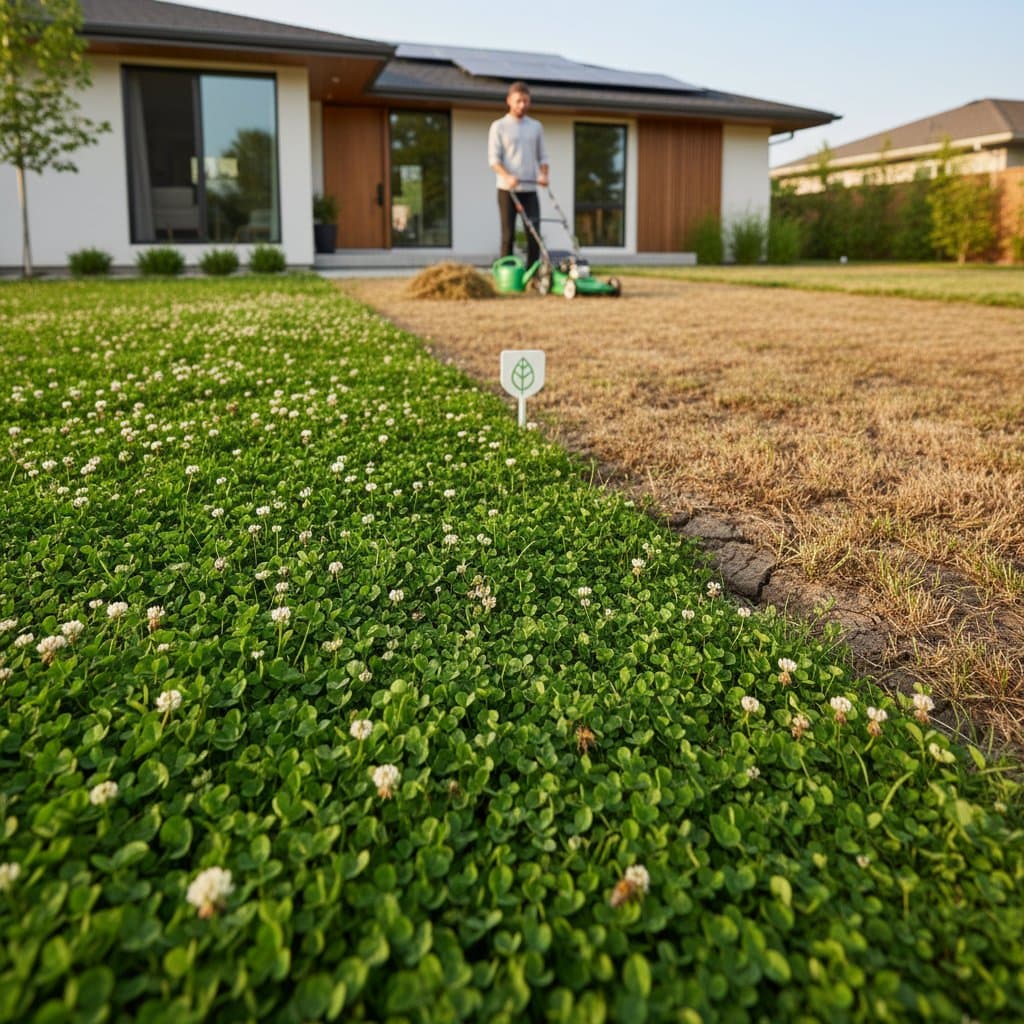
Clover Lawns: A Low-Maintenance Revolution for 2026
Picture a yard that maintains its green hue amid intense heat and prolonged dry periods, wards off weeds effectively, and demands minimal mowing. This scenario represents reality for numerous homeowners in California and other regions adopting clover lawns. As a verdant, undemanding substitute for conventional turf, clover integrates seamlessly into residential and commercial settings, delivering visual allure, functional benefits, and ecological advantages without the routine of frequent mowing or excessive irrigation.
Individuals frustrated by escalating water costs, disruptive mower noise, or reliance on synthetic fertilizers find in clover lawns a straightforward route to an intelligent, eco-conscious landscape. Proper initial setup and ongoing attention yield a supple, sturdy, and welcoming expanse that nurtures pollinators and lightens maintenance burdens.
The Rising Appeal of Clover Lawns
Clover lawns trace their origins to pre-industrial eras, yet their contemporary revival reshapes perceptions of a vibrant, contemporary yard. Prior to the widespread adoption of artificial fertilizers and weed killers, clover featured prominently in lawn seed blends. It flourished organically, enhanced soil fertility, and formed a delicate, enduring cover that endured harsh summer heat.
This renewed interest in clover lawns mirrors evolving homeowner values. People seek outdoor spaces that please the eye while aligning with ecological and financial prudence. Clover meets these criteria by reinstating innate mechanisms for soil vitality and species diversity, elements that typical lawns frequently undermine.
Principal Benefits of Clover Lawns
-
Minimal Upkeep
Clover exhibits slow growth rates, requiring mowing only several times annually for most types, or none at all. Its even spreading forms a level, cohesive layer seldom needing adjustments. Those accustomed to weekend mowing duties experience this feature as a significant relief. -
Inherent Nutrient Enrichment
As a member of the legume family, clover captures atmospheric nitrogen and deposits it into the earth. This biological mechanism nourishes adjacent grasses or covers persistently, obviating the necessity for artificial fertilizers. Consequently, the system sustains its vitality and density absent external amendments. -
Resilience to Dry Conditions
Clover develops roots that penetrate deeper than those of standard turfgrasses, tapping into subsurface water reserves. Such adaptation enables it to retain coloration during arid phases, rendering clover lawns particularly apt for California's Mediterranean environment, characterized by regular summer water shortages. -
Pleasant Tactile Quality
Barefoot traversal over clover proves unexpectedly agreeable. Its slender foliage offers a padded, resilient feel that remains temperate beneath sunlight. Both pets and children appreciate this surface, which withstands reasonable pedestrian activity. -
Aid for Pollinating Species
The blossoms of clover draw bees and other helpful insects. Gardeners aiming to foster pollinators while preserving neatness opt for microclover variants, which feature reduced foliage size and limited flowering, harmonizing form with ecological merit. -
Immunity to Intrusive Plants
Upon maturation, clover establishes a thick barrier that restricts weed intrusion. Effective soil shading diminishes the call for chemical controls or laborious removal.
Selecting Appropriate Clover Varieties
Clover species vary in characteristics, so choice hinges on objectives, local weather, and desired care levels.
Standard White Clover (Trifolium repens)
Recognized widely, this type attains heights of four to eight inches and propagates rapidly via stolons. Its robustness and versatility ensure thorough coverage. White clover suits expansive areas or blended turf applications reliably.
Microclover (Trifolium repens var. Pipolina or Comparable Cultivars)
Favored in recent years, microclover displays petite leaflets and restrained expansion. It merges elegantly with existing grasses, yielding a groomed aesthetic and subdued blooms. Those desiring a polished, consistent vista select microclover for its blend of utility and elegance.
Strawberry Clover (Trifolium fragiferum)
This variant endures elevated soil salinity and moisture. It gains popularity in seaside locales impacted by salt exposure or suboptimal drainage. Featuring broader leaves, it produces understated inflorescences that introduce subtle pattern and hue without dominating the scene.
Red Clover (Trifolium pratense)
Attaining greater stature, red clover suits meadow-style or informal plantings over structured lawns. It excels in soil improvement and pollinator attraction, though periodic clipping maintains order.
Site Preparation for Optimal Results
Clover flourishes with meticulous groundwork, encompassing soil conditioning, leveling, and seasonal timing.
-
Eliminate Current Vegetation
Clear legacy grass or invasives to curb rivalry. Employ a sod cutter, deploy solarization via transparent sheeting, or suppress growth using layered cardboard topped with mulch for a non-toxic method. -
Evaluate and Adjust Soil Composition
Clover favors pH levels from neutral to mildly acidic, between 6 and 7. Neutralize excess acidity with lime applications; counter alkalinity through additions of compost or similar organics. Aerate dense soil using a fork to enhance percolation and breathability. -
Even and Refine the Surface
Grade the ground smoothly, excising rocks and refuse. Clover's diminutive seeds demand firm soil adhesion, so a refined tilth promotes sprouting. -
Apply Seed at Recommended Density
For standalone clover stands, distribute approximately two ounces per thousand square feet. In grass-clover combinations, halve this quantity. Scatter seeds uniformly, incorporate shallowly with a rake, and initiate irrigation softly. -
Sustain Humidity During Germination
Seeds typically sprout in one to two weeks. Maintain steady soil dampness until plants reach several inches in height. Thereafter, irrigation requirements diminish substantially.
Incorporating Clover into Established Turf
For those wary of complete overhaul, overseeding offers a phased introduction of clover to present grass.
- Trim the lawn closely and clear debris.
- Disturb the topsoil lightly with raking.
- Disperse microclover seeds across the area.
- Irrigate sparingly yet regularly until emergence occurs.
Gradually, clover populates sparse zones, lessens fertilizer dependence, and bolsters soil durability. This hybrid strategy yields dual advantages: the recognizable grass profile augmented by clover's sustainability.
Streamlined Care Practices
Though clover demands less attention than turfgrass, select routines enhance longevity.
Irrigation Strategies
Post-establishment, supplement water solely during severe desiccation. In maritime or moderate climates, precipitation suffices. Excess moisture invites weeds, so permit intermittent drying cycles.
Trimming Routines
Unmowed clover remains viable, yet periodic cuts foster compactness and deter leggy intruders. Raise the mower height and perform this task two to four times yearly for uniformity.
Nutrient Management
Refrain from nitrogen additions, given clover's self-sufficiency. Annual top-dressing with compost preserves nutrient equilibrium.
Intrusion Management
Early on, extract weeds manually or apply natural acetic solutions selectively. Mature clover outpaces competitors through canopy dominance.
Renewal Techniques
Every three to five years, introduce scant seed to mend gaps or rejuvenate aging sections, ensuring sustained vibrancy.
Ecological and Financial Advantages
Adopting clover extends beyond ease, embodying commitment to conservation and efficiency.
-
Conservation of Water
Clover halves irrigation compared to turfgrass. In water-scarce areas with mandates, this yields substantial personal and communal economies. -
Diminished Reliance on Synthetics
Forgoing fertilizers and pesticides safeguards aquifers and insect allies. Healthier soil fosters microbial activity. -
Cost Reductions in Upkeep
Fewer mows translate to lower fuel use, equipment wear, and time investment. Cumulative effects render clover economically sound. -
Promotion of Species Variety
Clover sustains micro-habitats for arthropods and decomposers. Such support benefits bees, lepidopterans, and annelids, enriching the broader garden ecosystem.
Creative Applications for Clover Lawns
Clover adapts to formal or rustic designs, enhancing diverse architectural styles.
- Blended Covers: Pair microclover with prostrate thyme or low sedums for varied sensory elements.
- Border Definitions: Employ stone, alloy, or timber edgings to delineate spaces crisply.
- Access Features: Integrate with crushed rock, slate, or pebble routes for differentiation and navigation.
- Insect-Friendly Zones: Designate unmowed patches for flowering, evolving seasonally as a dynamic element.
- Buffer Areas: Position clover amid borders, beneath orchards, or adjacent to terraces to temper transitions and ease care.
Addressing Frequent Misgivings
Potential adopters often pause due to myths; clarifying these fosters informed decisions.
-
Excessive Insect Attraction?
Blooming clover draws bees, but regular trimming or microclover selection curbs this. Allergy sufferers maintain cuts during peak bloom periods. -
Clothing Discoloration?
Light residues may occur, removable with standard washing. Active households favor microclover's minimal foliage and sap. -
Durability Under Use?
It manages average passage but falters under intense pressure. Blend with hardy grasses or add pavers for busy spots. -
Seasonal Fading?
Clover greens longer than grasses, with minor dulling in chill. Mild regions see persistent luster.
Cultivating Lasting Landscape Harmony
Embracing a clover lawn embodies intentional stewardship of outdoor spaces. It alleviates labor, revitalizes earth, and deepens engagement with nature. Reclaim leisure from routine tasks to savor a self-regulating haven that endures.