
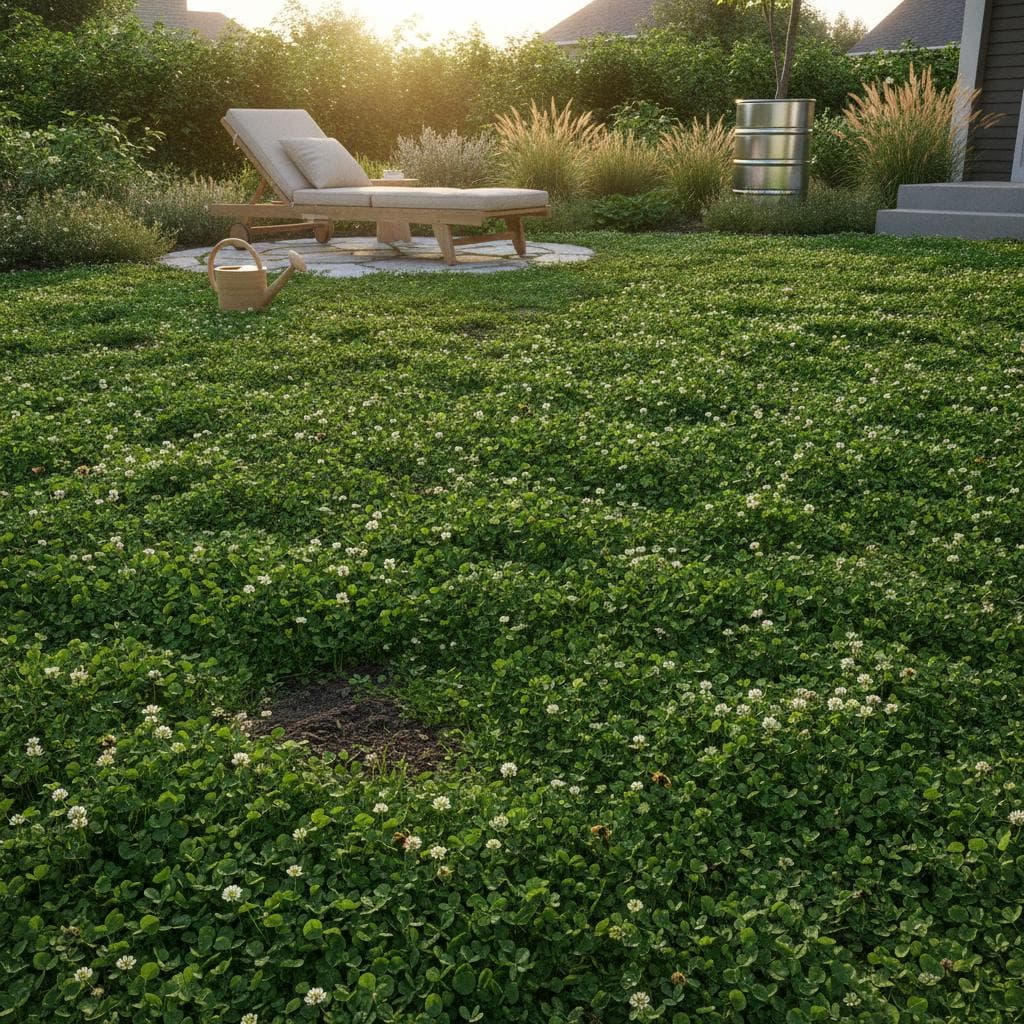
Clover Lawns Replace Grass With Practical Eco Benefits
A traditional grass lawn often demands frequent watering, regular mowing, and chemical applications that affect local water systems and budgets. Homeowners across dry regions now explore clover as a durable ground cover that maintains appearance with fewer resources. Clover establishes a dense surface through deep roots and natural nitrogen production.
This approach restores balance in residential landscapes. Clover tolerates variable conditions better than many turf grasses and supports soil health over multiple seasons.
Core Advantages of Clover in Residential Settings
Clover integrates well into modern yards because it addresses common maintenance challenges directly.
Water Efficiency
Clover roots extend deeper than typical turf varieties, accessing moisture reserves during dry periods. This trait reduces irrigation frequency and maintains color longer in Mediterranean climates. Households report noticeable decreases in water consumption after full establishment.
Natural Soil Enrichment
As a legume, clover converts atmospheric nitrogen into soil-available forms. The process eliminates routine fertilizer applications and improves nutrient levels for any companion plants. Mixed plantings benefit from this ongoing cycle without external inputs.
Reduced Pest Pressure and Upkeep
Dense clover growth limits weed establishment and resists many insects that target grass. Mowing occurs only when desired for appearance, and clippings return nutrients to the surface. The result lowers both labor and equipment needs.
Surface Comfort and Visual Appeal
Established clover forms a soft, even mat suitable for barefoot use. Its reflective leaves create a consistent green tone that remains cooler than exposed grass during warm weather. The overall texture suits both active and quiet yard functions.
Selecting Suitable Clover Varieties
Different clover types match specific yard conditions and usage patterns.
White Clover
White clover spreads readily, tolerates foot traffic, and produces small flowers that support pollinators. It functions as a standalone lawn or mixed planting.
Microclover
Microclover offers smaller leaves and lower flower production, preserving a grass-like appearance in blended lawns. Its compact habit suits areas where uniform texture matters most.
Red Clover
Red clover reaches greater height and suits meadow-style zones or larger properties. Its root system adds stability in less formal landscape areas.
Steps to Establish a Clover Lawn
Successful conversion follows a clear sequence of preparation and planting.
- Clear existing vegetation and loosen soil to a workable depth. Test pH and adjust toward neutral if necessary using compost or lime.
- Select pure clover seed or a grass blend at rates of two ounces per thousand square feet for full coverage.
- Distribute seed evenly, press lightly into soil contact, and maintain surface moisture until germination completes in two to three weeks.
- Allow growth to reach three to four inches before any initial trim. Subsequent mowing remains optional based on preference.
Responses to Frequent Concerns
Bee Activity Near High-Traffic Zones
Flowering clover draws pollinators. Microclover varieties or pre-bloom mowing reduce presence in play areas while preserving habitat elsewhere.
Durability Under Regular Use
White and microclover recover from moderate foot traffic. Heavy-use sections perform better when combined with durable grass seed for added resilience.
Seasonal Color Retention
Clover maintains green foliage longer than many grasses and returns each spring as a perennial. Brief dormancy during extreme heat reverses with renewed moisture.
Ongoing Care and Long-Term Results
Mature clover lawns require infrequent watering and occasional trimming. Soil quality improves steadily, supporting healthier plant growth without added amendments. The surface remains functional for family activities while contributing to local biodiversity.
Homeowners often begin with a test section to observe performance before full conversion. Many report sustained satisfaction with the reduced demands and consistent appearance.