
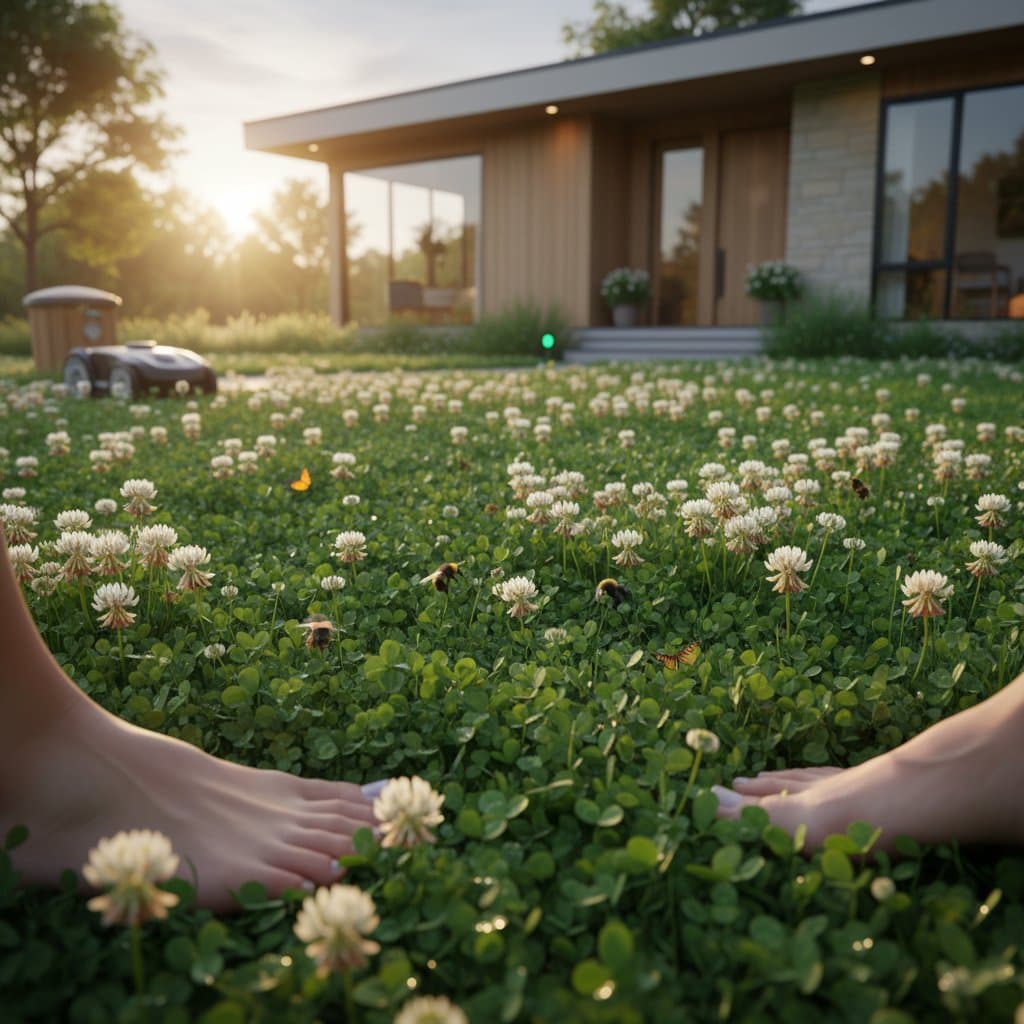
Clover Lawns: The Low-Maintenance Yard Revolution
Homeowners spend countless hours on lawn care tasks like mowing, watering, and applying fertilizers. In regions such as California, where water scarcity poses ongoing challenges, many seek alternatives to traditional grass. Clover lawns emerge as a practical, attractive option that maintains a green appearance with far less effort and resources.
These lawns thrive during dry periods, enrich the soil naturally, and attract beneficial insects. For new installations or renovations, clover provides a sustainable foundation that aligns with modern environmental priorities. The result is an outdoor area that enhances daily life without dominating it.
Why Clover Lawns Are Growing in Popularity
Clover lawns attract individuals seeking a plush green expanse free from intensive upkeep. This preference extends beyond visual appeal to include water savings, improved soil quality, and ecosystem support. Conventional grass in arid areas requires regular watering and synthetic inputs to remain viable, whereas clover manages with reduced inputs while enhancing the ground beneath it.
Nitrogen fixation by clover plants draws atmospheric nitrogen into usable forms, benefiting the lawn and adjacent vegetation. This process promotes healthier growth without external amendments. In addition, clover withstands everyday use, making it suitable for family yards or casual gatherings.
The rise of regionally adapted plantings further elevates clover's status. It integrates seamlessly with California's relaxed approach to outdoor spaces, combining utility, aesthetics, and ecological care. Paired with native flora, a clover lawn fosters a balanced environment that sustains pollinators essential for garden productivity.
Understanding Your Clover Options
Selecting the appropriate clover variety hinges on yard usage, desired texture, and regional conditions. Each type offers distinct advantages for different settings.
-
White Dutch Clover: This standard selection forms a low-growing cover that establishes rapidly and endures dry conditions after rooting. Its delicate white blooms draw bees and other pollinators, while the vivid green foliage persists in temperate zones.
-
Microclover: Featuring finer leaves than its Dutch counterpart, microclover yields a smoother, more consistent lawn surface. It integrates well with existing grasses, remains low-profile, and produces fewer flowers, appealing to those preferring a refined appearance over a wilder one.
-
Strawberry Clover: Adapted to challenging environments, this variety tolerates saline soils and brief flooding. It suits seaside properties or damp yard sections where other clovers might falter.
Homeowners can sow these pure or blend them with turf grasses for customized resilience and style.
The Practical Benefits That Win People Over
Clover lawns provide multiple advantages that surpass mere aesthetics, addressing common homeowner concerns effectively.
-
Low Water Needs: Clover develops extensive root systems that access deeper moisture reserves, sustaining color through droughts with infrequent watering. In California's variable climate, this approach halves typical irrigation demands.
-
No Fertilizer Required: Through symbiotic bacteria in its roots, clover extracts and distributes nitrogen, fostering self-sufficiency and enriching neighboring plants without added chemicals.
-
Soft and Comfortable Surface: The foliage offers a yielding, temperature-regulating mat ideal for barefoot strolls. It rebounds swiftly from casual wear, maintaining comfort in warm conditions.
-
Fewer Weeds: Dense growth suppresses invaders by limiting light and space. This natural barrier reduces reliance on chemical controls over time.
-
Pet Friendly: Clover withstands pet traffic and neutralizes urine-induced discoloration better than grass, preserving uniformity.
-
Pollinator Support: Flowering stages nourish bees and butterflies, bolstering biodiversity and aiding nearby plant pollination.
How to Establish a Clover Lawn
Establishing a clover lawn involves targeted steps to promote strong initial growth and long-term vitality.
-
Prepare the Site: Remove existing weeds and loose materials thoroughly. For conversions, cut grass to one inch height, then rake to loosen the top layer and reveal soil.
-
Amend the Soil: Clover adapts to varied soils but performs best in permeable, moderately fertile earth. Aerate compacted areas and incorporate a one-inch compost layer to enhance drainage and nutrient holding.
-
Seed Evenly: Use a spreader or manual method to distribute one to two ounces of seed per thousand square feet. Rake lightly to bury seeds at a quarter-inch depth, followed by a gentle initial watering.
-
Keep Moist Until Germination: Maintain even soil moisture for seven to ten days until sprouts emerge. Transition to deeper, less frequent watering to build robust roots.
-
Let It Fill In Naturally: Creeping runners root along the way, creating coverage in one to two months. Restrict heavy use during this phase to prevent disruption.
-
Mow Occasionally: Trim heights to three inches two to four times annually to promote density. Use sharp blades and avoid cutting more than one-third of the growth at once.
Integrating Clover with Existing Turf
Blending clover into current grass creates a hybrid that combines strengths for enhanced performance. This method suits active yards requiring both tradition and innovation.
Begin with resilient grasses like tall fescue or perennial rye. Introduce microclover via overseeding in fall or spring, targeting thin spots at a rate of half an ounce per thousand square feet. The clover's nitrogen contributions strengthen the entire mix, reducing overall water and care needs.
Over seasons, the partnership yields a durable, evergreen surface. It eases boundaries between play zones, borders, and plantings, delivering clover's eco-benefits alongside grass's familiar feel.
Maintenance That Fits Real Life
Clover lawns streamline routines, freeing time for enjoyment rather than labor. Established patches demand attention only as needed.
-
Watering: Apply one inch of water weekly during establishment, then every ten to fourteen days in dry spells. Focus on thorough soaking to support root depth.
-
Mowing: Limit cuts to maintain a two- to three-inch height. Perform after rain or growth spurts for clean results.
-
Weed Control: Remove seedlings manually in the first year. Maturity brings natural suppression, minimizing further intervention.
-
Overseeding: Add seed every two to three years in worn areas to sustain thickness.
-
Flower Management: Clip emerging buds if bee presence concerns high-traffic zones, keeping the surface neat.
This regimen contrasts sharply with grass's demands, lowering costs and environmental impact while elevating garden well-being.
Living with Your Clover Lawn
After initial adaptation, a clover lawn integrates effortlessly into daily routines. It shifts the yard from obligation to asset, enabling chemical-free play and pet access amid buzzing wildlife.
The plant's regenerative nature ensures longevity. Creeping expansion fills voids promptly, outlasting grass's vulnerabilities to wear or stress.
Steps to Transition Successfully
Adopting clover aligns with sustainable living by optimizing resources and beauty. Start modestly by converting a test patch, monitoring growth and adjusting as needed. This gradual approach builds confidence for broader implementation, yielding a resilient, inviting landscape.