
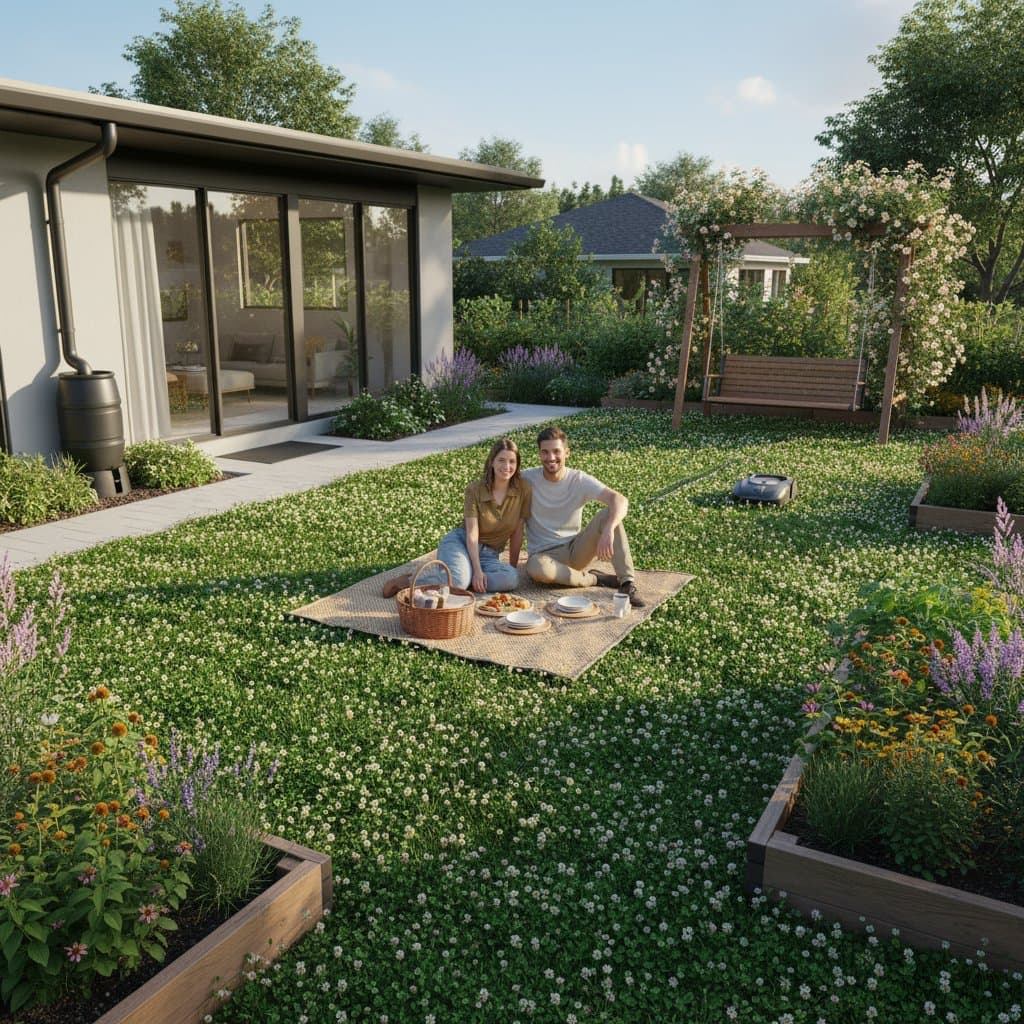
Clover Lawns: A Sustainable Alternative to Traditional Grass
Homeowners Harper and Eli Thompson sought a backyard transformation focused on efficiency and environmental harmony. They desired a green space that required minimal water, avoided chemicals, and eliminated frequent mowing. Their landscape designer recommended a clover lawn, which reshaped their approach to outdoor living.
At a Glance
- Residents: Harper and Eli Thompson, along with two children and a dog
- Location: Suburban area in a warm, dry climate
- Yard Size: 3,200 square feet
- Designer: Meadow & Stone Landscape Studio
- Contractor: GreenEarth Outdoor Solutions
- Primary Objective: Develop a low-maintenance, eco-friendly ground cover that maintains a soft, functional surface
The Environmental Drawbacks of Traditional Grass
Grass lawns represent a classic element of suburban landscapes. However, their demands raise concerns among environmentally aware homeowners. These lawns typically require weekly mowing, regular fertilization, and substantial irrigation, straining local water resources.
Clover lawns address these issues effectively. Once viewed as mere weeds, clovers now serve as refined, sustainable options. Their extensive root networks retain soil moisture, withstand drought conditions, endure foot traffic, and enrich the earth via natural nitrogen fixation. For those seeking a climate-resilient yard, clover combines aesthetic appeal with functional benefits.
Landscape designer Julia Marks of Meadow & Stone explains, "Grass lawns consume vast resources. Clover achieves a comparable lush appearance with significantly less effort. It conveys vitality rather than contrived perfection."
Exploring the Thompsons' Clover Landscape
The Thompsons' yard features a subtle slope that enhances its design. The front area flows from a stone pathway into a verdant microclover expanse. The backyard includes a play zone bordered by native shrubs and perennials, creating a cohesive outdoor environment.
Front Yard Entry
A pathway of microclover interspersed with creeping thyme defines the front approach. This blend ensures a low-growing, even surface with varied textures. The clover maintains its vivid green hue during arid periods, while the thyme releases a subtle scent underfoot.
The design team removed the prior sod and applied a layer of compost-amended loamy soil to boost drainage and root establishment. Ornamental grasses delineate boundaries softly, providing form without rigid edges.
Backyard Play and Gathering Space
A spacious terrace adjoins the house and leads to the primary clover lawn. This area accommodates family activities and pet play, free from mud or chemical residues. Clover's stabilizing roots and regenerative qualities make it suitable for such use.
A central fire pit, edged with gravel, integrates smoothly into the clover. The plants meet the hardscape organically, fostering a welcoming, low-effort atmosphere.
Harper notes, "The children run barefoot without encountering rough spots. It functions as a genuine backyard, yet demands little care."
Side Walkway and Planting Areas
Clover fills gaps between concrete pavers along the house side, balancing utility with visual softness. Adjacent raised beds for vegetables gain from the clover's nitrogen contributions.
This zone experiences partial shade, where the selected microclover and white Dutch clover varieties perform reliably. Their shorter stature prevents shading of nearby plants.
Strategic Design Elements
The Thompson project prioritized everyday usability in every choice. Clover's compact growth minimizes mowing to one or two sessions per year, yielding a neat, padded surface that appears deliberate.
Selecting Appropriate Clover Types
Residential clover options include three primary varieties:
- Microclover: Features small leaves and consistent height; integrates well with grass or thrives independently.
- White Dutch Clover: Offers broader leaves and moderate stature; ideal for versatile lawns.
- Red Clover: Suits meadow-style or low-traffic zones due to greater height.
The Thompsons selected microclover for its tidy form and resilience to play and pet activity.
Preparing Soil and Planting
Installation started with turf removal and gentle soil tilling. Compost and sand formed a nutrient-rich foundation. Seeds spread uniformly by hand, followed by consistent light watering for initial weeks.
Mature clover requires irrigation only biweekly in dry weather. Its nitrogen-fixing process obviates synthetic fertilizers, curbing pollution from runoff.
Ongoing Care Practices
Clover maintenance involves periodic trimming, targeted watering during heat waves, and spot reseeding in worn areas. The Thompsons employ a high-setting electric mower for clippings under five inches, completing the task in under 30 minutes.
Dense growth suppresses weeds naturally. Manual removal suffices for stragglers, eliminating chemical interventions.
Eli shares, "Sundays once revolved around mowing. Now, a brief trim occurs occasionally. The children resume play immediately, free from residues."
Supporting Materials and Features
Hardscape elements complement the yard's organic character. Gray cast concrete paths provide gentle contrast to the clover. The fire pit employs raw steel for natural patina development. Teak furnishings age to a silver finish.
Surrounding beds host natives like coneflower, black-eyed Susan, and lavender, drawing pollinators and linking to the local ecosystem. Textures dominate the timeless scheme over fleeting styles.
Water Management Systems
Subsurface drip lines deliver precise hydration, minimizing evaporation. Activation occurs sparingly in droughts, leveraging clover's moisture retention to prevent erosion on slopes.
Edge rain gardens with gravel and native grasses manage surplus water, filtering it effectively and advancing sustainability.
Why Clover Lawns Gain Traction
The Thompsons' design mirrors a surge in resource-conscious landscaping. Homeowners favor yards that align with regional conditions and simplify routines. Clover provides a plush, verdant base that retains traditional yard appeal.
Designers observe escalating demand from former grass enthusiasts. Marks states, "Visitors often express surprise at clover's springy, cool feel. They inquire about implementation upon experiencing it."
Key Ecological Advantages
Clover lawns foster environmental health through multiple mechanisms:
- Water Savings: They demand substantially less irrigation than turfgrass.
- Soil Enrichment: Natural nitrogen addition supports fertility sans chemicals.
- Biodiversity Boost: Flowers lure bees and butterflies.
- Emission Reductions: Infrequent mowing cuts equipment-related pollution.
- Toxin Avoidance: Maintenance skips harmful pesticides and herbicides.
These attributes yield cost savings and community benefits, such as diminished noise and enhanced soil vitality. The yard evolves into an integral ecological asset.
Aesthetic and Practical Perks
Clover's velvety surface endures seasonal shifts while staying green. Occasional white blooms introduce charm without dominance. It suits shaded sites and rebounds from use, inviting outdoor enjoyment.
Addressing Homeowner Concerns
Does clover draw bees? Flowers attract them seasonally. Pre-bloom mowing limits activity in play zones, while allowing blooms elsewhere aids pollinators.
Can it withstand frequent use? Microclover and white Dutch varieties endure regular traffic. Stepping stones enhance longevity in high-wear paths.
How does it fare in varied climates? Clover adapts broadly. Dormancy occurs in cold but revives swiftly; good drainage prevents wet-season issues.
What steps convert a grass lawn to clover? Overseeding integrates clover gradually. Complete overhaul involves turf stripping, soil amendment, and fresh seeding.
Embracing a Clover-Enhanced Lifestyle
Since completion, the Thompsons report heightened yard utilization. Outdoor gatherings extend comfortably in warm weather. Children extend playtime, and the dog avoids indoor mud after rains.
The family appreciates deeper environmental ties: observing pollinators, seasonal greens, and a resilient space that flourishes independently.