
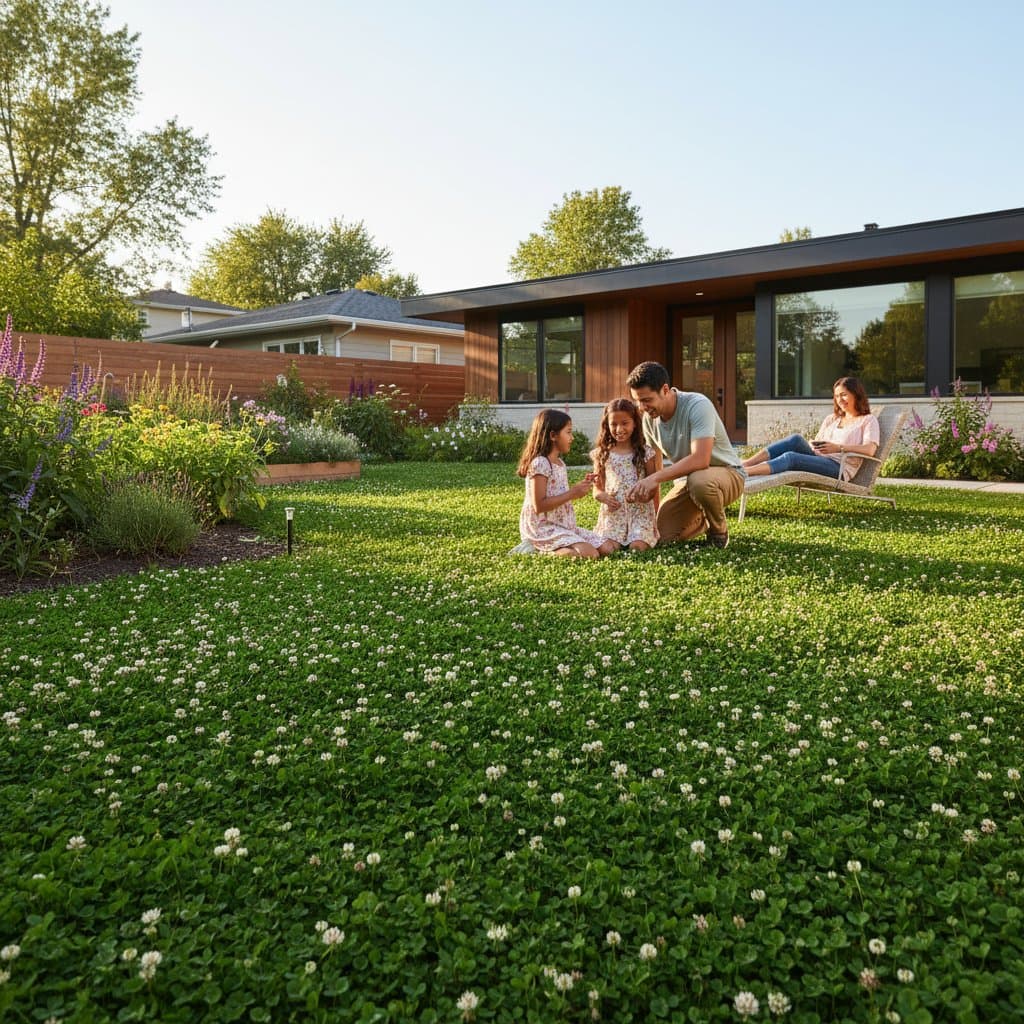
Introduction to Clover Lawns
Traditional grass lawns require substantial water and frequent mowing to stay healthy. Clover lawns offer a sustainable substitute that combines environmental benefits with attractive appearance. These covers grow well in diverse settings, consume much less water, and create a thick green layer that aids local wildlife.
Species like white clover and microclover naturally fix nitrogen into the soil, which cuts down on fertilizer requirements. This process improves soil fertility and promotes stronger plant development. Property owners enjoy savings on water bills and less time spent on chores, leaving more opportunities to relax outdoors.
In dry climates or zones with usage limits, clover performs better than grass. It holds its color and form during intense heat and low moisture periods. Adopting clover supports larger conservation efforts by increasing plant variety and preserving water supplies.
The Lopez Family Case Study
The Lopez family revamped their suburban property into an example of eco-friendly design. Rising water expenses and a struggling grass area prompted them to install microclover. This decision tackled upkeep issues and elevated their usable outdoor area.
Designers worked closely with the family to blend clover into the existing setup. The final design includes curving walkways and clear edges for both practicality and visual harmony. By the end of the initial growing season, the space showed clover's strengths, remaining lush through hot summer stretches.
Success depended on thorough site readiness. The team checked soil pH and water flow to create ideal starting conditions. They added targeted improvements to even out nutrients, laying the groundwork for steady expansion. This careful preparation avoided issues such as sparse patches or unwanted plants taking hold.
Material and Installation Details
Choosing the right materials guarantees a clover lawn's durability and effectiveness. For the Lopez installation, the crew used a regional organic clover mix combined with sand to enhance drainage. This mix avoids excess moisture around roots during rainy seasons.
Efficient watering setups aid early growth. The installers laid out inline drip lines with emitters that adjust for even pressure across the zone. Water reaches the roots directly, cutting waste from surface loss. After rooting, clover needs infrequent extra moisture, relying mostly on rain.
Walkways improve access while preserving the clover field. Compacted decomposed granite with a binding agent creates sturdy paths that match the surrounding greenery. Four-inch steel edging, coated for rust resistance, maintains sharp boundaries and lets clover expand within designated areas.
Amendments like bone meal provide phosphorus to build deep roots, and humic acid enhances soil texture and beneficial microbes. These elements speed up coverage. In about eight weeks, the Lopez area handled light use, signaling a smooth shift to full operation.
- Perform soil tests to evaluate pH and nutrient content.
- Amend soil with organic matter for better tilth.
- Spread clover seeds uniformly over the prepared surface.
- Set up drip irrigation to target water during sprouting.
- Add a thin layer of mulch to hold in humidity without blocking young plants.
- Track progress and remove excess seedlings to encourage thick growth.
These steps produce a sturdy lawn prepared for regular activity.
Insights from the Design Team
Experts in landscaping praise clover's adaptability for current projects. Maren Fields, a principal designer, appreciates its understated grace. The fine texture surpasses many grasses, and the steady green color withstands weather shifts. Clients desire lively areas with low demands, and clover achieves that balance.
Methods for setup adapt to specific situations. Current practices favor local clover types for superior local fit. Such options fend off insects and illnesses, easing care further. Fields suggests pairing clover with enduring flowers to add depth and change over seasons.
For households like the Lopezes, real advantages appear in everyday use. Sarah Lopez reports fewer thin areas and a cooler feel underfoot in heat. Earlier challenges with cutting and watering schedules have eased. Simplified tasks now allow weekends focused on enjoying the updated space.
Ongoing Maintenance and Benefits
Established clover lawns need little ongoing care. Mow occasionally at taller heights to build thickness without harming growth. Self-seeding naturally repairs small openings, keeping the area full across years.
A key perk involves aiding pollinators. Clover blooms draw bees and butterflies, enhancing regional variety. This yard-level action contributes to wider protection initiatives. The Lopez household enjoys daily sightings of these visitors, bringing energy to the setting.
Water reduction stands out significantly. Research shows clover demands up to half the water of grass, vital in water-scarce spots. Paired with less fertilizer use, these lawns decrease ecological strain and household costs.
The family pet plays comfortably on the yielding, shaded ground without discomfort. Barefoot strolls highlight the soft texture, encouraging longer stays outside. Such tactile qualities turn the yard into an appealing retreat.
Steps to Integrate Clover into Your Landscape
Clover lawns reshape exterior areas through ease and polish. They fit various home styles, from sleek modern to traditional charm. In tough weather zones, clover holds up where grass fades.
Making the change involves forethought but brings lasting gains. Seek advice from regional specialists on seed choices and planting schedules. Executed well, clover builds tough, appealing grounds that raise home worth and daily comfort.
Plan your yard update with clover in mind. It provides an easy route to green practices that maintain elegance, showing sustainable choices can prove simple and striking.