
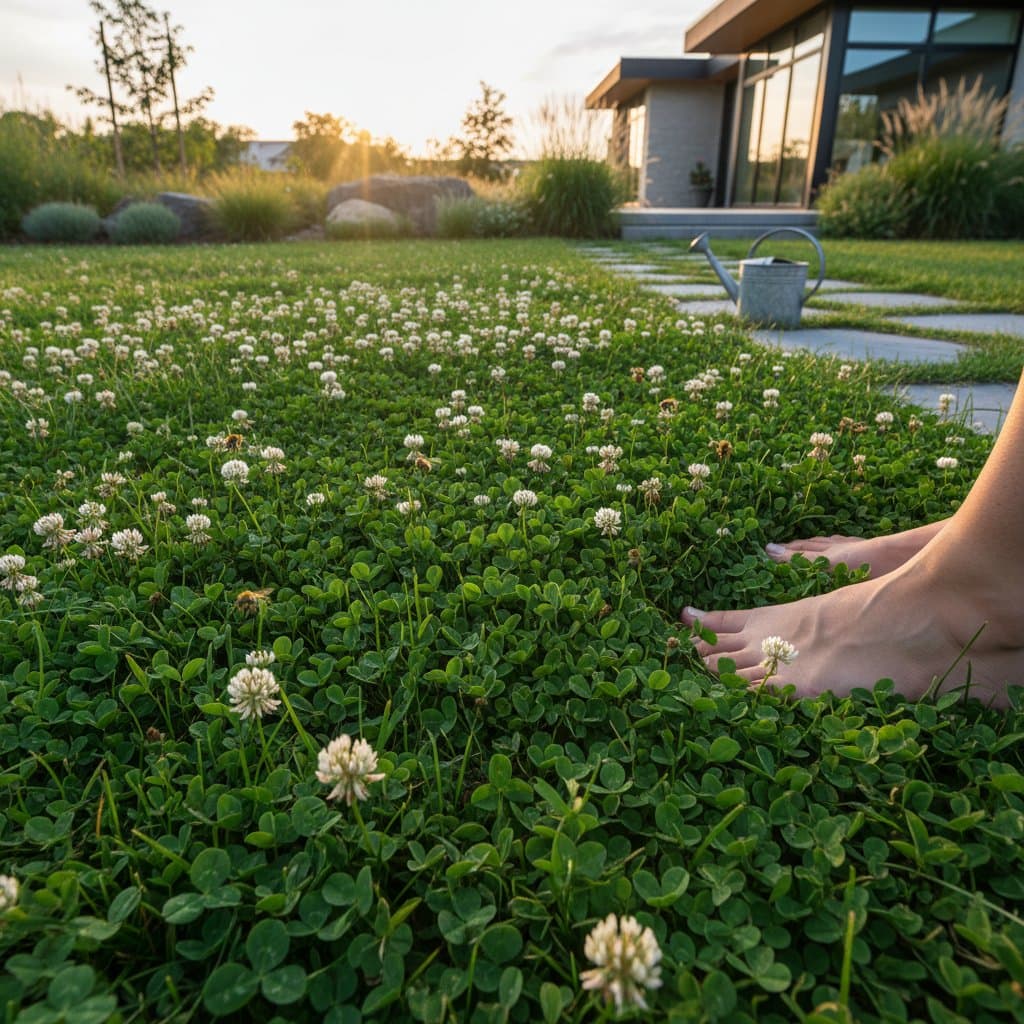
The Rise of Clover Lawns: Sustainable Turf for Modern Yards
Homeowners seek lawns that combine visual appeal with environmental responsibility. Clover lawns fulfill this need by providing a soft, green surface that withstands dry conditions and requires minimal resources. Professionals in landscaping increasingly recommend clover for its ability to deliver beauty without the burdens of traditional grass.
In an era focused on conservation, clover lawns address key concerns such as water scarcity and biodiversity loss. They maintain freshness during heatwaves and draw in pollinators like bees and butterflies, all while avoiding reliance on chemical treatments. This approach allows yards to serve as both recreational spaces and ecological assets.
Key Features at a Glance
- Suitable Locations: Adapts to most temperate areas, from urban plots to rural expanses.
- Scalability: Ideal for compact backyards or expansive fields.
- Climate Compatibility: Excels in cool and transitional zones, with tolerance for varied weather.
- Primary Objectives: Minimize water and chemical inputs while preserving a verdant, walkable surface.
Conserving Water and Fertilizers Through Natural Resilience
Clover demonstrates superior performance in challenging environments where conventional grass falters. Its extensive root system accesses deeper soil moisture reserves, ensuring the lawn remains vibrant amid prolonged dry periods. Homeowners report scheduling irrigation only every two to three weeks, depending on local rainfall, which lowers water bills and promotes sustainable practices.
A defining trait of clover involves nitrogen fixation, where it converts atmospheric nitrogen into a form usable by plants. This biological process nourishes the soil without external amendments, reducing or eliminating the need for commercial fertilizers. Horticulturists note that established clover lawns enrich surrounding areas, benefiting companion plantings such as flowers or vegetables.
To leverage these advantages, select white clover or microclover varieties for optimal results. These types establish quickly and integrate well with existing turf. Over seasons, the improved soil structure enhances overall yard vitality, creating a self-supporting ecosystem.
Streamlining Lawn Care Routines
Routine upkeep for standard grass involves frequent mowing, weeding, and feeding, which consume significant time. Clover disrupts this cycle by exhibiting slow, even growth that maintains a compact height. Many owners mow every three to four weeks, achieving a neat appearance with far less effort than the weekly sessions demanded by grass.
Clover possesses inherent resistance to common pests and diseases, minimizing the application of treatments. It rebounds swiftly from heavy use, such as family events or pet activity, preserving its uniform texture. This durability suits active households, where the lawn functions as a durable play area rather than a high-maintenance feature.
Experts in yard maintenance observe that clover halves labor requirements while delivering consistent aesthetics throughout the year. The fine leaves effectively camouflage minor soil undulations, contributing to a polished look without additional leveling. For best outcomes, use a sharp mower blade to avoid tearing, and adjust height to two inches for healthy regrowth.
Navigating Growth Phases and Environmental Adaptations
View clover lawns as dynamic ecosystems that evolve with proper guidance. Initial establishment may show sparse areas as the plants spread via stolons and seeds. Full coverage typically occurs within one growing season, filling voids organically and creating a dense mat.
Seasonal variations influence appearance; foliage might yellow briefly during extreme heat or frost, only to revive with moderating conditions. Regular, light watering during the first summer aids rooting, but mature stands rely primarily on natural precipitation. Mulching clippings post-mowing recycles nutrients, fostering denser growth without supplemental feeding.
Garden specialists emphasize the value of observation during setup. Allow time for adaptation, intervening only with gentle aeration if compaction arises. Trimming edges along walkways enhances definition, balancing the lawn's wild charm with structured appeal.
Embracing the Benefits of Clover in Daily Life
Integrating clover reshapes outdoor experiences, from leisurely strolls to hosting gatherings. The cushioned surface invites bare feet and remains cooler than grass under summer sun, extending usability. Pollinators flourish, boosting garden productivity and local biodiversity.
This choice liberates time previously allocated to intensive care, redirecting efforts toward enjoyment. Clover proves that sustainability enhances rather than compromises design, yielding spaces that nurture both people and nature. With initial planning and ongoing attentiveness, it establishes a resilient foundation for enduring yard harmony.