
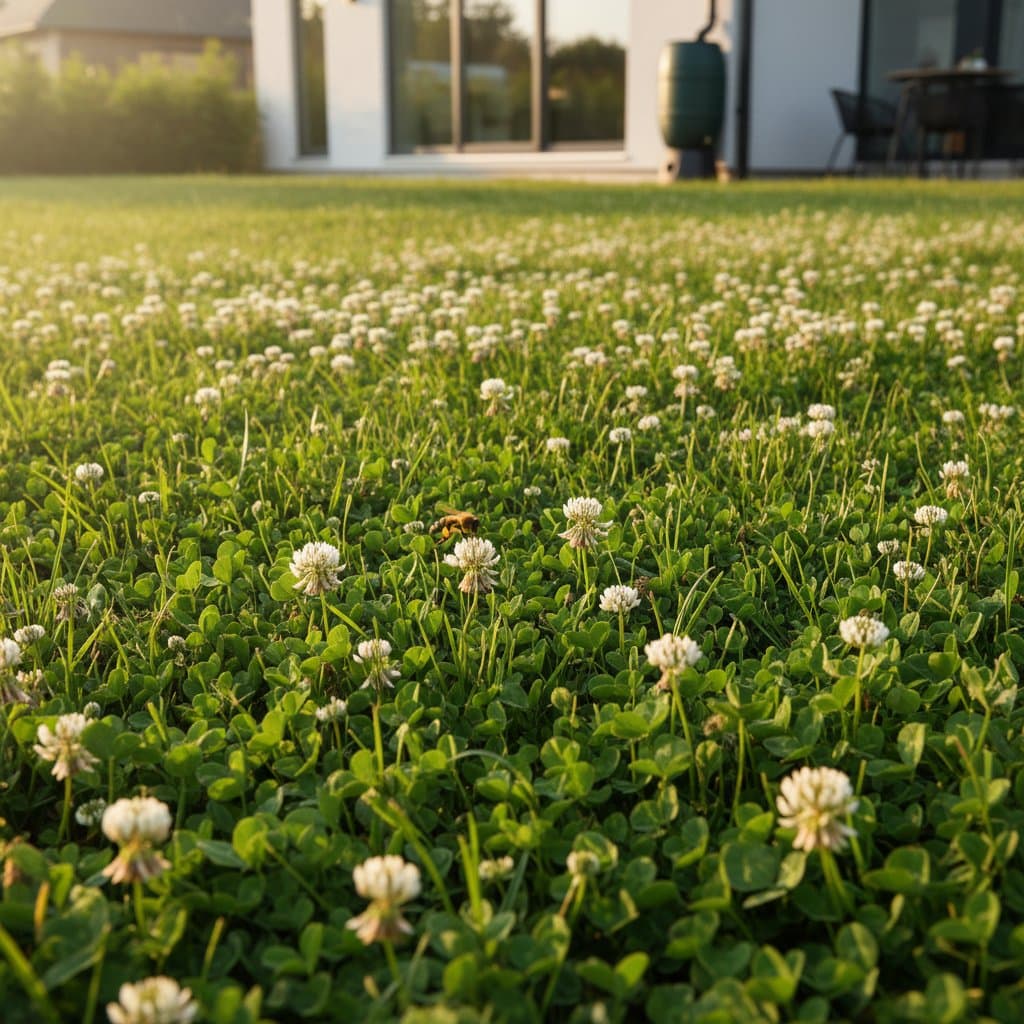
Clover Lawns Gain Popularity Over Traditional Grass Across the United States
Homeowners in neighborhoods, parks, and backyards observe a subtle change in landscaping practices. Many individuals who previously spent weekends on mowing, watering, and fertilizing water-intensive grass now select clover as an alternative. This shift, which started as an environmental initiative, evolves into a widespread trend that redefines turf management. Clover provides not only visual appeal but also environmental benefits that surpass those of conventional grass.
Reasons Clover Attracts Homeowners
Clover lawns draw interest for their practicality and ecological advantages. Standard turfgrass demands substantial irrigation, regular cutting, and synthetic nutrients to maintain appearance. In contrast, clover flourishes with reduced effort. The plant fixes nitrogen naturally in the soil, providing sustenance for itself and nearby vegetation without external additives. This feature suits areas with water limits or homeowners seeking to minimize routine tasks.
Clover offers a soft texture that enhances comfort. Barefoot contact with the surface feels vibrant and resilient. Families and animals appreciate the yielding quality, while the subtle visual style appeals to many. Flowering periods introduce white or pink accents, drawing bees and pollinators that sustain regional habitats.
Key Advantages of Clover Lawns
Clover lawns deliver environmental and financial gains. The following points highlight primary benefits:
-
Lower Water Requirements
Clover develops deep roots that access soil moisture effectively. After establishment, the plant retains green color during dry periods that damage typical grass. -
Natural Nutrient Provision
Through nitrogen fixation, clover avoids the need for added fertilizers. This reduces expenses and prevents chemical runoff into waterways. -
Resistance to Weeds and Pests
Dense growth of clover blocks sunlight from weeds. The compact layer also limits pests that target exposed earth or weakened turf. -
Resilience to Wear
Clover recovers swiftly from activity. Spreading roots and runners fill gaps naturally, eliminating frequent reseeding. -
Aid for Pollinators
Blooms on clover invite bees, butterflies, and helpful insects. Such inclusion fosters biodiversity in residential settings.
Selecting Appropriate Clover Varieties
Homeowners switching to clover must consider species for optimal results. White Dutch clover serves as a favored choice for its refined leaves and controlled stature. Microclover, with smaller foliage, remains short and integrates smoothly with existing grass in hybrid setups. Red clover suits taller growth in naturalistic or meadow-like areas.
A full clover installation yields consistent coverage and minimal upkeep. Combining clover with grass achieves a familiar aesthetic alongside sustainability. Preferences and local weather influence the mix. In coastal California, microclover excels in temperate, arid climates, whereas white clover withstands interior heat.
Steps to Install a Clover Lawn
Converting grass to clover proves straightforward with proper planning. Preparation ensures strong establishment.
-
Prepare the Site
Eliminate weeds and old turf to minimize rivalry. A cleared base promotes uniform rooting of new seeds. -
Enhance Soil Conditions
Aerate dense soil using a rake or gentle tiller. Clover thrives in permeable earth but tolerates various types. -
Apply Seeds Uniformly
Distribute seeds manually or via spreader, followed by light irrigation to initiate sprouting. Use thin soil cover over the tiny seeds. -
Protect Initial Growth
Restrict heavy use as seedlings emerge. The plant develops rapidly, forming a plush layer in weeks. -
Trim as Needed
Mow sparingly to stimulate density and control height. Skip cuts if a wilder appearance suits the space.
Integrating Aesthetics and Sustainability
Clover lawns redefine ideals of manicured yards. The surface varies seasonally with flowers, insects, and color changes. This dynamic quality appeals to those embracing natural harmony. In water-scarce or cost-conscious areas, clover delivers enduring appeal without excess demands.
Certain factors warrant attention. Clover may transfer color to fabrics, a note for active households. Bee activity from flowers supports ecology but requires caution for allergy sufferers. Hybrid mixes moderate blooms while preserving benefits.
Maintaining a Clover Lawn Long-Term
Established clover lawns demand little ongoing work. Provide water only during extended droughts, reseed sparse sections annually, and mow infrequently. Store fertilizers and herbicides away. The yard sustains vitality independently.
Clover handles use well. Gatherings or daily routines leave the area intact and inviting. Soil quality enhances over time through added organics, benefiting adjacent plantings. Gardens nearby often show improved performance from enriched ground.
Advancing Sustainable Landscapes
Clover lawns extend beyond trends to embody resourceful living. Selection of clover conserves resources, cuts chemical reliance, and bolsters habitats. Homeowners gain purposeful, attractive spaces.
Widespread adoption yields broader impacts, such as reduced pollution and enhanced earth. Free time increases without equipment noise. For those prepared to adopt low-effort turf, clover provides an effective, gentle solution.