
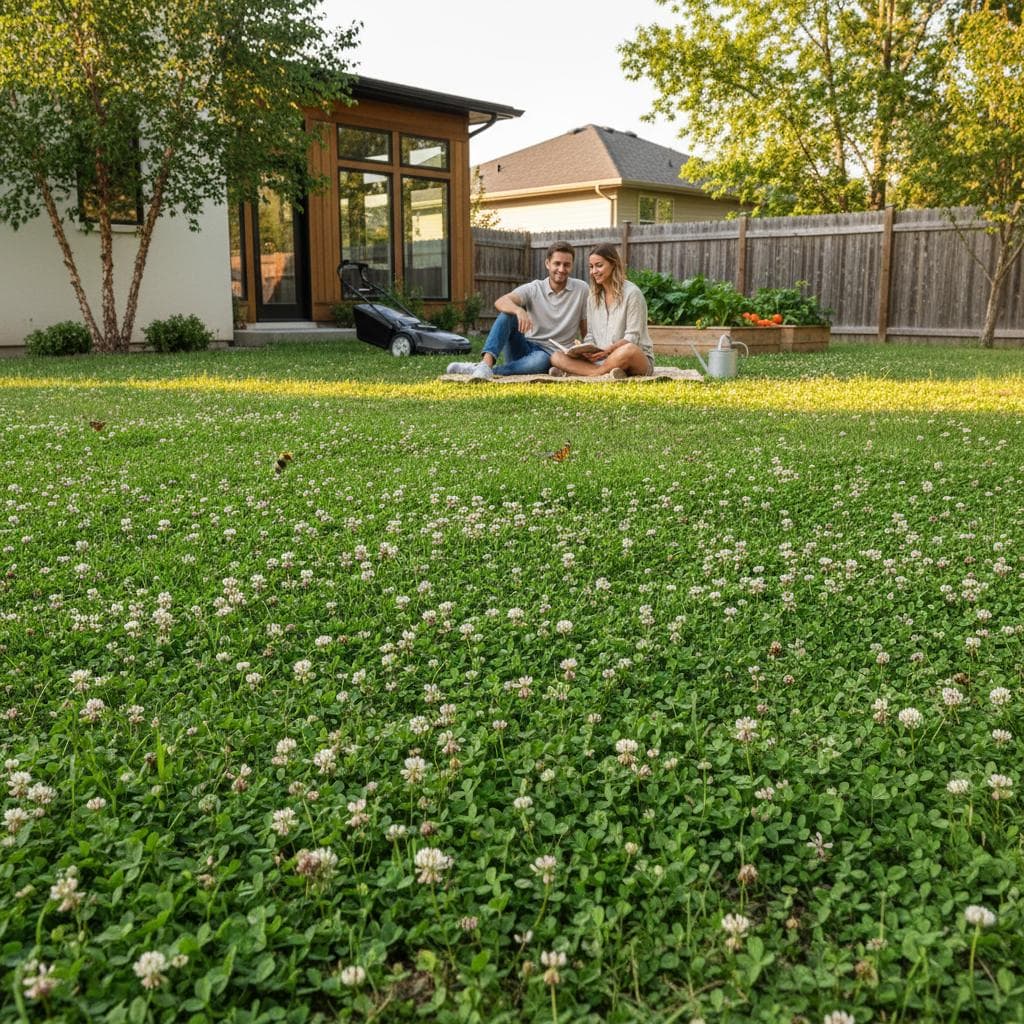
Why Homeowners Swap Grass for Clover Lawns
A lush green lawn has long symbolized a well-kept home. Many homeowners now seek sustainable and manageable alternatives. Clover lawns provide that soft green appearance while reducing maintenance, water usage, and chemical applications. This creates a living carpet that feels pleasant underfoot and supports pollinators.
At a Glance
Location: Suitable for most temperate regions
Size: Works for small courtyards or large yards
Climate Zone: Moderate to warm, adaptable with the right variety
Project Goal: Reduce maintenance, water use, and improve soil health
1. Rethink the Idea of a Perfect Lawn
Traditional turf lawns require frequent mowing, watering, and fertilizing. Clover disrupts this cycle. It grows to a lower height, spreads naturally, and remains green during dry periods. A designer notes: “A clover lawn takes the pressure off weekend maintenance while still looking tidy.”
Clover retains soil moisture and shades the ground from intense heat. Its root system fixes nitrogen from the air, reducing the need for synthetic fertilizers. The small, round leaves produce a fine texture that contrasts effectively with pavers, stepping stones, or gravel borders. Incorporate microclover for a dense, even surface that remains soft and resilient under bare feet.
Visual Callout: Microclover fills gaps between stone paths, creating a low, seamless green layer.
2. Choose the Right Clover Variety
Various clover types provide different appearances and growth habits. White clover (Trifolium repens) serves as the most common lawn option. It maintains a low height and spreads evenly. Microclover, with its smaller leaves, forms a tighter mat and produces fewer flowers. Red clover grows taller and suits meadow-style or informal areas.
A landscape contractor observes: “Microclover gives that classic lawn look without the upkeep of grass.”
Selecting the appropriate variety influences yard performance and feel. Microclover aligns with modern homes that favor smooth, uniform surfaces. White clover complements mixed lawns or cottage gardens through its natural spread. Both varieties attract bees and butterflies, enhancing the yard's vitality.
For blends with grass, target a 20 to 30 percent clover seed ratio mixed with drought-tolerant fescue. This combination balances texture and durability, with clover providing natural nitrogen to the grass.
Visual Callout: A mix of fescue and microclover creates a lush, barefoot-friendly surface.
3. Lower Water and Fertilizer Needs
Clover flourishes with moderate moisture and tolerates dry spells better than most turf grasses. After establishment, it requires minimal watering. The plant draws nitrogen from the air and releases it into the soil, which sharply decreases fertilizer needs.
A horticulturist explains: “Clover is a self-sustaining green cover that feeds the soil as it grows.”
This approach saves costs and minimizes runoff into waterways. Homeowners can view their lawns as natural ecosystems rather than artificial features. The yard maintains health throughout the season with reduced intervention.
Water deeply immediately after planting, then decrease irrigation as roots develop. Clover prefers slightly dry conditions, so avoid overwatering. The deep roots enable quick recovery from short droughts.
Visual Callout: Established clover stays green through heat with half the irrigation of turf grass.
4. Welcome Pollinators and Soil Life
A clover lawn supports diverse quiet activity. Bees visit the small white or pink blooms, and beneficial insects flourish in the shaded understory. The dense roots aerate compacted soil and encourage microbial activity.
An ecologist states: “Every square foot of clover supports the chain of life beneath and above the soil.”
Replacing chemical-dependent turf with clover fosters a natural habitat that aids the wider environment. The lawn functions as a living ecosystem beyond mere decoration. In compact yards, pollinators foster a deeper connection to the landscape.
For play areas with bee concerns, opt for microclover. It offers fewer flowers yet delivers comparable nitrogen-fixing and drought tolerance without drawing as many insects.
Visual Callout: White clover blossoms draw gentle pollinators while keeping the lawn lush and green.
5. Simplify Maintenance
Clover lawns minimize routine tasks. They grow slowly, demand less trimming, and seldom need pesticides. Mow every few weeks to maintain an even surface. Infrequent mowing actually strengthens clover growth.
A groundskeeper comments: “Clover is one of the few plants that looks its best when you leave it alone.”
Clover spreads via stolons, naturally filling bare spots. This self-repairing trait reduces reseeding and soil disruption. The lawn remains uniformly green, free from brown patches or fertilizer marks.
Set mower blades to three inches for optimal moisture retention and leaf protection. Mow only on dry soil to avoid compaction. These practices ensure an even, healthy appearance.
Visual Callout: A single monthly mow keeps microclover lawns neat and even.
6. Blend Clover with Design Features
Clover's texture and low growth make it versatile for design. It integrates seamlessly with stone, wood, and metal elements. Position it between stepping stones, near seating areas, or beneath pergolas. The soft foliage tempers hardscape geometry and adds visual ease.
A landscape designer remarks: “Clover gives structure a living edge that softens the geometry of built elements.”
Microclover enhances modern aesthetics with clean lines and sparse plantings. Larger-leaf clover bolsters a naturalistic vibe, particularly alongside native grasses such as little bluestem or prairie dropseed. This pairing introduces movement and seasonal variation while limiting upkeep.
Clover reflects light softly, pairing well with illumination. Install low-voltage path lights or solar markers along edges to accentuate texture after dark. This produces a gentle, inviting glow that elevates outdoor areas.
Visual Callout: Ground-level lighting casts gentle highlights across a microclover surface.
7. Manage the Transition from Grass
Converting turf to clover requires preparation but proves straightforward. Remove existing grass or allow it to decline through reduced watering. Rake the soil lightly and apply a thin compost layer. Broadcast seeds evenly, then press them into the soil using a roller or gentle foot traffic.
A lawn specialist advises: “Clover is forgiving, but good seed-to-soil contact sets the stage for success.”
Maintain moisture until seedlings emerge, then reduce watering. Restrict foot traffic until plants fill in. In mixed settings, clover spreads organically, outcompeting weaker grass for balance.
First-season care emphasizes monitoring. Observe establishment, traffic tolerance, and reseeding needs. The lawn eventually forms a robust, self-maintaining cover.
Visual Callout: Newly seeded clover begins filling in bare spots within weeks.
Living with Your Clover Lawn
An established clover lawn transforms outdoor spaces. The area feels quieter, cooler, and more welcoming. Without frequent mowing or chemicals, time outdoors becomes more pleasant. Children and pets enjoy play without fertilizer or herbicide exposure, as soil quality improves steadily.
A homeowner shares: “It’s the first lawn that feels alive rather than managed.”
Clover lawns demonstrate how sustainability and aesthetics coexist. They align with contemporary design principles that integrate function, comfort, and ecology.