
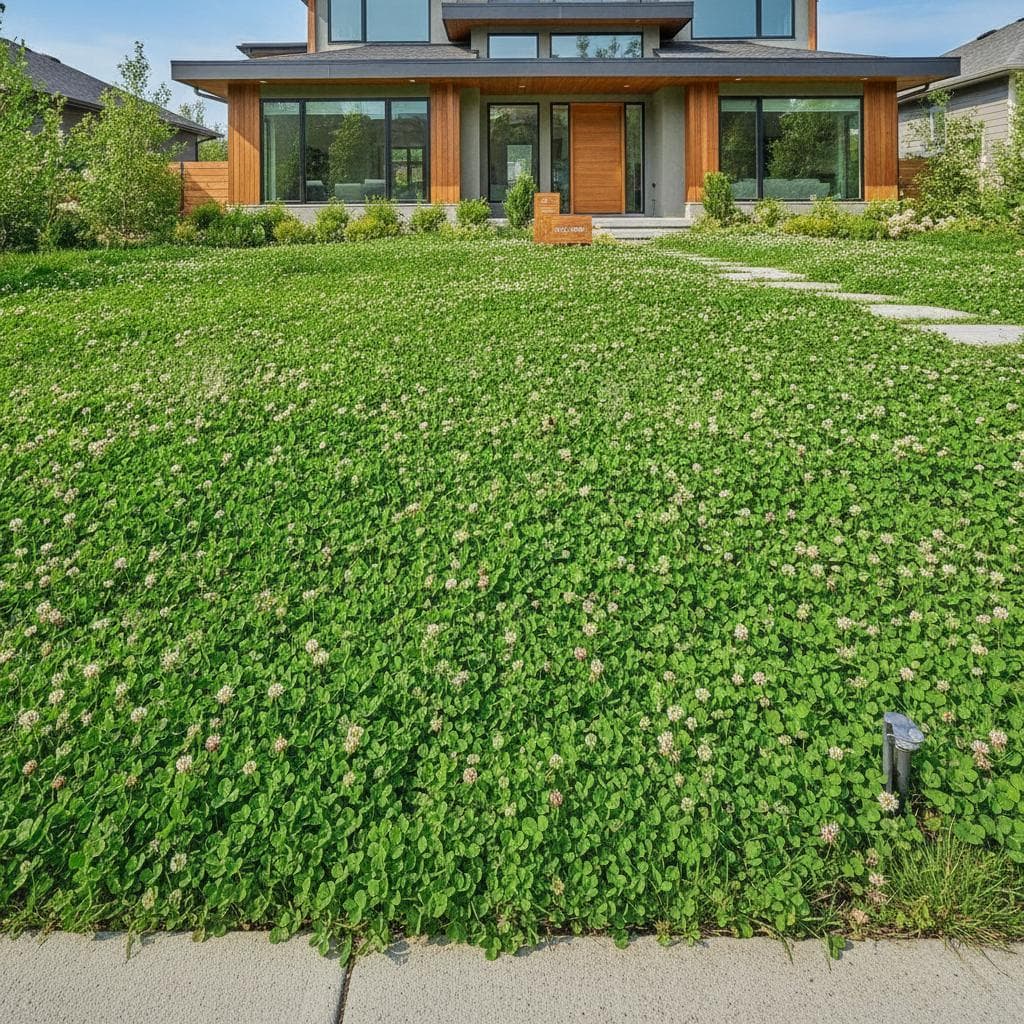
Clover Lawns Need Less Water and Zero Fertilizer
Clover Lawns Beat Grass as Homeowners Make the Switch
When Lauren and Marcus Reed bought their suburban home, they loved the yard size but dreaded the weekly mowing, watering, and fertilizing required to keep it green. They wanted a landscape that stayed lush without constant upkeep. Their designer suggested a clover lawn. That single choice transformed their backyard and their approach to outdoor living.
The Reeds previously faced weekly mowing and heavy irrigation. Brown patches appeared each summer. Fertilizer runoff reached the nearby storm drain. The couple wanted an open, usable lawn without the environmental cost.
A New Kind of Lawn
Their designer, Jenna Morales, proposed a microclover mix seeded directly over the existing grass. This method required less soil disturbance than full removal. Within weeks the first soft green leaves began to fill in.
Clover thrives where grass struggles. It stays green through drought, fixes nitrogen naturally, and supports bees. Homeowners who see that it looks like a regular lawn but performs better rarely go back.
Step-by-Step Transformation
Installation took place in early spring. The existing grass was trimmed short and lightly aerated. The team spread a blend of microclover seed mixed with compost for even germination. A gentle watering routine followed for two weeks until the seedlings established.
By midsummer the lawn had become a uniform green carpet. The Reeds noticed that it stayed vivid even during dry spells while neighbors grass turned brittle.
It felt almost effortless. Marcus said. We still mow occasionally to keep it tidy, but only every few weeks. The mower bag stays empty since clover clippings break down quickly and feed the soil.
Material and Maintenance Details
- Seed mix: 90 percent microclover, 10 percent fine fescue
- Soil prep: Light aeration, compost topdressing
- Watering schedule: Twice weekly until established, then rain-fed
- Mowing height: 2 to 3 inches
- Fertilizer: None required
- Weed control: Hand removal in sparse areas during the first season
Clover lawns rarely require irrigation once mature. This saves thousands of gallons of water each year. The Reeds installed a simple rain barrel system that collects runoff from their roof for occasional deep watering.
Clients often assume sustainable landscapes look wild or unkempt. Morales said. But clover lawns prove that you can have something tidy, soft, and family-friendly without chemicals or constant care.
Design Considerations for Different Climates
Microclover thrives in temperate regions. Other varieties suit different conditions. White clover handles cooler climates. Strawberry clover tolerates salt and coastal air. For hot, dry zones, designers often blend clover with buffalo grass or creeping thyme for a mixed-turf approach that balances resilience and texture.
Soil type, sunlight, and use patterns all influence the right mix. Shady yards benefit from more fescue. Sunny open spaces can rely on pure microclover. Morales recommends testing a small patch first to observe how it responds before converting the entire yard.
Making the Change to Clover
Months after installation, the Reeds backyard now feels completely different. The lawn glows with even color. The sound of bees hums softly through the flower beds. Family gatherings spill naturally onto the grass. Weekend yardwork has dropped to a single quick mow.
Most important, the couple feels their outdoor space finally matches their values. We wanted something that worked with nature, not against it. Lauren said. Now our yard feels alive, not like a chore.
Clover lawns deliver comfort, beauty, and sustainability in one step. For those seeking greener ground without the burden of constant maintenance, this simple plant proves effective.