
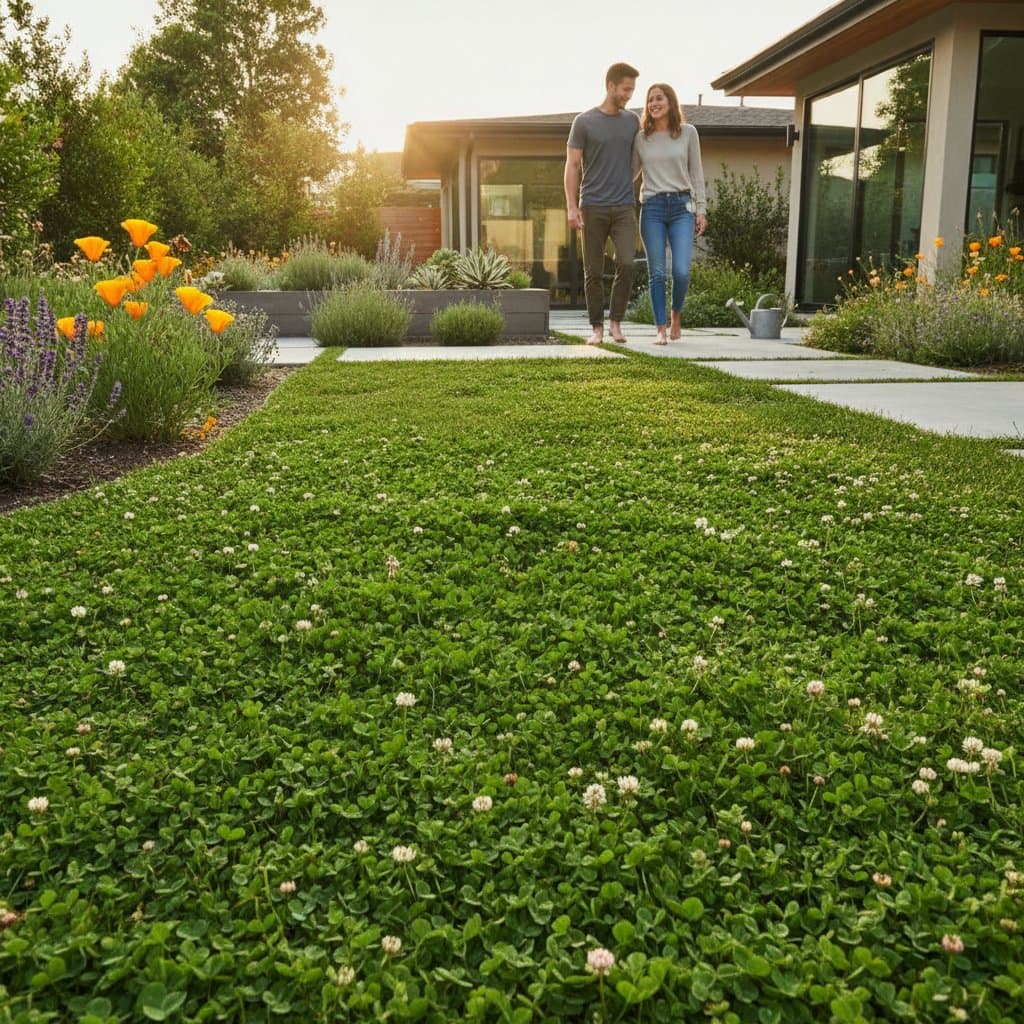
Why Homeowners Are Replacing Grass with Clover Lawns
Across many neighborhoods, the familiar green carpet of turfgrass is quietly giving way to something softer, more resilient, and far easier to maintain. Clover lawns are no longer a quirky experiment. They represent a smart, sustainable choice for homeowners who want a lush yard without the high water bills or constant mowing.
In California and other dry regions, the shift toward clover fits perfectly with the growing preference for low maintenance, eco friendly landscapes.
The New Green Standard
Traditional lawns have long been the symbol of a neat home and well kept garden. Yet they demand significant inputs of water, fertilizer, and time. Clover, by contrast, thrives on less.
Its natural nitrogen fixing ability enriches the soil, reducing the need for synthetic fertilizers. It stays green through long dry stretches when grass turns brown. It also provides gentle ground cover that feels cool underfoot.
Clover lawns deliver practical resilience along with visual appeal. The soft, small leaves create a fine texture that looks elegant against patios, garden beds, or stone pathways. Many homeowners also appreciate that clover attracts honeybees and other pollinators, adding life and movement to the garden.
Why Clover Works So Well
Clover has a few remarkable traits that make it ideal for California climates and beyond.
-
Drought Tolerance
Once established, clover withstands dry conditions far better than most grasses. It develops deep roots that tap into moisture below the surface, staying green with minimal irrigation. This makes it an excellent choice for regions where water conservation is a priority. -
Natural Fertility
Clover belongs to the legume family. It captures nitrogen from the air and stores it in the soil, feeding itself and nearby plants. Homeowners often notice that surrounding shrubs and perennials grow stronger when near clover patches. -
Soft and Low Growing
Clover rarely grows taller than a few inches, which means less mowing. It forms a dense mat that feels comfortable under bare feet, perfect for outdoor lounging or garden play areas. -
Weed Resistance
Its thick growth leaves little room for weeds to take root. That means fewer hours spent pulling unwanted plants and less need for herbicides. -
Eco Benefits
Clover supports bees, butterflies, and other beneficial insects. By replacing part of a lawn with clover, homeowners create a mini ecosystem that supports pollination across the neighborhood.
Choosing the Right Clover for Your Lawn
Not all clovers are the same. The most common varieties for lawns are microclover and white Dutch clover. Microclover has smaller leaves and blends well with grass, creating a unified look that feels familiar but performs better. It tolerates light foot traffic and stays neat even without frequent mowing.
White Dutch clover is slightly taller and spreads quickly, ideal for open areas or natural meadow style yards. Some homeowners mix clover with drought tolerant grasses to achieve a balanced look. This approach offers flexibility, combining the visual softness of grass with the durability and eco benefits of clover. The mix also helps with seasonal variation, keeping the lawn green even when one component slows its growth.
Installation and Early Care
Clover lawns can be planted from seed over bare soil or over an existing grass lawn. The process is simple but benefits from good preparation.
-
Prepare the Soil
Rake away debris and loosen the top layer of soil. Clover prefers well draining soil with moderate fertility. Overly rich soil can lead to excessive growth and reduced durability. -
Seed Evenly
Use a broadcast spreader or hand sow the seed evenly across the area. Clover seeds are tiny, so mixing them with fine sand helps distribute them more uniformly. -
Water Lightly but Consistently
Keep the soil moist until seedlings appear. After establishment, watering can be reduced significantly. -
Mow Occasionally
A light mow every few weeks keeps the surface even and encourages thicker growth. Avoid cutting too short, as clover looks best when it maintains a soft, full texture.
Cost and Maintenance Advantages
A clover lawn typically costs less to maintain than a traditional grass lawn. Reduced watering, no fertilizer, and minimal mowing translate into real savings over time. For homeowners who manage large yards, the difference can be noticeable within the first season.
Clover also eliminates many of the frustrations that come with grass. Bare patches often fill in naturally, and pests tend to be less attracted to clover. This means fewer treatments, less chemical exposure, and a more balanced garden ecosystem.
Even in shaded or uneven areas where grass struggles, clover finds a way to thrive. It tolerates partial shade and uneven soil moisture, adapting to conditions that would quickly stress turfgrass.
Aesthetics and Lifestyle Benefits
Clover lawns have their own style. They bring a relaxed, natural look that feels more in tune with California casual outdoor lifestyle. The subtle movement of clover leaves in the breeze, combined with their gentle green hue, gives a space visual depth and calm.
Families often find that clover lawns stay comfortable underfoot, even on warm days, and resist the dusty look that grass develops during dry spells. For those who enjoy outdoor entertaining, clover lawns create an inviting setting for picnics or gatherings. The surface stays cool, resists wear, and recovers quickly from foot traffic.
Practical Outcomes of the Switch
Switching to clover is not only about saving water or reducing maintenance. It represents a shift toward a more sustainable, low stress approach to home landscapes. Once homeowners see how well clover performs through the seasons, they often expand its use into side yards, parkways, or garden edges.
To keep a clover lawn looking its best, occasional reseeding every few years helps refresh coverage. Aerating compacted soil and monitoring for overwatering ensure continued health. Most importantly, avoid heavy chemical treatments, as clover thrives in natural balance.
Replacing grass with clover gives homeowners a lawn that feels good underfoot, looks vibrant year round, and supports a healthier environment. It reduces the workload while enhancing the beauty of outdoor living spaces.