
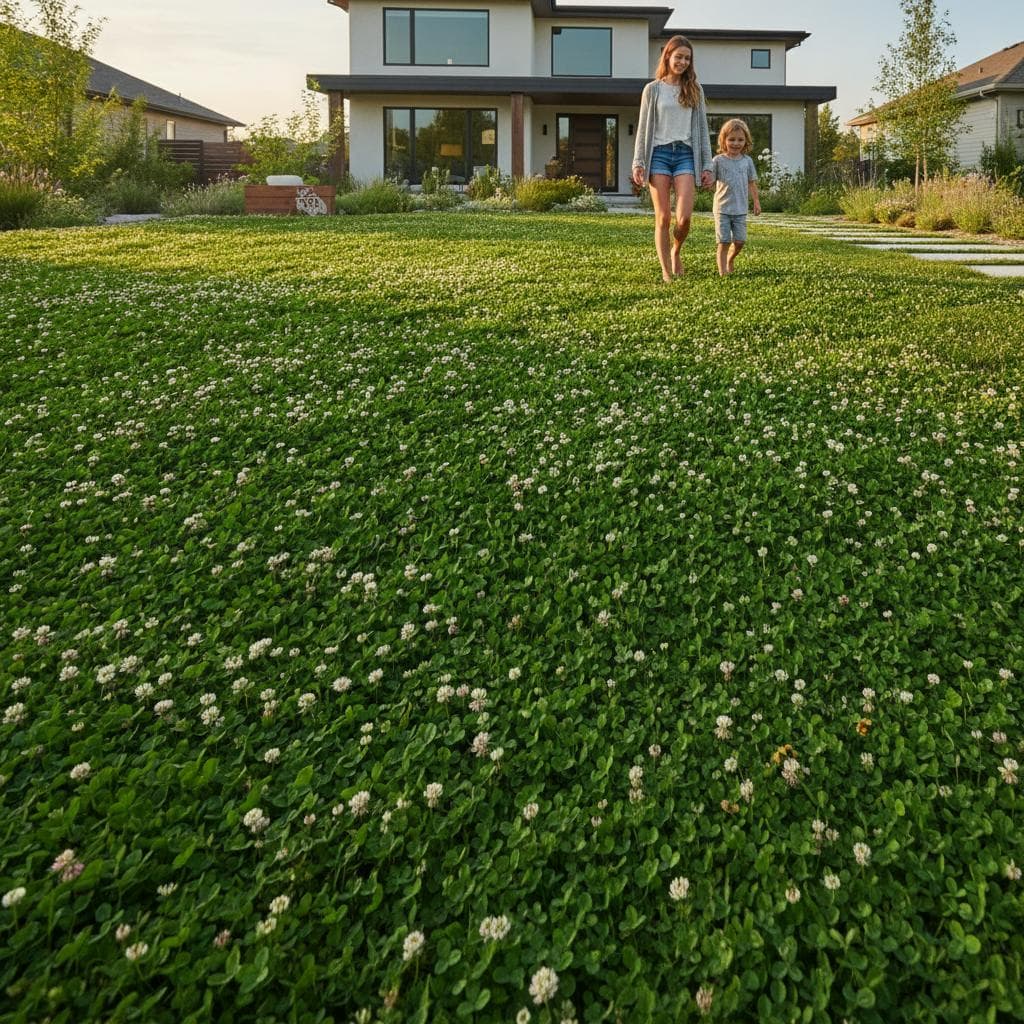
Why More Homeowners Are Choosing Clover Over Grass
When Sarah and Daniel moved into their suburban home, they appreciated the backyard but dreaded maintaining its patchy lawn. They sought a green space that remained soft underfoot and lush without frequent mowing or watering. Their designer recommended replacing traditional turf with clover.
Project Overview
- Residents: Sarah and Daniel, a couple with two children and a dog
- Setting: Tree-lined suburban neighborhood
- Area: About 2,500 square feet
- Designer: Greenline Outdoor Design
- Installer: EcoGrowth Landscaping
- Objective: Establish a low-maintenance lawn that stays green year-round
Shifting Lawn Preferences
Lawns across neighborhoods are changing. Traditional grass once represented neat appearance but now demands high upkeep. Homeowners want surfaces that look attractive, use fewer resources, and aid local ecosystems. Clover meets these needs directly.
Clover needs minimal irrigation and fewer chemical applications than grass. It establishes fast, holds color in dry periods, and adds nitrogen to soil. Families like Sarah and Daniel find these traits align with daily routines and values.
"We wanted something that looked good but did not need constant attention," Sarah said. "Clover offered the softness and color we wanted, but without the weekend chores."
Yard Transformation Process
Work on the yard started with removal of existing turf. The team loosened the top soil layer, mixed in compost, and sowed a mix of white clover and microclover. Within weeks, bare areas filled into a dense green cover.
The finished space shows clear differences. Clover springs back underfoot and releases a light scent when stepped on. Children play barefoot, and the dog spends more time outdoors.
Three zones organize the yard. A front path combines clover with native flowers. A central area serves play needs. A shaded patio sits at the rear. Clover fills the front completely. It mixes with thyme and sedum near the patio. In the play zone it stays low and recovers from use.
"We treat it more like a living ground cover than a lawn," said designer Laura Chen. "It does not need to be perfect to feel inviting."
Practical Advantages of Clover
Reduced Upkeep
Clover grows slowly and stays low. Mowing occurs only every few weeks. Some owners skip mowing to let blooms support pollinators.
Natural Soil Improvement
Clover roots pull nitrogen from air and return it to soil. This reduces or removes the need for added fertilizer and supports nearby plants.
Better Water Use
Deeper roots let clover retain green color longer in dry weather. Homeowners facing watering limits find this trait especially useful.
Comfortable and Resilient Surface
The fine leaves feel soft on skin and paws yet withstand regular traffic. Clover rebounds quickly after compression.
Support for Local Wildlife
Clover draws bees and butterflies. It also limits many weeds without extra effort. The result is a small habitat that improves yard health.
Selecting Clover Types
White clover and microclover suit most lawns. White clover reaches six inches, spreads readily, and produces white flowers. Microclover stays shorter with smaller leaves and fewer flowers for a tidier appearance.
The design team used both varieties together. The mix adds texture while balancing softness and strength. It also builds soil quality more rapidly.
"The blend keeps the lawn looking rich without becoming too uniform," said contractor Miguel Torres.
Steps for Planting and Ongoing Care
Successful planting requires loose, well-drained soil free of thick thatch. Rake the surface lightly before seeding.
- Loosen the top two inches of soil.
- Add a thin compost layer.
- Spread seed evenly.
- Water lightly until plants emerge.
- Keep traffic off the area for several weeks.
Established clover needs little attention. Mow lightly every few weeks if desired. Water once weekly during dry spells. Remove early weeds by hand rather than with broad chemicals.
Creative Placement Options
Clover works in several design roles beyond full lawns. It fills spaces between stepping stones. It grows under trees to hold moisture and feed soil. It combines with grasses and flowers in meadow plantings. It softens edges around patios and decks.
In this yard, clover links hard surfaces to planting beds and creates visual continuity.
"That continuity makes the whole yard feel calm," Laura Chen said.
Appearance and Texture
Clover forms a dense mat of rounded leaves that catches light differently than grass. Morning dew gives it a soft sheen. White flowers appear as small accents when allowed to bloom.
Trim before flowering for a uniform surface. Allow some height for a meadow effect that aids pollinators.
Long-Term Costs and Savings
Seeded clover costs less than sod installation. Ongoing expenses drop because of lower water, fertilizer, and mowing needs. Seed may require occasional renewal, yet total costs stay below those of grass lawns.
Sarah and Daniel report their yard work time fell by half and water use decreased.
Daily Experience After Installation
Months later the clover remains green through heat and the soil shows improved condition. Bees visit the small flowers away from main play spots. The family enjoys more outdoor time without mower duty.
Their results match a wider pattern of practical, sustainable yard choices. Start with a small test area to observe growth and fit with existing plantings.
A healthy yard can thrive without constant effort.