
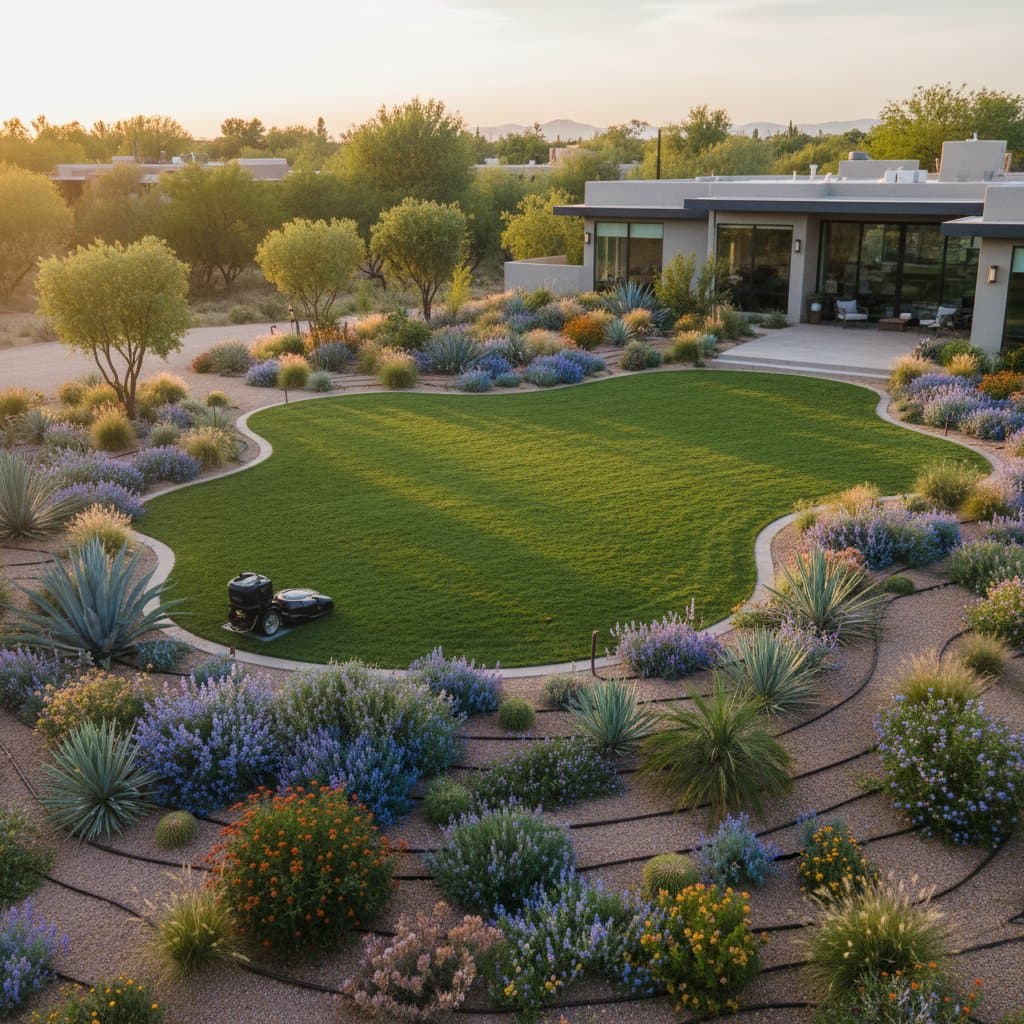
Drought-Tolerant Turf Cuts Mowing Time by 90%
Well-kept lawns require substantial weekly effort, including watering and mowing. Homeowners and landscape professionals increasingly turn to drought-tolerant turf for relief. These varieties maintain color with limited water and exhibit slow growth rates that reduce mowing frequency dramatically. The outcome delivers a vibrant, comfortable lawn with minimal ongoing work.
At a Glance
Location: Suitable for dry and transitional climates
Size: Adaptable to small courtyards or expansive suburban yards
Climate Zone: Best suited to arid and semi-arid areas
Project Goal: Develop a low-maintenance, water-efficient lawn that remains welcoming
1. Choose the Right Turf Variety
Effective drought-tolerant lawns begin with informed plant choices. Hybrid buffalo grass, zoysia, and native bentgrass excel in dry conditions. These options feature extensive root systems that access deep soil moisture, cutting irrigation requirements by up to 50 percent relative to traditional fescue or bluegrass.
A landscape designer notes, “Match the grass to your climate first. A well-suited species saves more time and water than any gadget.” This approach establishes a durable foundation.
Functional benefit: Reduced watering, infrequent mowing, and minimal fertilizer application.
Design insight: Select fine-bladed types for a sleek, groomed appearance or coarser varieties for a natural, meadow-style effect.
Example: A backyard installation of zoysia japonica preserves a gentle green tone during dry periods and requires trimming only monthly.
Visual Callout: “Fine-textured zoysia creates a dense mat that appears refined while remaining organic.”
2. Improve Soil Before Planting
Robust soil underpins the success of drought-tolerant turf. Add organic materials like composted leaves or aged manure prior to planting. Such amendments enhance water retention and deliver gradual nutrient release.
A turf installer observes, “If you get the soil right, the grass will almost take care of itself.” Proper preparation accelerates establishment and bolsters stress resistance.
Functional benefit: Enhanced root depth and balanced moisture levels.
Design insight: Conduct a soil pH test to maintain levels between 6 and 7, optimizing nutrient uptake for most grasses.
Example: Incorporating compost into sandy soil enables buffalo grass to remain verdant during droughts without frequent irrigation.
Visual Callout: “Tilling a thin compost layer into sandy soil fortifies roots prior to seeding.”
3. Rethink the Watering Routine
Conventional lawns depend on regular shallow watering, which fosters shallow roots. Drought-tolerant turf flourishes with deep, infrequent applications that encourage roots to extend downward, fostering durability in arid conditions.
A contractor advises, “Think of watering as training, not pampering. Deep roots are your insurance policy.”
Functional benefit: Overall water savings and superior performance in heat.
Design insight: Employ a moisture meter or manual soil probe to verify dryness in the upper inches before irrigating.
Example: A programmed irrigation setup delivering one extended session weekly sustains a zoysia lawn under direct sunlight.
Visual Callout: “Targeted irrigation schedules provide deep soaks that build enduring turf vitality.”
4. Cut Less, Cut Smarter
Drought-tolerant grasses offer the notable perk of diminished mowing needs. Slow growth in these low-water species can reduce maintenance time by 90 percent. Homeowners often shift from weekly cuts to monthly or seasonal ones.
A horticulturist comments, “When the grass grows slower, you save time, fuel, and noise.” The turf retains a tidy appearance without relentless attention.
Functional benefit: Decreased emissions and additional leisure time.
Design insight: Maintain sharp mower blades to prevent damage to delicate leaves, and raise cutting height slightly to shield soil and conserve moisture.
Example: A front yard of hybrid buffalo grass requires attention only every four to six weeks to stay presentable.
Visual Callout: “Slow-growing buffalo grass maintains order with sparse trims.”
5. Integrate Native Plant Borders
Complementing turf with native plantings elevates aesthetics and efficiency. Perennials, ornamental grasses, and succulents serve as borders that minimize irrigation demands throughout the landscape.
A designer states, “Borders of native plants make a drought-tolerant lawn feel intentional, not just low-maintenance.” This integration adds seasonal variety and texture.
Functional benefit: Support for local wildlife and further water conservation.
Design insight: Select companions with matching hydration requirements to streamline upkeep.
Example: Pairing little bluestem, coneflower, and sedum with a modest turf patch yields a unified, resilient layout.
Visual Callout: “Native borders temper lawn boundaries and draw pollinators.”
6. Use Mulch and Hardscape to Reduce Turf Area
Strategic reduction of turf coverage benefits even resilient grasses. Substitute high-use or shaded sections with gravel walkways, porous pavers, or mulched lounging zones to ease overall care.
A landscape contractor explains, “A smaller lawn is easier to keep healthy, and hardscape gives structure to outdoor living.” This method crafts a harmonious blend of vegetation and functional surfaces.
Functional benefit: Simplified mowing, edging, and watering tasks.
Design insight: Opt for materials echoing regional earth colors to achieve visual unity.
Example: A gravel-ringed fire pit adjacent to zoysia turf forms a sturdy, low-effort social hub.
Visual Callout: “Porous pavers delineate spaces while harmonizing with adjacent turf.”
7. Feed Lightly and Rarely
Excessive fertilization promotes rapid growth, undermining low-maintenance goals. Drought-tolerant turf performs well with sparse applications, typically one or two annually using slow-release organic products.
A lawn care professional remarks, “Feed less, mow less, and your lawn stays balanced.” Steady nourishment avoids growth spikes that necessitate frequent cuts.
Functional benefit: Minimized environmental impact and reduced mowing.
Design insight: Select balanced organic formulas to sustain color without accelerating foliage expansion.
Example: One spring application keeps buffalo grass vibrantly green through extended dry seasons.
Visual Callout: “Sparse organic nourishment fosters consistent development and soil vitality.”
Sustaining Your Drought-Tolerant Landscape
Adopting drought-tolerant turf reshapes landscape interaction from labor-intensive to observational. These varieties endure with modest intervention, merging sustainability with usability.
Beyond appearance, the change conserves resources, cuts expenses, and enhances enjoyment. As adoption grows in water-scarce regions, these lawns demonstrate that vibrant greenery aligns with effortless care.
For new installations or renovations, drought-tolerant options provide a straightforward route to enduring appeal and efficiency. Established properly, they deliver persistent vibrancy, tactile pleasure, and relaxed routines.