
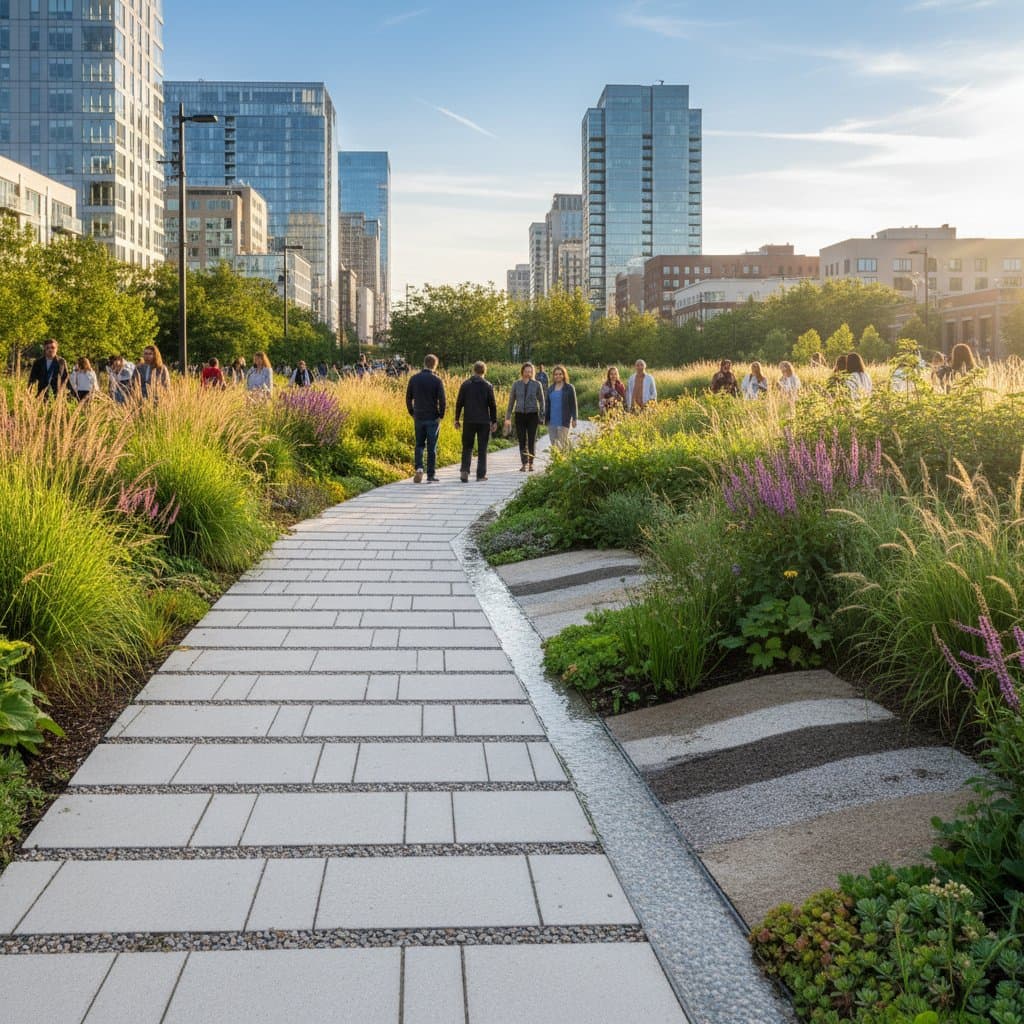
EPA Bioswale Walkways: Integrating Stormwater Management into Landscape Design
Walkways serve more than navigation; they manage rainwater, nurture native vegetation, and bolster soil vitality. The Environmental Protection Agency promotes bioswale walkways as exemplars of purposeful landscape architecture. These installations capture surface runoff, remove contaminants, and replenish aquifers, while introducing organic textures and dynamic elements to outdoor spaces.
Bioswale walkways merge environmental engineering with aesthetic consideration. They convert drainage challenges into ecological advantages. Property owners, urban planners, and landscape professionals increasingly recognize these elements as essential for both utility and visual appeal.
Key Features at a Glance
- Settings: Urban areas, suburban yards, or educational campuses
- Scale: From compact trails to expansive pedestrian routes
- Adaptability: Suitable for diverse climates facing stormwater issues
- Objectives: Control runoff, mitigate flooding, and elevate pedestrian experiences
1. Select Permeable Surfacing Materials
Conventional hardscapes block water infiltration, prompting rapid surface flow. Bioswale walkways employ permeable options such as porous concrete pavers, stabilized gravel bases, or jointed tile systems. Water penetrates the walking surface and descends into underlying strata for natural purification and soil absorption.
Landscape architects emphasize that permeable surfaces prolong pathway durability and permit soil respiration. These materials also moderate surface temperatures, benefiting adjacent flora and alleviating urban heat effects.
Core Advantages: Diminishes runoff quantities and optimizes drainage patterns.
Practical Guidance: Align material choices with site aesthetics. Historic districts favor permeable bricks, whereas contemporary landscapes suit resin-bound aggregates.
Case Illustration: Interlocking porous pavers embedded in a sand base link a residence entrance to a nearby rain garden, facilitating infiltration along the entire route.
Highlight: Water filters through paver gaps, ensuring a dry, secure treadway.
2. Establish Gentle Grading for Directed Flow
Effective bioswale performance hinges on subtle slopes that guide water without erosion. Designers configure pathways with a mild cross-slope, typically one to two percent, directing flow toward vegetated swales or infiltration zones. This setup slows velocity, promotes settling of sediments, and prevents pooling on the path itself.
Engineers note that precise grading transforms pathways into active conduits for stormwater. Integration of berms or check dams along the route further controls movement and enhances retention.
Core Advantages: Minimizes erosion risks and maximizes water retention.
Practical Guidance: Conduct site surveys to account for topography; incorporate transition zones for varying elevations.
Case Illustration: A subtle crown in the pathway center funnels rain toward bordering planting strips, where it nourishes deep-rooted perennials.
Highlight: Gentle slope channels water to adjacent bioswale, avoiding pathway inundation.
3. Layer Vegetation for Pollutant Filtration
Vegetation forms the heart of bioswale efficacy, with stratified plantings that capture and break down pollutants. Surface grasses and forbs intercept initial sediments, while deeper shrubs and trees uptake nutrients and heavy metals. Native species thrive in these conditions, requiring little supplemental water once rooted.
Ecologists highlight that diverse plant layers mimic natural wetlands, providing robust filtration. Root systems aerate soil, boosting microbial activity that degrades contaminants.
Core Advantages: Enhances water quality and supports biodiversity.
Practical Guidance: Select plants tolerant of periodic saturation; arrange in bands from path edge to swale base for graduated filtration.
Case Illustration: A walkway flanked by sedges near the surface and willows at the swale's core filters urban pollutants before groundwater entry.
Highlight: Multi-tiered plants trap debris and absorb excess nutrients from passing water.
4. Define Edges for Stability and Definition
Natural appearances demand structured boundaries to ensure usability and upkeep. Edging elements, including natural stone, metal strips, or wooden borders, confine soils and mulches while delineating safe walking zones. These features safeguard plantings and curb edge erosion.
Designers assert that defined edges harmonize utility with appearance. They guide maintenance efforts, distinguishing mowable areas from preserved growth.
Core Advantages: Averts soil displacement and preserves pathway integrity.
Practical Guidance: Coordinate edging with surfacing; rusted steel accents gravel effectively, and local stone complements concrete seamlessly.
Case Illustration: Metal edging delineates a bioswale strip from a crushed stone path, upholding a uniform tread line.
Highlight: Contained edging secures the planting area, directing runoff efficiently.
5. Integrate with Comprehensive Stormwater Networks
Isolated bioswales limit impact; integration amplifies benefits. Link walkways to rain gardens, rooftop vegetations, or retention ponds to sequence treatment stages. This holistic strategy decelerates and cleanses water prior to sewer discharge.
Civil engineers describe the walkway as an initial treatment node in a networked system. Distributed elements balance loads and enhance resilience.
Core Advantages: Boosts overall stormwater handling capacity and dependability.
Practical Guidance: Map interconnections during planning; provision overflow paths via rock-lined channels or underground conduits for intense storms.
Case Illustration: An institutional pathway directs excess to a lawn-subsurface basin, enabling gradual soil percolation.
Highlight: Runoff transitions smoothly from path to neighboring rain garden, illustrating system synergy.
6. Schedule Maintenance for Sustained Performance
Ongoing attention ensures bioswale longevity. Routine activities encompass debris clearance, vegetation pruning, and mulch renewal. Community participation fosters durability, as informed users contribute to preservation.
Managers observe that engaged communities yield thriving bioswales. Appealing, interpretive features promote care and deter damage.
Core Advantages: Preserves filtration efficiency and aesthetic quality.
Practical Guidance: Opt for resilient, low-water natives; install interpretive signs to convey operational benefits.
Case Illustration: Community paths feature explanatory panels on native flora's role in water purification during descent.
Highlight: Signage near the path educates on bioswale mechanics for passersby.
7. Monitor and Refine for Long-Term Adaptation
Sites change, necessitating bioswale evolution. Track infiltration speeds, vegetation health, and hydrology to inform adjustments. Modifications to contours or flora can elevate outcomes incrementally.
Hydrologists stress that monitoring refines design iteratively. Insights from one installation guide subsequent projects, advancing regional practices.
Core Advantages: Upholds enduring functionality amid shifts.
Practical Guidance: Embed monitoring tools like test wells or indicators; revise plant selections with evolving weather data.
Case Illustration: Park pathways incorporate access panels for subsurface evaluations post-rainfall.
Highlight: Compact well facilitates post-storm infiltration assessments.
Advancing Sustainable Pathways Through Bioswale Innovation
Bioswale walkways exemplify how infrastructure aligns with ecology. They manage water wisely, enrich environments, and invite community connection. As adoption grows, these designs pave the way for resilient, water-conscious landscapes.