
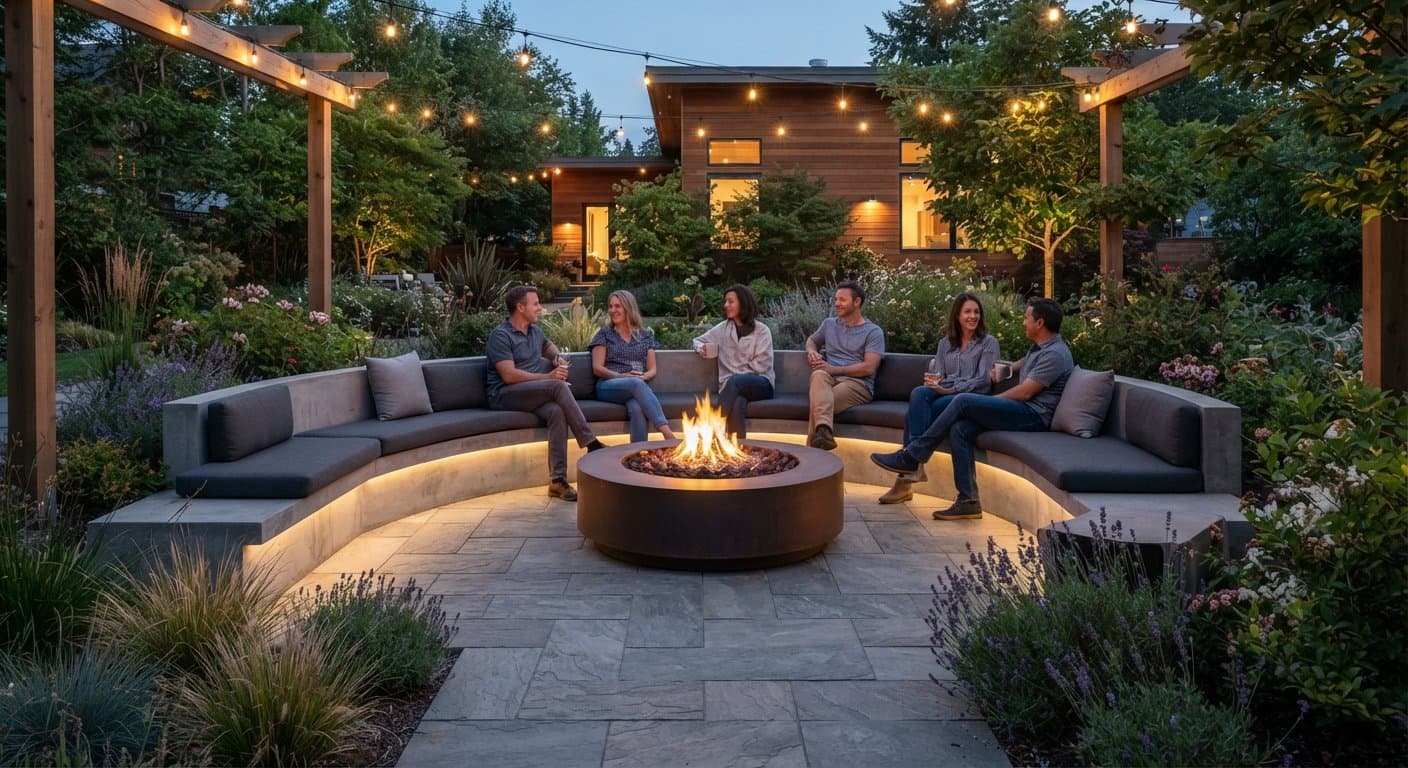
Fire Pit Patios Turn Backyards Into Cozy Retreats
A fire pit patio creates a natural gathering point in any backyard. The combination of warmth and comfortable seating encourages people to spend more time outdoors. Thoughtful placement, durable materials, and clear safety planning make the space practical for both compact and spacious yards.
1. Choose a location that works
Place the fire pit where people can reach it easily from the house. Keep the area clear of overhanging branches, fences, sheds, and other combustible materials. A level spot helps chairs sit securely and keeps the fire feature stable.
Check local fire rules, property lines, and utility locations before building. Requirements for setbacks and approved fuel types vary by area. A gas line or electrical connection may require professional installation.
A landscape designer might say, "Start with the path people already take from the door. A fire pit feels more inviting when it is easy to reach."
For a broad yard, a patio near the lawn can serve as a destination. In a smaller backyard, placing the seating area beside an existing deck may reduce construction and keep the layout connected to the home.
2. Set a comfortable patio size
The patio needs room for the fire pit, seating, and safe passage between them. A layout that looks spacious on paper can feel crowded once chairs are pulled out and people gather around the flame. Mark the proposed footprint with a garden hose or stakes, then test it with the furniture you plan to use.
Leave enough clearance for chairs to move without blocking the main route. Preserve a walking path to the house and yard, rather than making guests squeeze between seats. If the patio will host meals as well as fireside visits, place dining furniture in a separate zone.
A compact space can still feel generous. Use a round fire bowl and a few lightweight chairs instead of a large built-in ring. In a larger area, built-in benches can anchor the layout while keeping the center open.
3. Select materials for heat and weather
Choose paving that suits the fire feature and the conditions in your region. Concrete pavers, brick, natural stone, and properly installed compacted gravel each offer a different look and maintenance routine. Confirm that materials near the pit are rated for the heat they may receive.
Avoid placing a wood-burning fire pit directly on a combustible deck or lawn. A stable, noncombustible surface protects the area from stray embers and helps prevent shifting. For a patio with a built-in pit, follow the manufacturer's installation details and use an appropriate fireproof liner.
Mix textures to keep the design relaxed rather than uniform. Smooth concrete can pair with a rough stone border. Brick paving works well beside cedar seating, while gravel can soften the edge between a patio and perennial beds.
4. Pick a fire feature that fits daily use
Wood-burning pits offer the sound and scent of a traditional fire, but they need wood storage, ash cleanup, and attention to smoke direction. Gas models start quickly and offer adjustable flames, though they require a suitable supply line or fuel connection.
Think about how the fire feature will be used. A portable steel bowl suits renters or homeowners who want flexibility. A masonry pit can feel permanent and provide a strong visual anchor. A gas fire table may serve as both a flame source and a place to set drinks.
A contractor might say, "Choose the fuel first, then design the patio around its clearances and service needs." That simple sequence can prevent costly changes after the paving is in place.
5. Arrange seating for conversation
Place seats close enough for conversation, with a clear view of the fire. Chairs set in a loose circle encourage people to face one another. Leave an opening in the arrangement for easy entry and exit, especially when guests carry food or blankets.
Select outdoor furniture for comfort as well as appearance. Deep lounge chairs invite longer visits, while upright chairs work better around a small fire bowl. Weather-resistant cushions add softness, and washable covers make routine care easier.
Built-in stone or concrete benches can save space, but add cushions to improve comfort. Keep a small table within reach for mugs and snacks. If the patio serves several groups, include a mix of chairs and bench seating so people can choose how they gather.
6. Layer lighting around the flame
The fire provides a warm center, but it does not light every part of the patio. Add low path lights along the route from the house, then use shielded fixtures near steps and changes in level. This helps guests move safely without competing with the fire's glow.
Warm, low-intensity lighting suits a relaxed setting. Concealed lights beneath a bench or along a retaining wall can define the patio edge without shining into people's eyes. Avoid aiming bright fixtures at the seating area, where glare can make the fire harder to enjoy.
Lighting also helps the backyard feel connected after sunset. A few well-placed fixtures near trees or planting beds show the shape of the landscape and keep the transition from patio to garden easy to read.
7. Use planting to soften the setting
Plants create a softer edge around hard paving and add privacy where the yard feels exposed. Choose species that suit local soil, sun, and water conditions. Little bluestem and prairie dropseed offer fine texture in sunny, well-drained areas. Native shrubs can screen a view while supporting local wildlife.
Keep plants and mulch at a safe distance from the fire. Do not crowd the pit with dry grasses or branches, and avoid planting where mature growth will hang over the seating area. A border of low, moisture-conscious perennials can define the patio without obstructing views.
For privacy, use a mix of plants rather than a solid wall of greenery. Layer shrubs, ornamental grasses, and small trees where space allows. This creates a softer backdrop and can reduce the sense of exposure while leaving air movement around the fire.
8. Plan for safety and easy upkeep
Keep a fire extinguisher, hose, or other suitable extinguishing equipment accessible. Use a screen with a wood-burning pit, and never leave a fire unattended. Store firewood away from the flame and keep children and pets at a safe distance.
Check the fire feature regularly for wear, loose parts, or blocked vents. Clear ash only after it has cooled completely, and follow the maker's instructions for cleaning gas burners. Sweep leaves from the patio so dry debris does not collect near the heat.
Weather protection can extend the life of furniture and cushions. Store soft goods in a deck box, and use covers designed for outdoor furniture. A simple care routine keeps the retreat ready for use without turning upkeep into a major task.
Making the Patio Your Own
A successful fire pit patio brings together safe placement, comfortable seating, practical materials, and a flame suited to everyday habits. Begin with the way the household moves through the yard, then build a layout that supports conversation and easy care. With a few personal touches, the backyard becomes a welcoming place to pause, gather, and enjoy the outdoors.