
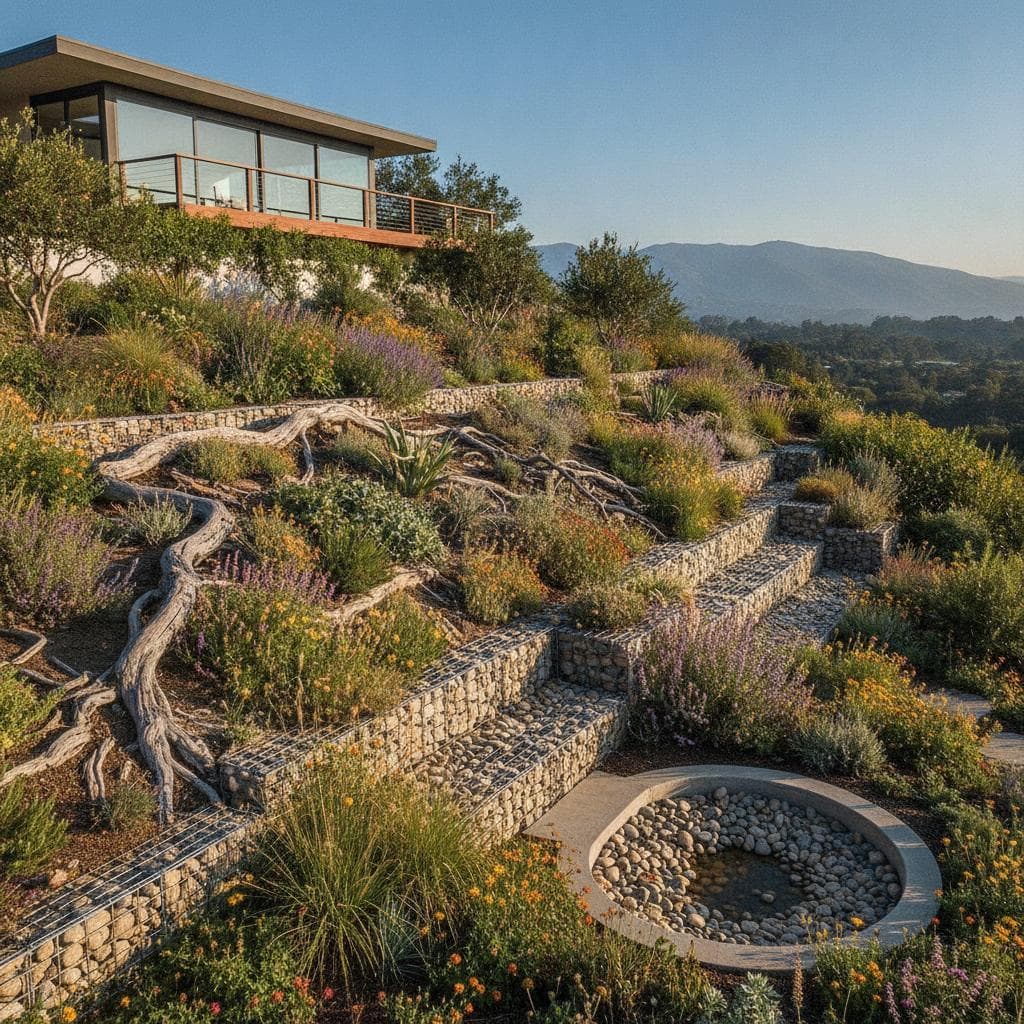
Living Retaining Walls: Plants Replace Concrete
A slope does not need to become a fortress of concrete to remain stable. With thoughtful grading, deep rooted plants, and well designed drainage, a living retaining wall can hold soil, soften hard contours, and support a healthier garden. This approach, often called bioengineering, combines structural planning with the natural strength of vegetation.
For California gardens, the benefits are practical. Living systems can reduce erosion, improve habitat, moderate surface temperatures, and blend naturally with patios, pathways, and outdoor rooms. They also require careful preparation. Plants cannot compensate for poor drainage, unstable soil, or a slope that exceeds its physical limits.
Start With the Slope
The first task is assessment, not planting. Walk the site after irrigation or rain and look for muddy channels, leaning trees, exposed roots, cracks, and areas where soil collects at the bottom. These clues reveal how water moves and where pressure may build.
Measure the height and length of the slope, then consider its soil type. Sandy soil drains quickly but may wash away easily. Heavy clay can hold together well until saturated, when it becomes dense and unstable. Fill soil requires special caution, since its composition and compaction may be inconsistent.
A gentle bank may be stabilized with layered planting and erosion control fabric. A taller or steeper slope may need terraces, timber, stone, geocells, or an engineered retaining system beneath the vegetation. Consulting a licensed landscape professional or structural engineer is sensible when the wall supports a home, driveway, fence, pool, or public walkway.
Design the Living Structure
Living retaining walls work through several connected systems. Roots bind soil. Fibrous roots knit the upper soil layers, while deeper roots help resist sliding. Stems slow runoff. Dense growth reduces the speed of water moving over the surface. Leaves soften rainfall. Foliage intercepts drops before they strike bare soil.
Terraces reduce pressure. Shorter planted steps are often more stable than one tall face. Drainage protects the slope. Gravel layers, perforated pipes, swales, and outlet points direct water away from vulnerable areas.
A useful design often includes low terraces with slightly sloped planting shelves. Each shelf should shed water safely rather than allowing it to pool behind a vegetated face. Coir logs, live stakes, biodegradable wattles, and woven fiber mats can provide temporary support while roots establish. These materials gradually decompose, leaving a rooted soil system in their place.
Choose Plants for Function
Select plants according to root behavior, climate, exposure, and maintenance capacity. A plant that looks attractive in a nursery pot may spread aggressively or fail during a dry California summer.
Good candidates often include California native bunchgrasses, which create dense, fibrous root networks and provide movement. Coffeeberry and toyon work well for larger slopes where deeper woody roots and wildlife value are desired. Coyote brush performs effectively in sunny, dry conditions when given enough room to spread.
Creeping ceanothus suits erosion control on well drained slopes. Yarrow and foothill penstemon add seasonal color without demanding constant irrigation. Deep rooted shrubs can be placed selectively to reinforce broader planting zones.
Avoid relying on one species. A mixed palette is more resilient when pests, drought, or unusual weather affect one plant. Place lower ground covers near the exposed face, medium shrubs on terraces, and larger species where their mature size will not overload the slope or interfere with foundations.
Manage Water With Precision
Water remains the central concern. Too little moisture prevents roots from establishing. Too much saturates soil and increases weight, pressure, and erosion.
Install drip irrigation in separate zones so new plants receive regular moisture while established natives can transition to less frequent watering. Keep emitters away from the wall edge, where concentrated water can create channels. Use mulch to reduce evaporation, but keep it clear of stems and avoid thick layers on steep surfaces that may slide.
Rain gardens or shallow swales at the top of a slope can intercept runoff. At the base, a level infiltration area may capture sediment and water before it reaches a patio. Every outlet should discharge onto a stable, protected surface. Water should never be allowed to pour freely over the face of a living wall.
Plan the Installation Sequence
Construction order affects long term performance. Begin by marking utilities, access routes, drainage lines, and the final grade. Remove invasive weeds without leaving bare soil exposed for long. Shape terraces carefully, compacting structural fill in controlled layers where needed.
Install drainage and temporary erosion protection before planting. Place larger structural materials first, then add soil, irrigation, and plants. Water each section thoroughly during installation so roots contact the surrounding soil. Protect fresh work from foot traffic, pets, and construction runoff.
Budget for establishment care. The first period requires weeding, irrigation adjustments, replacement planting, and inspection after heavy rain. Cutting corners during this phase can erase the savings gained by avoiding a conventional wall.
Maintaining Your Investment
Inspect the slope regularly for gullies, exposed roots, clogged outlets, leaning terraces, or sudden plant decline. Remove dead material when it blocks drainage, but avoid aggressive pruning that leaves soil exposed. Replant thin areas promptly with compatible species.
A living retaining wall should mature into a layered planting community, not disappear beneath one fast growing ground cover. Its success comes from cooperation between roots, soil, water, and thoughtful construction.
Moving Forward With a Greener Slope
Plants can replace much of the visual and environmental burden of concrete when site conditions support a living solution. Start with a professional assessment, design drainage before selecting plants, and choose species that match the slope's sun, soil, and water conditions.