
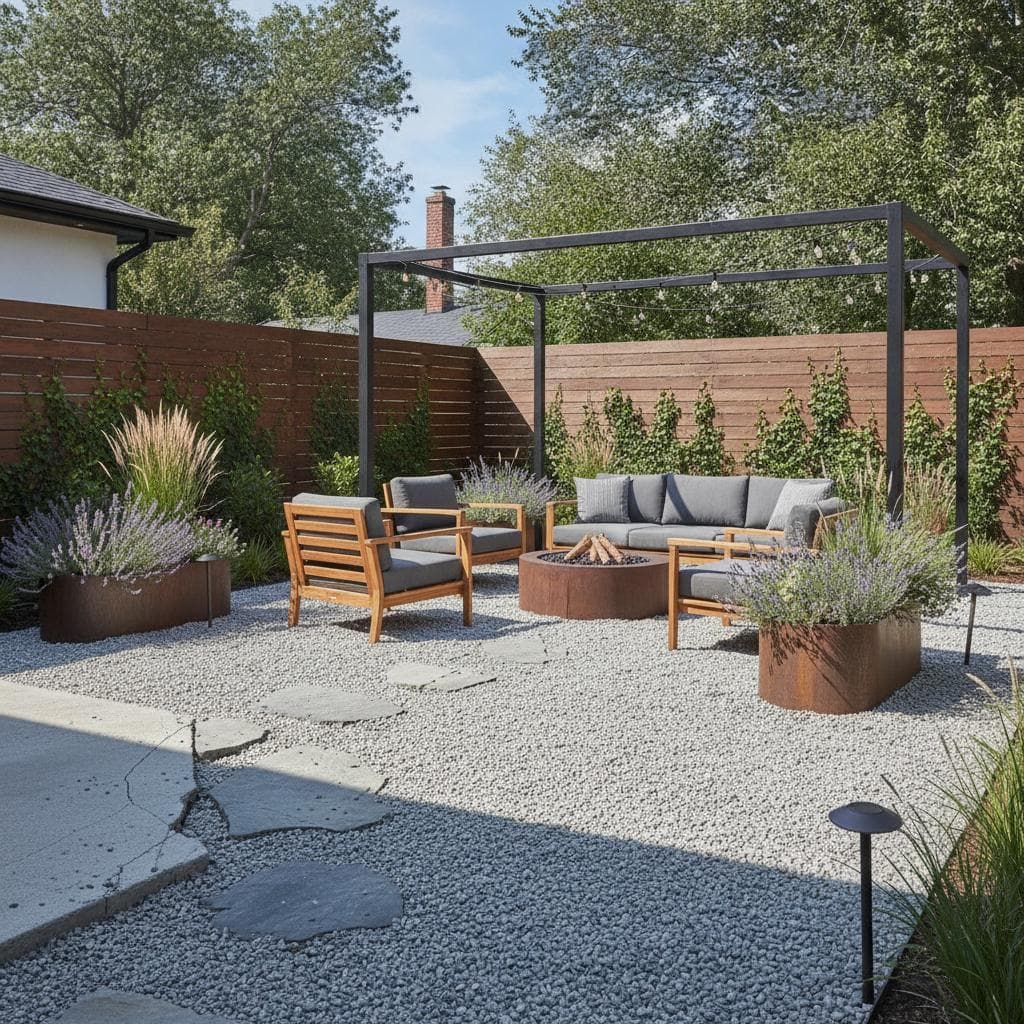
Gravel Patios: 2026's Affordable Concrete Replacement
Gravel patios are stepping into the spotlight as a smart, affordable, and design forward alternative to poured concrete. They bring texture and warmth to outdoor spaces while cutting costs and reducing environmental impact. For homeowners and professionals alike, gravel offers flexibility, drainage, and a relaxed character that fits both modern and traditional landscapes.
A gravel surface feels natural underfoot. It invites easy maintenance and adapts to almost any backyard setting. The surface breathes, drains, and ages gracefully. The appeal lies in its simplicity and its adaptability to budgets of all sizes.
At a Glance
- Location: Backyards, courtyards, and side yards
- Size: Scalable from compact patios to large entertaining zones
- Climate Zone: Works in temperate, arid, and coastal regions
- Project Goal: Affordable, permeable patio surface that replaces concrete
Define the Patio Edges
Gravel needs clear boundaries to feel intentional and to stay contained. Edging gives the surface structure and keeps loose gravel from spreading into lawns or beds. Steel, brick, or natural stone borders all work well.
A thin steel edge blends invisibly into the landscape and suits modern homes. Brick or cobblestone edging adds a classic touch that defines curves or transitions. Natural stone edges, such as limestone or bluestone, often enhance rural or cottage style gardens.
Good edging also helps with maintenance by separating gravel from mulch or turf. It prevents erosion and keeps the surface even after heavy rain. Edging is the unsung hero of gravel design. It keeps a loose surface looking crisp year after year.
A ribbon of steel edging outlines the patio curve and gives the gravel a clean, defined shape.
Design for Drainage and Comfort
One of gravel biggest advantages is its permeability. Water filters through easily. This helps reduce runoff and puddling. Still, the patio should be graded gently away from the house to keep moisture out of foundations.
Comfort matters too. For seating areas, keep gravel depth around two inches so chairs remain stable. In fire pit zones, use slightly coarser gravel to handle heat and foot traffic. For walking paths, finer gravel provides smoother footing and less shifting.
Gravel solves drainage problems naturally. It lets the landscape breathe without the hard edge of concrete.
A subtle slope directs water away from seating while maintaining a level dining surface.
Add Layered Lighting
Gravel surfaces glow beautifully under soft lighting. Because gravel reflects light, even modest fixtures can create an inviting atmosphere. Combine path lights, string lights, and lanterns to balance function and mood.
Low voltage path lights define edges and improve safety. String lights overhead or across a pergola cast a warm, diffuse glow that encourages lingering. Portable lanterns add flexibility and can shift with furniture arrangements.
Layering light sources avoids glare and highlights texture. Layered lighting extends evenings outdoors without harsh glare. It turns gravel into a softly sparkling surface.
Warm string lights reflect off pale gravel and create a calm evening space.
Keep Maintenance Simple and Regular
Gravel patios are low maintenance, but not maintenance free. Rake the surface occasionally to keep it level and redistribute displaced stones. Remove debris and fallen leaves to prevent organic buildup that encourages weeds.
Every few years, top up with fresh gravel to restore color and depth. For weed prevention, spot treat early rather than waiting for growth to spread. A leaf blower on low power can clear dust and fine debris without disturbing the stones.
Think of gravel like a living floor. A little attention keeps it beautiful for decades.
A quick raking revives texture and keeps the patio looking freshly installed.
Adapting Your Gravel Patio Over Time
A well planned gravel patio evolves over time. The surface settles, softens, and takes on a patina that reflects everyday use. Unlike concrete, it can be adjusted easily as needs change. Adding a new seating area or extending the edge requires only simple tools and extra gravel.
In practice, a gravel patio encourages slower living. The crunch underfoot, the gentle reflection of light, and the way it connects to the surrounding landscape all invite people outside.
For those seeking an affordable concrete replacement, gravel offers both practicality and charm. It is a material that proves outdoor design does not need to be expensive to feel considered.