
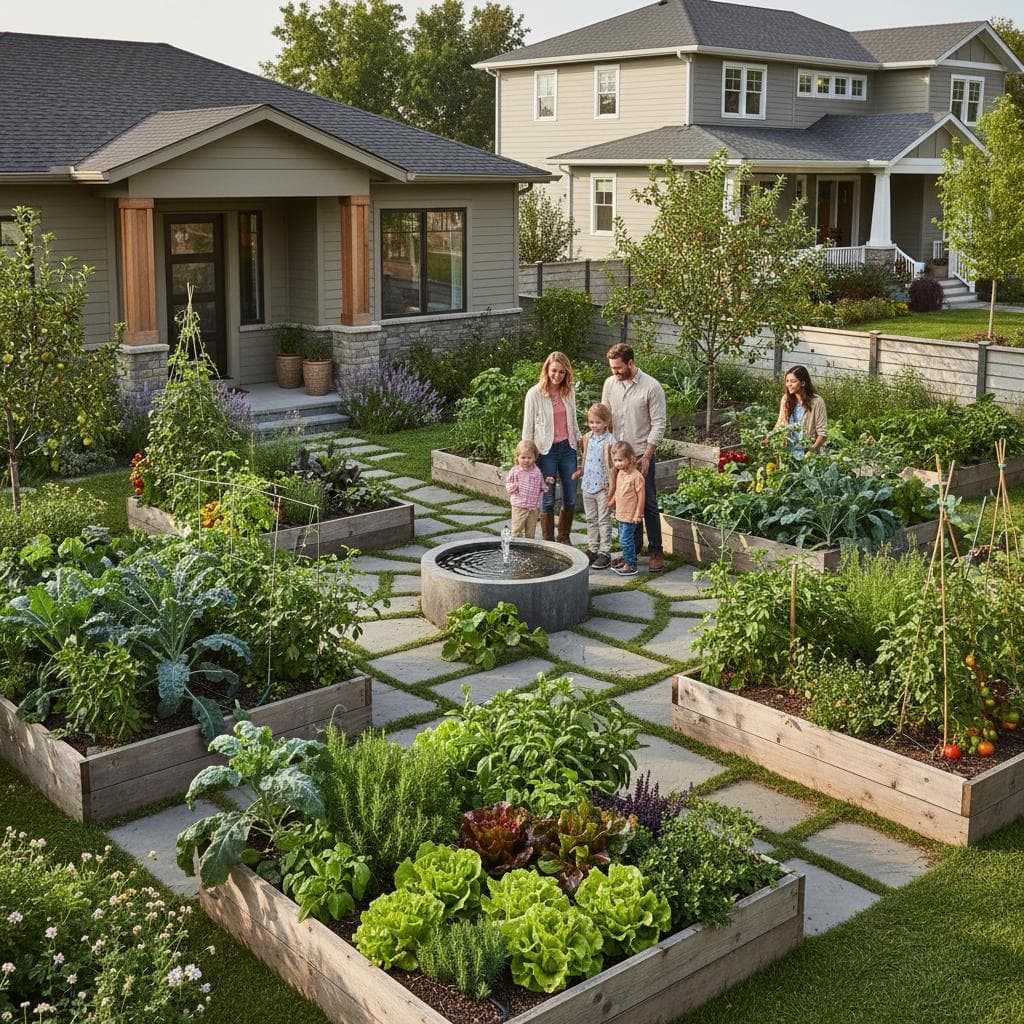
Front Yards Transform into Productive Edible Gardens
Front yards across neighborhoods are shifting from turf lawns to structured edible landscapes. Rows of vegetables, fruit trees, and mixed plantings now deliver food production alongside visual appeal. This change stems from interest in food security, reduced reliance on external supply chains, and spaces that serve multiple practical purposes.
Project Overview
- Location: Residential front yards of varying sizes
- Focus: Blend food crops with design elements that respect neighborhood standards
- Key outcomes: Higher yields, improved soil, and stronger local connections
Establish Clear Structure First
Begin with defined beds, paths, and edges to keep plantings orderly. Raised beds of cedar or corten steel organize crops and prevent soil compaction. Espaliered trees or low walls can mark boundaries while preserving sight lines to the street.
Materials should match the home exterior. Symmetrical planters filled with alternating kale and strawberries create rhythm without clutter. Defined geometry also directs water flow and simplifies harvest.
Combine Edibles with Ornamental Plants
Pure vegetable rows can appear stark. Pair crops with flowering perennials for texture and pollinator support. Purple basil next to lavender or chard beside ornamental grasses adds contrast and seasonal color.
Repeat leaf shapes or tones across beds to unify the view. A border of echinacea, thyme, and dwarf blueberries moves smoothly from curb to productive area. Pollinators drawn by ornamentals improve fruit set on nearby edibles.
Select Crops That Fit the Scale
Choose compact or vertical varieties for limited space. Dwarf fruit trees, columnar apples, and patio tomatoes yield well without blocking views. Train cucumbers or pole beans on matching trellises to create living screens.
Vertical supports add height and privacy while using minimal ground area. This approach meets visibility rules common in many neighborhoods.
Maintain a Tidy Appearance
Consistent upkeep signals intention. Apply uniform mulch to suppress weeds and retain moisture. Drip lines or soaker hoses reduce surface clutter. Low thyme edges along gravel paths keep beds accessible and neat.
Regular pruning and clean borders preserve curb appeal year round. A cared-for edible garden reads as landscape design rather than an afterthought.
Manage Water Through Design
Capture runoff with shallow swales planted in mint or rhubarb. Connect rain barrels to downspouts for irrigation supply. A small cistern can serve as both water storage and a focal point near the entry.
These features reduce erosion and provide reserves during dry spells. Visible water elements become part of the overall composition.
Incorporate Perennial Crops
Add asparagus, rhubarb, artichokes, and strawberries for lower annual effort. Fruit trees and berry shrubs supply the permanent framework. Layer plantings from canopy to ground cover to mimic natural systems and stabilize soil.
Perennials return each season, support pollinators, and reduce replanting needs. They anchor the design through changing weather.
Align with Neighborhood Standards
Match scale, color, and materials to surrounding homes. Use brick or cedar already present on the street to maintain continuity. Check local height and setback rules before planting tall crops.
A design that fits the block avoids conflicts and quietly shifts perceptions about productive landscapes.
Extend Use with Lighting and Rotation
Low-voltage path lights and warm accent fixtures on trees or trellises allow evening access. Rotate cool-season greens into summer peppers and then into cover crops to keep beds full and soil healthy. Each change brings fresh color and texture.
Foster Neighborhood Ties
Place a bench or low fence near the sidewalk to invite conversation. A small sign listing surplus herbs for neighbors encourages sharing. Surplus produce moves from private harvest to community resource.
Living with the Garden
Over successive seasons the soil improves and plantings become more self-sustaining. Daily harvests replace store trips. Neighbors exchange seeds and ideas. The front yard evolves from a response to food concerns into a steady source of local resilience and daily connection.