
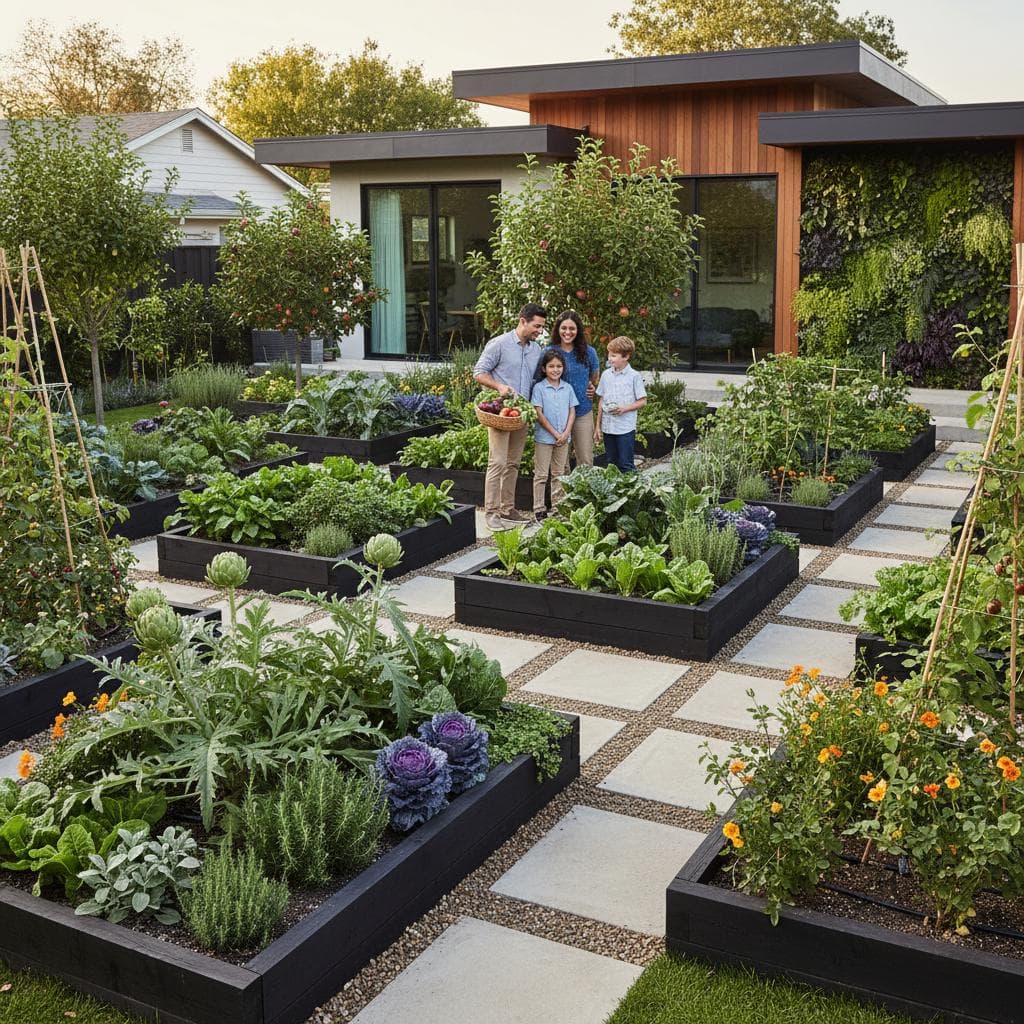
The Rise of Edible Front Yards in 2025
Emma and Luis Morales sought a front yard that extended beyond mere decoration. They aimed for a space that would sustain their family through fresh produce. Starting with raised beds along the walkway, their vision evolved into a full edible landscape incorporating herbs, fruit trees, and vegetables, all integrated smoothly into the surrounding neighborhood.
This transformation reflects a broader shift. In urban and suburban settings, residents are substituting grass lawns with gardens that yield food while preserving visual appeal. These edible front yards rival traditional ornamental designs in elegance, yet they provide the tangible benefits of homegrown bounty.
Turning a Lawn into a Productive Pantry
The Morales family's yard previously featured a sparse lawn demanding frequent irrigation and offering scant returns. They desired an area for cultivating herbs and vegetables, drawing in pollinators, and retaining a tidy street view. Landscape designer Rachel Kim of TerraForm Studio crafted a plan to convert the space into an efficient, aesthetically pleasing garden.
Balance guided the entire process, according to Kim. The family required productivity without sacrificing style, so each feature supports either crop growth or spatial harmony. The layout establishes order through defined zones that adapt to the yard's conditions.
Structure forms the foundation. A low stucco wall outlines the front boundary, serving also as seating for visitors and children. Within this frame, stone-bordered raised beds divide the area into distinct zones. These beds mix edible plants with complementary ornamentals, grouped by compatible water and light requirements.
Selecting Materials for Longevity and Efficiency
Choices prioritized resilience and ecological benefits throughout the project.
- Bed borders: Locally sourced limestone in a subtle gray tone that echoes the home's stucco exterior
- Mulch layer: Shredded redwood bark to stabilize soil temperatures and curb moisture loss
- Water delivery: Buried drip irrigation linked to an automated controller for precise usage
- Illumination: Energy-efficient LED path lights that accentuate bed outlines and welcome nighttime guests
The selection of plants focuses on varieties that endure dry conditions. Sun-loving options such as Mediterranean herbs, fig trees, and olive shrubs flourish with limited watering, while shade-tolerant greens occupy spots nearer the house. This mix ensures steady output year-round with reduced upkeep.
Functional Design Elements
Strategic Layering for Maximum Yield
Kim avoided conventional row planting in favor of layered arrangements. In each bed, sturdy plants like kale and tomatoes anchor the core, flanked by mid-level herbs, with trailing varieties such as oregano cascading toward the paths. Such layering boosts output per area while tempering the beds' rigid lines.
Harmonizing Colors and Textures
Silver-hued leaves from sage and artichokes contrast with the rich greens of Swiss chard and the violet shades of basil. This palette maintains unity across seasons, as Emma notes. "It resembles a deliberate garden rather than scattered crops," she explains. "The intent shines through, regardless of harvest cycles."
Efficient Water Strategies
The irrigation setup, combined with mulch, cuts water consumption by over 50 percent versus the prior lawn. Beds constructed with breathable foundations minimize runoff and promote healthy root development. A compact rain barrel by the entrance captures rooftop runoff for supplemental seedling care.
Effortless Care with Substantial Returns
Plants chosen for local climate compatibility demand minimal intervention, freeing the family for harvesting over weeding. Weekends yield fresh herbs, salad greens, or ripe fruits. The organized design simplifies tasks, with accessible paths eliminating the need for lawn equipment.
Extending the Vision Beyond One Yard
Edible front yards gain momentum nationwide. Once wary of altering manicured lawns, property owners now embrace designs where food production enhances rather than disrupts refinement. Professionals treat edible elements as integral to composition, not add-ons.
Mateo Ruiz, a landscaper at Greenline Landscape Co., reports increasing inquiries. "Clients discover that gardens yielding edibles can match any formal scheme in sophistication," he states. "We apply principles of balance, pattern, and variety, simply with nutrient-providing flora."
Community rules that formerly restricted vegetable plots are adapting to permit well-organized edible setups. Success hinges on disciplined presentation: precise edging, outlined walkways, and thoughtful height distribution create a unified, welcoming appearance.
Essential Steps for Your Edible Front Yard
- Establish the skeleton first. Outline bed contours and access routes prior to any planting. This framework maintains clarity amid seasonal shifts.
- Blend edibles with accents. Integrate herbs and veggies alongside blooms that draw beneficial insects. Options like marigolds, sweet alyssum, and salvia provide vibrancy and ecological support.
- Scale appropriately. Position vertical growers such as corn or sunflowers at rear or lateral edges to preserve views and avoid dominating the entrance.
- Build in verticality. Layer from thyme as ground cover through mid-tier greens to compact trees or bushes for dimension and efficiency.
- Schedule crop successions. Refresh the space with seasonal swaps, like shifting from summer tomatoes to autumn brassicas or winter tubers.
- Incorporate watering infrastructure upfront. Drip networks conserve resources and shield foliage from disease.
- Uphold boundaries. Crisp edges and groomed perimeters foster neatness, easing integration into residential norms.
Integrating the Garden into Everyday Life
Several months post-installation, the Morales household views their front yard as an essential routine element. Mornings involve inspecting ready-to-pick herbs. The kids graze on berries en route to school. Passersby pause for advice or to trade starts.
The vitality of the space stands out most to Emma. "We sought beauty with utility, and now we enjoy that fully." As adoption grows, curb appeal redefines itself through landscapes that prioritize refinement, stewardship, and individual expression. Edible front yards have transitioned from novelty to norm.