
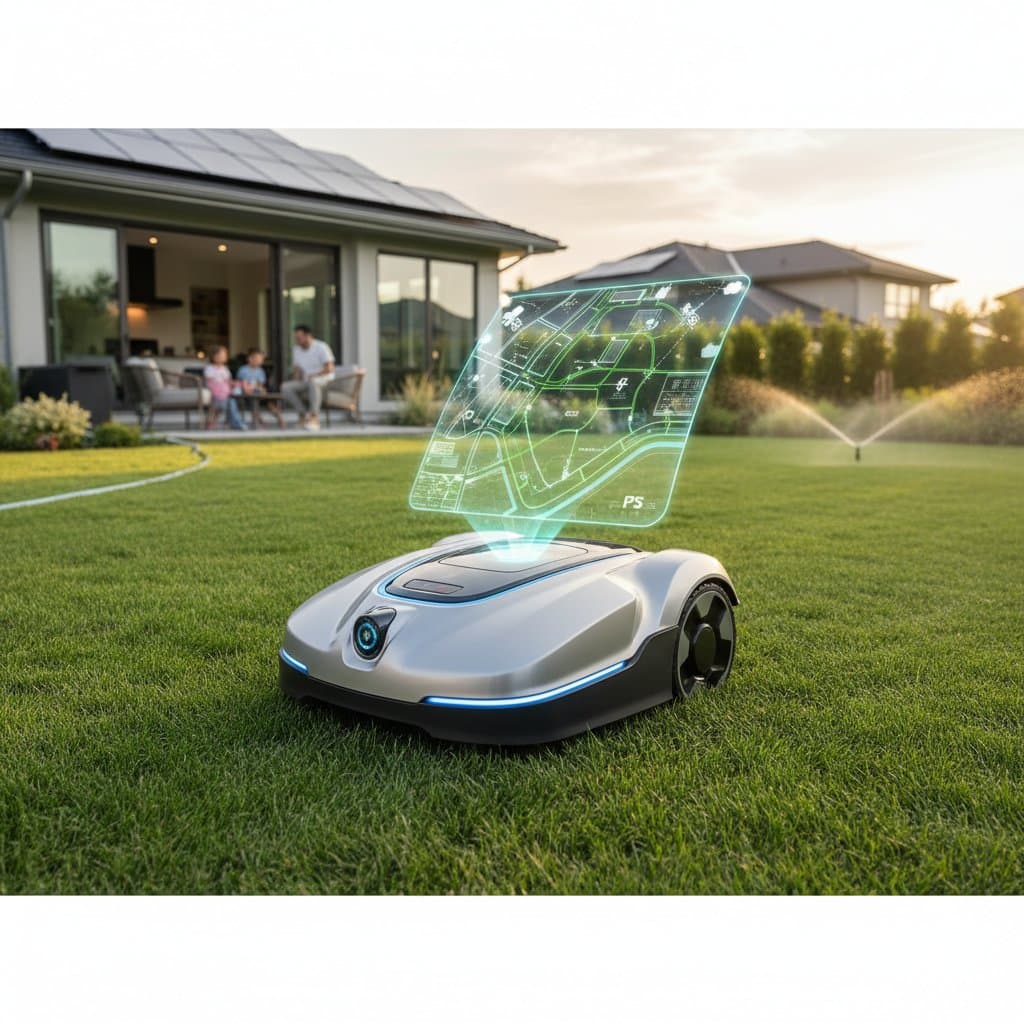
GPS Smart Mowers Reduce Lawn Care Time by 60 Percent Through Intelligent Mapping
Homeowners once spent hours pushing mowers across uneven terrain each weekend. GPS smart mowers change that reality by navigating yards autonomously with satellite precision. These devices create detailed maps of properties, adjust to grass growth patterns, and maintain lawns to professional standards with little human intervention.
Satellite guidance enables these mowers to follow optimized paths, avoiding obstacles and ensuring even coverage. The result includes a 60 percent reduction in total lawn care time compared to traditional methods. Quiet motors and efficient batteries support operation at any hour, while consistent cuts promote denser, more resilient grass.
Key Overview
Suitable Locations: Residential yards in suburban and urban settings
Applicable Yard Sizes: From compact lots to expansive properties
Compatible Climates: Temperate regions and warmer zones with regular grass growth
Primary Objective: Minimize maintenance efforts while enhancing lawn appearance and health
Map the Yard for Precision Navigation
The foundation of effective GPS mowing begins with comprehensive yard mapping. Users install boundary wires or rely on wireless signals to define the mowing area. The mower then uses GPS satellites to generate a digital blueprint, identifying flower beds, trees, and pathways.
This mapping process takes under an hour for most setups. Once complete, the device stores the layout in its memory, allowing it to revisit zones systematically. Such accuracy prevents missed spots and reduces wear on the equipment.
Core Advantage: Ensures complete coverage without random wandering.
Expert Perspective: Detailed mapping supports tailored navigation that adapts to seasonal changes in yard layout.
Practical Application: For a half-acre lot with irregular borders, the mower plots efficient routes around patios and shrubs, completing the task in sessions as short as 90 minutes.
A technician notes, "Mapping turns a complex yard into a simple grid for the machine, saving hours over manual efforts."
Automate Schedules for Consistent Results
After mapping, programming the mower for regular operation becomes straightforward. Mobile applications allow users to set mowing frequency, blade height, and active times based on grass type and weather data. The device charges itself at a base station and resumes work without prompting.
Schedules can adjust dynamically; for instance, the system increases frequency during rapid spring growth. This automation maintains uniform grass length, preventing overgrowth that invites pests or weeds.
Core Advantage: Preserves turf vitality through regular, light trims.
Expert Perspective: Shallow, frequent cuts enhance root development and nutrient uptake in grasses like Bermuda or rye.
Practical Application: Program the mower for alternate-day runs on cool-season turf, achieving a velvety finish that withstands foot traffic.
A landscape professional observes, "Automation ensures the lawn appears freshly maintained, regardless of travel schedules or busy weeks."
Integrate with Irrigation for Optimal Turf Care
Pairing GPS mowers with smart irrigation systems elevates lawn health further. Controllers communicate via Wi-Fi to synchronize activities, delaying mowing after watering events until the surface dries. This prevents wet clippings from sticking and damaging blades.
Integration also optimizes resource use; sensors detect soil moisture to align cuts with dry conditions. Homeowners gain insights into water patterns through app notifications, refining overall yard management.
Core Advantage: Safeguards grass quality and eases mechanical strain.
Expert Perspective: Timed coordination minimizes disease risk from excess moisture while promoting even drying.
Practical Application: After an evening irrigation cycle, the mower waits four hours before starting, yielding clean cuts on dewy mornings.
An installer comments, "Linking mowing and watering creates balanced care that keeps turf robust with less oversight."
Incorporate Safety Sensors for Peaceful Operation
Safety features define modern GPS mowers, with ultrasonic and infrared sensors detecting objects in real time. The blades halt upon approaching pets, children, or movable items like lawn chairs. Perimeter signals keep the device within defined boundaries, avoiding neighbor properties.
These safeguards enable operation during family gatherings or quiet evenings. Anti-theft measures, including GPS tracking and PIN codes, protect the investment when not in use.
Core Advantage: Provides secure, interruption-free performance around daily life.
Expert Perspective: Sensor technology allows flexible scheduling without constant supervision.
Practical Application: In a pet-friendly yard, the mower navigates around a lounging dog, pausing only if approached closely.
A designer remarks, "Safety integration lets families coexist with automated tools, expanding usable outdoor time."
Achieve Sustainability Through Efficient Design
GPS mowers excel in eco-conscious operation by minimizing redundant paths and energy waste. Precise routing cuts battery drain by up to 50 percent versus older random models. Solar-assisted charging options extend runtime in sunny climates.
Blade designs shear grass cleanly, returning nutrients to the soil as mulch. This natural fertilization reduces the need for synthetic additives, supporting biodiversity in the yard.
Core Advantage: Lowers operational costs and environmental impact.
Expert Perspective: Optimized paths align with sustainable landscaping principles, conserving resources long-term.
Practical Application: Weekly sessions on a quarter-acre plot consume energy equivalent to a few hours of LED lighting, far below gas-powered alternatives.
A specialist states, "Efficient mowing contributes to greener practices that benefit both the yard and the planet."
Daily Integration of Automated Mowing
GPS smart mowers blend seamlessly into routines once established. They sustain optimal grass heights, manage edge growth with optional trimmers, and adapt to weather via connected forecasts. Homeowners redirect saved time toward gardening or relaxation.
Maintenance involves simple tasks: sharpening blades seasonally and clearing debris from sensors. Firmware updates refine algorithms, improving obstacle avoidance over time. The technology evolves with the yard, responding to new plantings or terrain shifts.
Consistent use yields thicker turf resistant to drought and wear. Without the labor of traditional mowing, yards thrive under automated precision, delivering enduring aesthetic and functional value.