
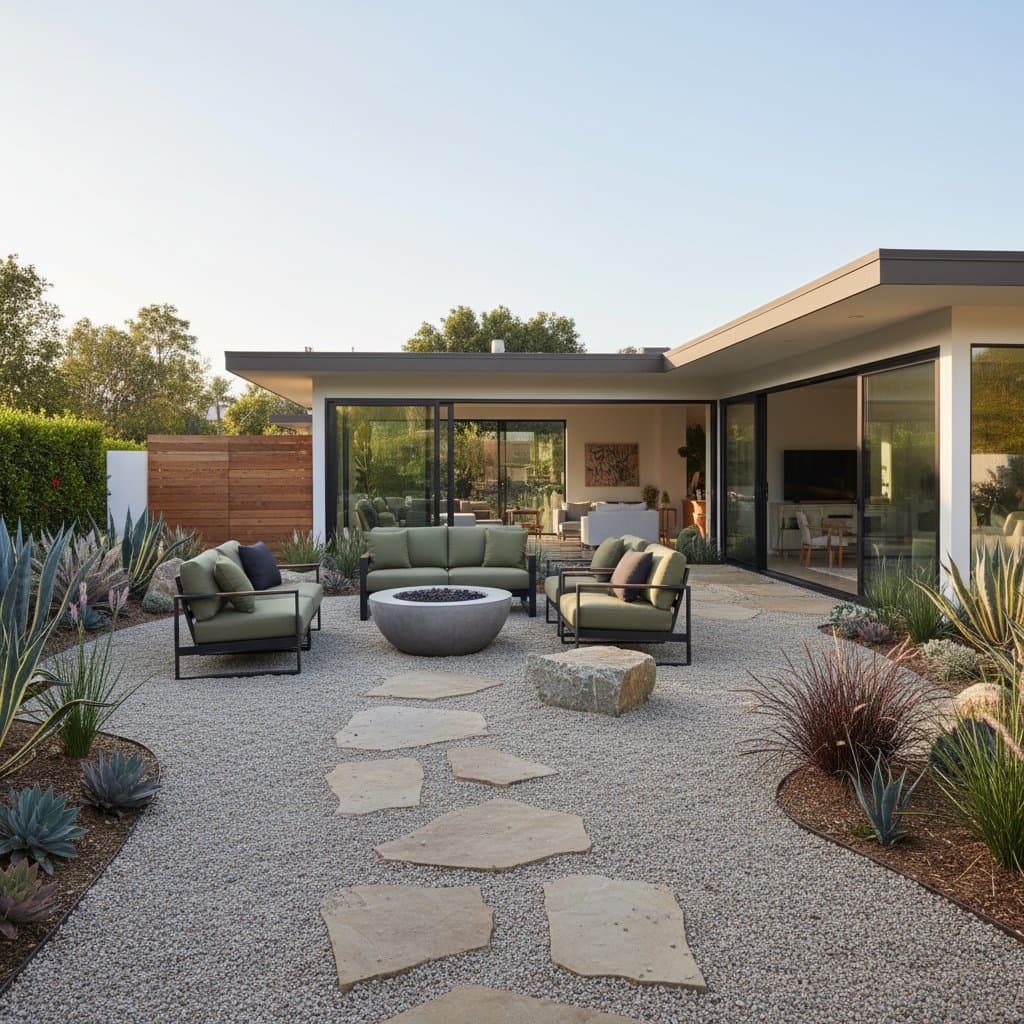
Why Gravel Patios Lead Outdoor Trends Over Wood Decks in 2026
Homeowners increasingly select gravel patios over traditional wood decks. This preference aligns with demands for sustainable, cost-effective, and low-maintenance outdoor areas. Gravel patios achieve these objectives while integrating elegantly with California's varied environments. They support water-efficient landscapes and suit diverse design preferences, creating surfaces that appear organic, prove economical long-term, and harmonize in coastal or inland settings.
Core Attractions of Gravel Patios
Gravel patios draw inspiration from European courtyards, desert landscapes, and rustic gardens. Their renewed popularity stems from alignment with contemporary homeowner needs. Individuals seek welcoming outdoor areas that require minimal ongoing care. Gravel embodies this approach by maturing attractively without the need for sealing, sanding, or staining.
Gravel patios permit natural drainage, prevent cracking, and eliminate repainting requirements. They withstand California's arid conditions and intermittent rains effectively. The material's texture provides visual depth, and its subtle crunch underfoot conveys a serene, natural ambiance distinct from wood. These attributes render gravel patios functional and inviting on multiple levels.
Maintenance Comparison
Wood decks offer inherent warmth, yet they entail extensive upkeep. Premium wood demands routine cleaning, sealing, and checks for damage. Ultraviolet exposure discolors the surface and degrades the structure. Excess moisture promotes decay or distortion, often necessitating expensive fixes or complete overhauls.
Gravel patios demand far less attention. Periodic raking maintains an even surface. Refreshing with additional gravel every several years restores freshness. Weeds yield to simple extraction or a vinegar application. Without boards to renew, fasteners to secure, or coatings to restore, gravel patios allow owners to prioritize enjoyment over labor.
Installation Process and Expenses
Gravel patio installation proves simple relative to deck building. Begin by grading the site, installing a weed-suppressing fabric, and compacting a stable base. Spread and level the gravel to the desired depth, then secure borders for containment. Many owners finish this project swiftly, often in days rather than weeks.
Gravel materials remain budget-friendly, unlike volatile lumber prices. No framing, fittings, or approvals typically apply. Reduced labor further lowers costs, freeing resources for accessories like seating or greenery. This efficiency suits those navigating financial constraints.
Endurance and Lifespan
Properly built gravel patios endure for decades. The material resists decomposition and corrosion while accommodating thermal fluctuations. Heavy traffic leaves it resilient; uneven spots receive straightforward releveling. Wood decks, however, suffer when isolated sections weaken the overall integrity.
Gravel's adaptability stands out. Soil movement or root expansion prompts minor shifts rather than fractures. This resilience suits areas with seasonal ground changes. Modifications prove easy: adjust borders and incorporate more gravel to resize or reshape the area.
Sustainability and Ecological Benefits
California residents prioritize eco-conscious choices. Gravel patios align with green practices by facilitating water absorption, minimizing erosion, and aiding aquifer replenishment. Sourced locally, they cut transport-related pollution.
Wood decks frequently depend on non-sustainable timber unless reclaimed or certified. Pressure-treated options release chemicals into the earth gradually. Gravel remains neutral and secure near gardens, edibles, or recreation zones. Combined with water-wise plants, it fosters a unified, planet-friendly setting.
Usability and Daily Comfort
Frequent users value comfort in outdoor designs. Gravel may seem uneven, but selected types like compacted decomposed granite or rounded pea gravel yield a solid base. Furniture anchors firmly, and skin acclimates to the gentle feel. It retains less heat under sun than synthetics or deep-toned wood, enhancing afternoon usability.
Gravel patios promote casual vibes that match California's al fresco culture. Envision gatherings around a central fire feature, illuminated by overhead lights, free from spill concerns. The surface absorbs activity smoothly and evolves attractively within its surroundings.
Aesthetic Versatility and Customization
Gravel patios adapt to varied styles. Steel or concrete frames lend a modern edge, while native flora evokes rusticity. Options span earthy tones to neutral shades. Blending sizes forms patterns or accents effortlessly.
Scalability enhances appeal. Compact enclosures or vast gathering spots benefit equally. Gravel complements hardscapes, elevated beds, or fountains. Designers employ it to link zones, from lounging to cultivation, blending seamlessly unlike elevated decks that isolate from terrain.
Resolving Typical Objections
Comfort and tidiness concern many considering gravel. Opt for fine particles like quarter-inch granite or pea gravel for stable footing. Firm edging contains spread, and a solid sublayer avoids depressions.
To manage debris, position entry mats or tiled thresholds. Routine smoothing prevents settling. These practices ensure neatness with little investment.
Climate Adaptability
Wood reacts to weather variations, causing gaps or noises over time. Gravel sidesteps such problems. Rain percolates rapidly, avoiding standing water. In arid periods, occasional misting controls dust while keeping temperatures moderate.
In fire-prone zones, gravel's non-flammable nature acts as a buffer. This safety appeals to those in elevated or remote locations.
Incorporating Amenities
Gravel accommodates diverse setups. Durable furnishings in metal, rock, or timber integrate well. Position slabs under supports for extra steadiness. Structures like cooking stations or shade covers require no elaborate bases.
Illuminate with embedded low-energy fixtures along routes. Edge with resilient flora such as agaves, sedums, or herbs needing scant irrigation. This arrangement yields a purposeful, effortless space that endures.
Long-Term Financial Advantages
Gravel patios excel in sustained economics. Upfront expenses may mirror basic decks, but upkeep costs plummet. Skip yearly treatments, wood swaps, or overhauls. Functionality persists with occasional updates.
Long-term residents gain reliable outdoor foundations. Sellers attract buyers drawn to efficient, green features.
Embracing Gravel in Everyday Outdoor Life
Installed gravel patios weave into routines seamlessly. They facilitate interaction with subtle sounds of use. Rain integrates softly, and the area molds to inhabitants over seasons.
Transitioning owners report reduced stress from care, greater adaptability, and deeper landscape unity. Gravel honors simplicity, strength, and environmental accord without diminishing quality.