
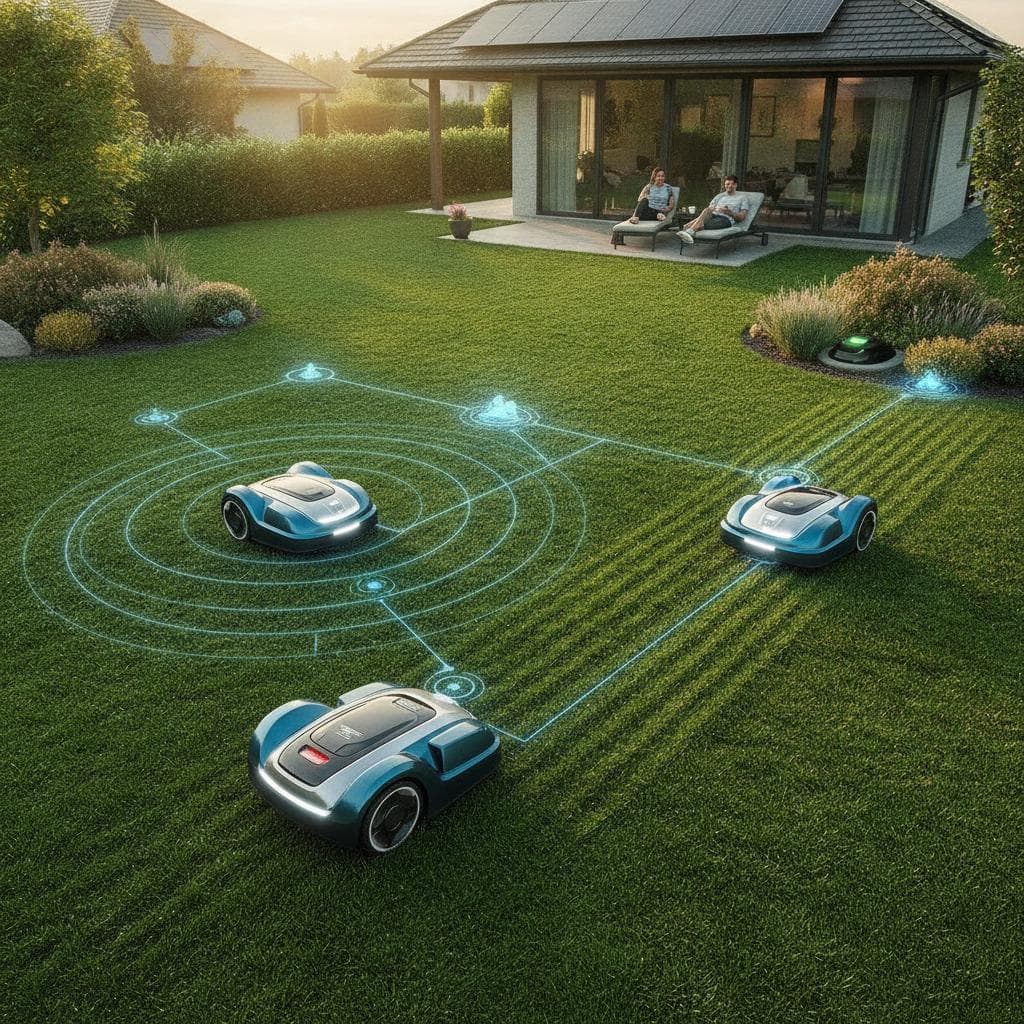
GPS-Powered Robotic Mowers Cut Lawn Maintenance by 90 Percent
When Michael and Dana Harper purchased their suburban home, they sought a lawn with a professionally manicured appearance. They did not want to spend every weekend operating a mower. Between professional obligations, school events, and travel, they preferred to use outdoor time for relaxation rather than routine chores. After consulting landscape designer Erin Clarke of IntePra Gardens, the couple installed a GPS-powered robotic mowing system. This installation reduced their lawn maintenance time by nearly 90 percent.
Project Overview
- Who lives here: Michael and Dana Harper, two children, and a Labrador retriever
- Location: Suburban neighborhood outside a mid-sized city
- Property size: Half-acre lot
- Lawn area: Approximately 8,000 square feet
- Designer: Erin Clarke, IntePra Gardens
- Installation contractor: GreenEdge Landscape Systems
- Technology used: GPS-guided robotic mower with boundary mapping and app control
- Goal: Reduce manual lawn care while maintaining professional-quality results
System Operation
The GPS-powered robotic mower operates similarly to a self-driving vehicle for the yard. It integrates satellite positioning, onboard sensors, and smart connectivity. High-accuracy satellite data establishes mowing zones and restricted areas. Ultrasonic sensors identify obstacles such as toys, hoses, or pets. Adaptive cutting patterns prevent repetitive tracks and reduce soil compaction. Users manage schedules, battery levels, and progress through a mobile application. The mower returns to its charging dock automatically and resumes operation as needed.
Clarke observed that the mower learns from its surroundings to deliver consistent results without manual intervention.
Installation and Supporting Elements
The project extended beyond mower placement to create a cohesive lawn system. The charging dock rests on a concealed concrete pad behind ornamental grasses, with underground conduit protecting power lines. Pavers provide maintenance access near the dock without turf damage. A blend of tall fescue and perennial ryegrass offers durability under daily operation. Organic compost applications followed soil testing, and clippings remain on site to recycle nutrients. The irrigation system links to the same application for coordinated scheduling based on mowing and weather data.
Clarke emphasized that soil conditions, drainage, and planting edges must align for optimal robotic mower performance.
Time and Cost Comparison
Prior to installation, the Harpers dedicated nearly four hours weekly to mowing and trimming. They now spend fifteen to twenty minutes reviewing the application and clearing filters. This change reflects an approximate 90 percent reduction in active maintenance time. Energy costs remain lower than previous fuel expenses. Noise levels stay minimal, and emissions drop to zero. Natural mulching from clippings supports a 25 percent reduction in fertilizer needs.
Michael noted the unexpected efficiency and consistent appearance of the lawn.
Adoption Across Property Types
Landscapers and property managers apply GPS-powered mowers to larger sites including campuses and parks. Residential users value the convenience and uniform results that match professional crews. Electric operation supports sustainability by eliminating fossil fuels and minimizing landfill waste. Models accommodate properties from small urban lots to multi-acre estates. Applications track history, weather, and growth rates, with some units connecting to broader smart home platforms.
Daily Experience After Installation
The Harpers now allocate weekends to leisure on the patio or with family activities instead of yard work. The lawn maintains uniform height and color throughout the season. Children use the space for play without concerns over uneven growth. Clarke attributes success to the integration of technology within a complete landscape plan that includes soil health and irrigation.
Homeowners seeking reduced maintenance can achieve professional outcomes through this approach. Automation supports rather than replaces engagement with the outdoor space, allowing more time to observe and enjoy seasonal changes.