
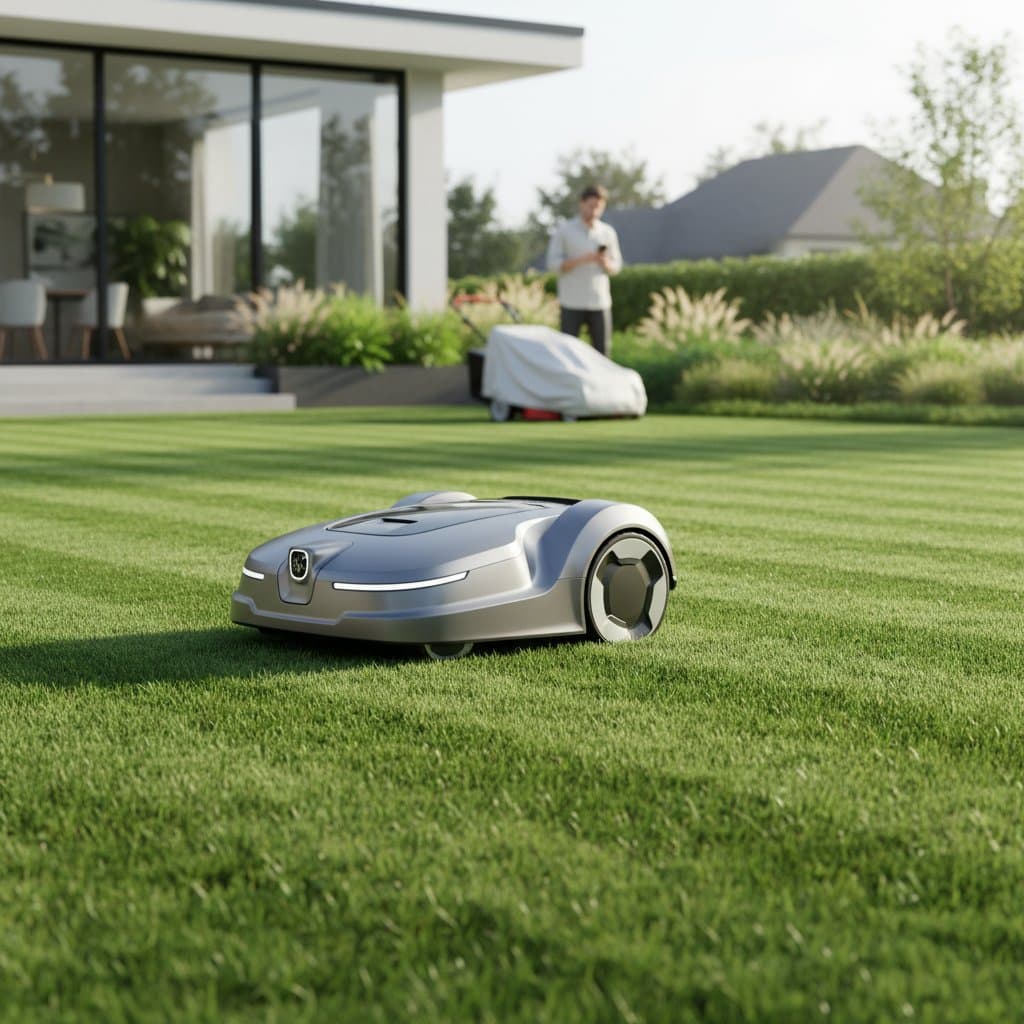
Why Robotic Mowers Make Manual Lawn Care Obsolete
A pristine lawn represents dedication and aesthetic appeal. Traditional mowing, however, often demands significant time and physical effort, disrupting leisure activities. Robotic mowers alter this dynamic entirely. They provide reliable, silent outcomes that liberate homeowners from the labor and clamor of push mowers. Leading models integrate exact cutting mechanisms, sophisticated sensors, and intelligent routing, rendering conventional methods antiquated.
At a Glance
- Location: Functions effectively in diverse climates and terrains
- Size: Accommodates everything from compact patios to expansive suburban yards
- Climate Zone: Thrives in humid, arid, or transitional environments
- Project Goal: Streamline upkeep and enhance turf vitality via automation
1. Precision Cutting for Uniform Results
Robotic mowers employ razor-sharp blades that slice grass at optimal heights, typically between one and four inches, depending on the model and turf type. Unlike manual mowers that may leave uneven patches due to operator fatigue or terrain challenges, these devices maintain a consistent cut across the entire area. The mulching function finely chops clippings, which then nourish the soil as they decompose.
A turf expert observes, "The precision of robotic blades promotes denser growth and reduces weed invasion by eliminating scalping or overcutting."
Homeowners notice thicker, greener lawns within weeks of consistent use. This method avoids the ruts and bare spots common with heavy manual equipment. For best results, select a model with adjustable height settings to match seasonal grass needs.
Visual Callout: "Blade assembly hovers just above the turf, delivering clean cuts without tearing delicate blades."
2. Smart Navigation and Mapping
Contemporary robotic mowers utilize boundary wires or digital mapping to comprehend yard configurations. Certain advanced units incorporate GPS and artificial intelligence to record mowing areas and evade obstacles. This approach minimizes initial configuration and operational disruptions.
A landscape professional notes, "After the robot familiarizes itself with the property, it navigates deliberately. It avoids overlooking edges or overlapping paths inefficiently."
The mapping technology enables the creation of optimized paths that conserve energy and extend battery duration. It manages intricate designs, including winding garden borders or stone walkways, without collisions. Consequently, users achieve smoother trims and lessen turf compaction from redundant traversals.
Visual Callout: "Compact unit maneuvers around paver stones, steering clear of floral edges with pinpoint accuracy."
3. Safety Features and Obstacle Avoidance
Safety ranks as a primary consideration in robotic mower design. Built-in sensors detect objects such as pets, children, or garden tools, prompting the machine to halt or reroute instantly. Lift detection immediately stops the blades if the unit encounters interference, preventing accidents.
An installer comments, "These safeguards make robotic mowers family-friendly. They respond faster than human reflexes in crowded yards."
Many models include anti-theft measures like PIN codes, GPS tracking, and alarm systems. Blades retract upon impact, ensuring no harm to wildlife or property. Homeowners appreciate the peace of mind, particularly in households with young children or animals that roam freely.
Visual Callout: "Infrared sensors scan ahead, pausing operation as a toy enters the mowing zone."
4. Adaptive Scheduling and Weather Response
Intelligent mowers link to household Wi-Fi via companion applications, enabling remote control of cutting timetables. The device modifies its operations according to grass development or meteorological data. Upon sensing precipitation, it retreats to its base and reactivates afterward, avoiding muddied ground and equipment wear.
A turf specialist explains, "Permitting the mower to determine optimal times fosters superior grass conditions. It refrains from operating on saturated soil or immature blades."
This responsive capability sustains even appearances without constant supervision. It accommodates fluctuations, such as rapid vernal expansion or midsummer slowdowns. Users monitor activity via smartphone, refine perimeters, or designate exclusion areas for events.
Visual Callout: "App interface displays live trajectory as moisture detectors initiate a programmed delay."
5. Quiet Operation and Convenience
Unlike gas-powered alternatives that generate disruptive noise levels exceeding 90 decibels, robotic mowers operate below 60 decibels, comparable to a soft conversation. This hushed performance allows use at any time without disturbing neighbors or family.
A homeowner shares, "The silence lets me work from home while the lawn receives attention—no interruptions or complaints."
Convenience extends to effortless docking and recharging, often overnight, ensuring readiness for daily tasks. Models with modular designs facilitate easy transport and storage during off-seasons. This blend of discretion and simplicity integrates seamlessly into busy lifestyles.
Visual Callout: "Unit silently traverses the yard at dawn, blending into the morning routine unnoticed."
6. Environmental Benefits That Accumulate
Fuel-based mowers release pollutants and amplify auditory disturbances. Battery-operated robotic versions perform more frequent, lighter trims that benefit grass roots by minimizing strain. The resulting micro-clippings break down rapidly, replenishing soil nitrogen naturally.
A horticulture authority states, "Recycling organic matter on-site completes the nutrient cycle in lawn management."
This process diminishes reliance on chemical fertilizers and reduces visits to suppliers for enhancements. Lawns develop greater resilience to dry spells and require less water overall. Integrating with weather-adaptive sprinklers or photovoltaic rechargers establishes an almost autonomous green space.
Visual Callout: "Base station concealed among decorative shrubs harnesses sunlight to energize the device."
7. Simple Installation and Maintenance
Setting up a robotic mower involves laying perimeter wires or calibrating virtual boundaries, a process that takes under two hours for most users. Apps guide through steps, from docking station placement to initial mapping runs. No specialized tools prove necessary.
A service technician advises, "Basic cleaning of wheels and sensors every few weeks keeps performance optimal—far simpler than servicing engines."
Routine care includes sharpening blades biannually and inspecting for debris. Durable components withstand years of use with minimal intervention. This low-maintenance profile appeals to those seeking reliability without technical expertise.
Visual Callout: "User app tutorial overlays boundary setup on a smartphone screen for straightforward installation."
8. Long-Term Cost Efficiency
Initial purchases for robotic mowers range higher than basic manual units, yet lifetime costs decline sharply. Power consumption remains low, eliminating fuel and lubricant expenses. Blades endure for several months, with upkeep limited to sensor wipes and surface cleanses.
A builder remarks, "Owners often find the reduced demands astonishing relative to gasoline counterparts."
Regular trimming curbs excessive growth that harms sod or burdens watering setups. Diminished fixes, labor, and improved vitality yield gradual returns. For those outsourcing cuts, break-even occurs within one season.
Visual Callout: "Docked mower awaits its schedule beside the power source, free of gasoline containers."
Embracing Effortless Lawn Vitality
Technology complements rather than supplants personal involvement in yard care. By automating tedium, it empowers individuals to focus on innovative planting or outdoor enjoyment. Robotic mowers foster thriving landscapes that enhance property value and well-being with sustained ease.