
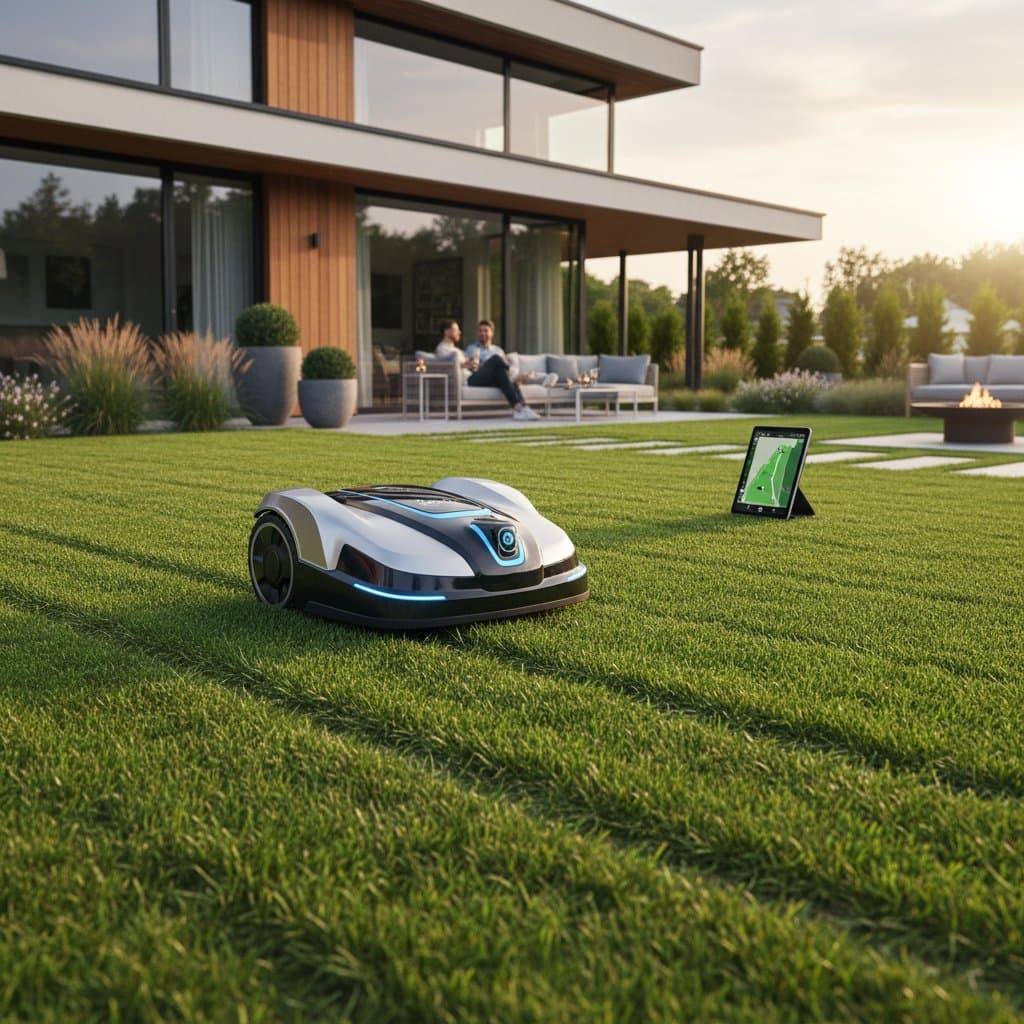
GPS Smart Mowers Slash Lawn Time by 60 Percent
A perfectly trimmed lawn once required hours of manual effort with a push mower. GPS smart mowers transform this routine. These robotic devices reduce mowing time by up to 60 percent and produce a more uniform finish. They navigate with pinpoint accuracy, memorize yard boundaries, and operate quietly while owners pursue other activities.
At a Glance
- Location: Suitable for residential and commercial lawns
- Size: Ideal for small to large properties with clear boundaries
- Climate Zone: Operates effectively in regions with seasonal grass growth
- Project Goal: Minimize manual labor, enhance cut quality, and conserve time
1. Map the Yard for Precision
GPS-guided mowers depend on digital mapping to comprehend the lawn's layout. After initial mapping, the mower adheres to predefined routes that minimize overlap and eliminate missed areas. This precision reduces overall mowing duration and prevents irregular patterns.
A landscape technician noted, "Smart mapping ensures efficiency. The mower follows a deliberate plan without unnecessary movements or erratic turns." The outcome includes a uniform cut throughout every section, including around curved flower beds or narrow pathways.
For optimal design, establish clear boundaries. Use edging materials such as steel, stone, or composites to delineate transitions between grass and adjacent surfaces. In intricate gardens, segment large areas into smaller zones to achieve superior results.
Visual Callout: Digital boundaries enable the mower to navigate around ornamental beds without damaging plant edges.
2. Schedule for Ideal Conditions
Most GPS mowers operate according to programmed schedules. Mowing during cooler periods preserves grass resilience and eases blade stress. Regular light cuts supplant occasional deep trims, fostering a healthier lawn surface.
A grounds manager observed, "Brief daily sessions maintain even grass height and avoid clipping accumulation. The lawn appears freshly mowed at all times." This consistent approach also diminishes the necessity for bagging or raking debris.
In planning, account for noise levels and visibility. Homeowners often program mowers for early mornings or times when they are absent. The low noise profile complements outdoor spaces designed for relaxation and social interaction around patios or seating areas.
Visual Callout: A compact GPS mower operates quietly along a patio edge during morning hours.
3. Integrate with Smart Home Systems
Contemporary GPS mowers integrate effortlessly with smart home ecosystems. Mobile applications allow users to initiate, pause, or modify mowing sessions remotely. Connections to weather sensors halt operations during rain, safeguarding the turf against soil compaction.
A designer commented, "Linking the mower to irrigation schedules synchronizes both processes. Watering follows mowing, rather than preceding it, which keeps blades dry and clippings minimal." Such alignment yields cleaner cuts and reduces residue on walkways.
For expansive landscapes, integration facilitates automated zone management. It balances mowing intervals across shaded and sunlit sections. This intelligent oversight ensures lawn uniformity across seasons.
Visual Callout: A smartphone interface shows mowing zones and real-time progress updates.
4. Choose Blades and Height Settings Wisely
GPS mowers typically offer adjustable cutting heights and replaceable blades. The appropriate selection hinges on grass variety and growth cycles. Lower settings suit fine fescues for a sharp appearance, whereas higher ones shield warm-season grasses from summer heat.
A lawn care specialist advised, "Raise blades during peak warmth, then lower them as growth diminishes. The mower stores these preferences and applies adjustments autonomously." This flexibility promotes lawn vitality and aesthetic equilibrium.
Owners focused on design can leverage height variations to influence yard aesthetics. Taller cuts adjacent to garden beds add dimension and texture, while shorter ones along pathways define crisp borders.
Visual Callout: The blade height adjustment interface provides exact control for individual lawn zones.
5. Manage Edges and Obstacles
Although GPS technology manages primary navigation, tangible boundaries play a key role. Mowers interpret satellite signals, yet edging aids in perimeter definition. Materials like paver strips or metal edging guarantee smooth shifts from grass to garden features.
A landscape architect explained, "Edges serve as aesthetic elements and functional guides. They assist the mower in preserving straight lines and safeguarding vegetation." In yards with unconventional contours, incorporate markers such as low stone borders or gravel strips to boost precision.
Obstacles including trees or structures receive virtual designations during setup. The mower retains these locations and circumvents them independently. This capability minimizes harm to bark or irrigation components while sustaining fluid mowing paths.
Visual Callout: A curved gravel border divides turf from a native plant bed, directing the mower accurately.
6. Maintain and Monitor Performance
GPS mowers demand little maintenance, though routine inspections sustain optimal function. Clear the undercarriage after several sessions to avert wet clipping buildup. Examine blades for sharpness to secure even trims and lessen motor wear.
A technician stated, "A simple cleaning and blade inspection weekly maintains consistent output. Blunt blades can extend cutting duration twofold and produce ragged edges." Battery recharging and software updates occur easily via the control application.
Track operational data to detect trends. Prolonged times in specific zones may signal needs for boundary refinements or height alterations. These minor adjustments preserve peak efficiency and the 60 percent time reduction.
Visual Callout: A user accesses the mower's compartment to clean the deck and inspect blade sharpness.
7. Design Benefits Beyond Time Savings
The proficiency of GPS mowers liberates schedules for landscape enhancements. Automated regular mowing permits attention to planting, trimming, or hosting gatherings. The lawn remains impeccably groomed, thereby amplifying the site's overall harmony.
A garden designer remarked, "A perpetually neat lawn renders the garden more purposeful. It forms a foundation that accentuates other features." Steady mowing patterns curb soil erosion and encourage denser turf development over time.
This technology advances eco-friendly methods as well. Numerous models employ rechargeable batteries and redistribute clippings as natural mulch, thereby nourishing the soil.
Visual Callout: Uniform turf borders enclose a seating zone amid native grasses and compact shrubs.
Enhance Your Landscape with Automated Precision
Adopting GPS smart mowers streamlines lawn maintenance and unlocks creative possibilities. Owners gain hours weekly for meaningful pursuits while enjoying a pristine yard. This integration of technology and design cultivates enduring outdoor appeal.