
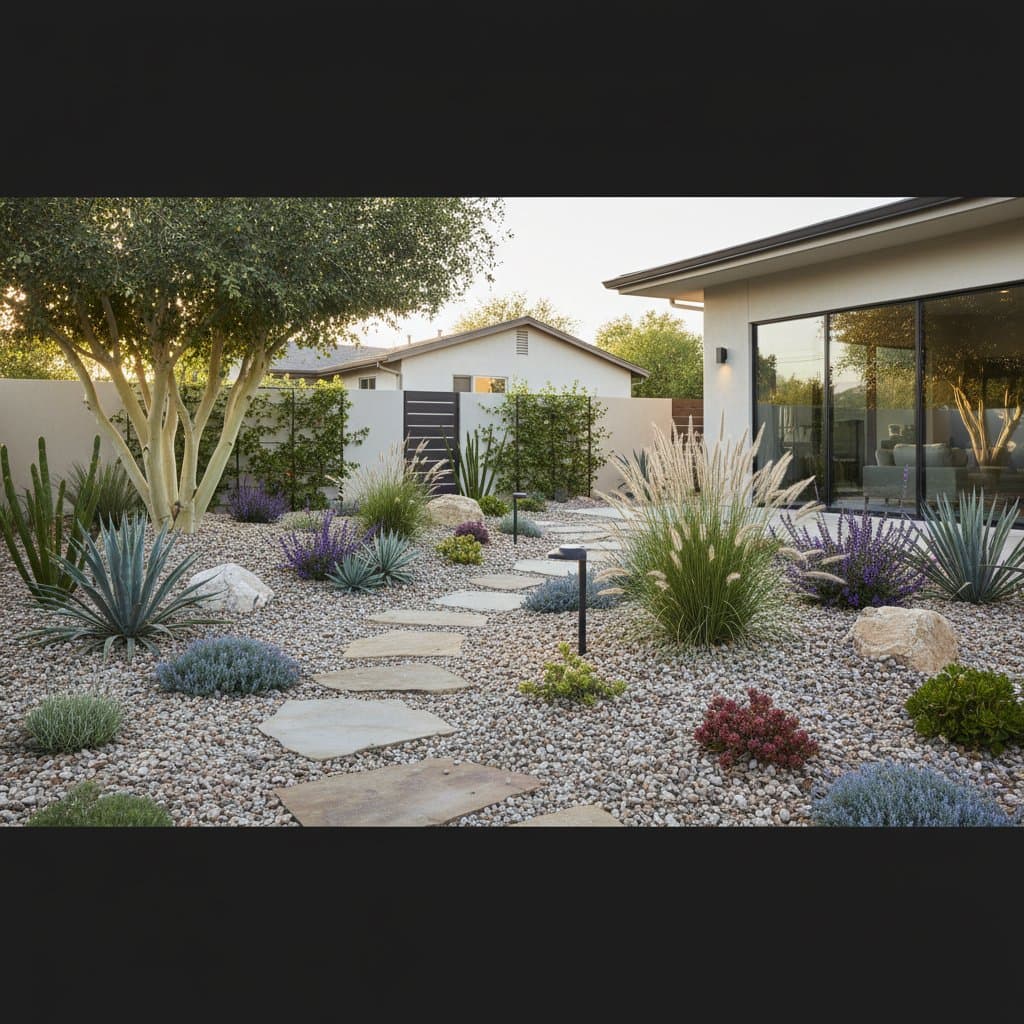
Gravel Gardens: A Drought-Resistant Approach to Saving $800 Annually
Gravel gardens combine aesthetic appeal with functional benefits, including substantial reductions in water and maintenance costs. These designs feature varied gravel textures paired with resilient plants that require minimal irrigation and no regular mowing. Many homeowners adopt gravel gardens for their authentic appearance and the opportunity to lower expenses by roughly $800 per year on water, fertilizers, and lawn services.
At a Glance
Suitable Locations: Full-sun areas in various regions
Scalability: Adaptable from compact courtyards to expansive yards
Best Climates: Arid or fluctuating weather conditions
Primary Objectives: Minimize water consumption, streamline upkeep, and enhance contemporary visual interest
1. Establish a Sturdy Foundation
The core of a gravel garden lies in its multi-layered base, which promotes effective drainage and suppresses weed development. Start by compacting the existing soil, then install a permeable weed barrier fabric. Layer on 4 to 6 inches of gravel to complete the structure, selecting regionally sourced stones to integrate seamlessly with the local environment.
Effective drainage supports healthy root systems and eliminates pooling water that could damage vegetation. Opt for crushed granite or pea gravel in neutral shades like soft gray to complement arid-adapted plants such as lavender or Russian sage. This combination yields a landscape that appears organized yet inviting.
Visual callout: A winding path of fine gravel meanders through patches of thyme and sedum.
2. Select Resilient, Water-Efficient Plants
Careful plant choices determine the longevity and vitality of a gravel garden. Focus on species suited to low-moisture soils, including agave, yarrow, and ornamental grasses like little bluestem. Arrange plants in clusters based on comparable hydration requirements to simplify care and promote uniform development.
Incorporate native varieties, which naturally acclimate to regional soils and weather patterns. Their extensive root networks stabilize the ground and mitigate erosion risks. Native perennials maintain color and form during extended dry periods, as noted by horticulturists. Blend diverse forms, such as airy seed heads and robust succulents, to provide visual intrigue throughout the year.
For added specificity, consider planting lavender in groups of three to five for fuller coverage, spaced 18 inches apart to allow air circulation. Yarrow's flat flower clusters attract pollinators while requiring no supplemental watering once rooted. These selections not only conserve resources but also foster biodiversity in the garden space.
Visual callout: Agave clusters accentuate a expanse of golden gravel.
3. Outline Pathways and Functional Zones
Gravel's versatility allows for the delineation of practical zones dedicated to relaxation, transit, or cultivation. Employ larger aggregate stones to border walkways, while using finer gravel in lounging spots for a more comfortable surface. Such organization imparts purpose to the design, preventing an overly barren appearance.
Strategic zoning transforms a basic gravel expanse into an interactive outdoor area. Integrate elements like irregularly placed stepping stones or repurposed concrete slabs to establish visual flow. This method directs foot traffic and encourages discovery, all while preserving low-effort maintenance.
To implement, measure pathways at 3 feet wide for easy access, ensuring they connect key features like seating nooks to planting beds. Edge borders with 4-inch-high stones to contain gravel spread. These details create a cohesive layout that enhances usability without increasing workload.
Visual callout: A flagstone trail extends from a sheltered bench toward a sunlit terrace.
4. Integrate Lighting Layers for Extended Enjoyment
Thoughtful illumination prolongs the usability of a gravel garden into the evening hours. Install solar-powered path markers or low-voltage LED units to accentuate plant groupings and structural highlights. Select bulbs with a color temperature of 2700 Kelvin to produce a warm, diffused light that accentuates the gravel's granular quality.
Layered lighting schemes avoid uniform brightness and instead create depth through varied elevations and directions. Position fixtures to cast subtle shadows that play across surfaces, fostering a serene atmosphere after dusk. The interplay of light on stone and foliage extends the garden's appeal without introducing complexity.
For optimal results, space path lights 4 to 6 feet apart along routes, and use uplights at 2-foot intervals near focal plants. This setup ensures safety and ambiance, allowing families to gather outdoors longer during mild evenings.
Visual callout: Compact uplights project soft shadows over a gravel terrace.
5. Implement Effortless Upkeep Routines
After initial establishment, gravel gardens demand little ongoing attention. Rake the surface periodically to redistribute gravel and maintain evenness. If drip irrigation systems are incorporated, inspect emitters monthly to verify consistent water delivery to plant roots.
Well-constructed bases deter weed invasion, though manual extraction of any stragglers preserves neatness. Limit interventions to about ten minutes per month, sufficient for sustaining a polished appearance. As the garden matures, the gravel settles into organic contours that harmonize with emerging plant forms.
Additional practices include mulching around new plantings with extra gravel to retain soil moisture, and pruning ornamental grasses in late winter to refresh growth. These steps ensure the design remains vibrant with minimal investment of time or resources.
Visual callout: A hand rake levels newly added gravel beneath the soft glow of afternoon sun.
Realizing Long-Term Advantages
Gravel gardens provide enduring value through decreased utility costs, reduced labor demands, and enhanced durability against drought. Annual water savings of $800 free up budgets for other home improvements, while the subdued palette of stones and greenery offers a tranquil setting for seasonal accents. Homeowners who invest in deliberate design elements discover a sustainable outdoor retreat that evolves gracefully with minimal intervention.