
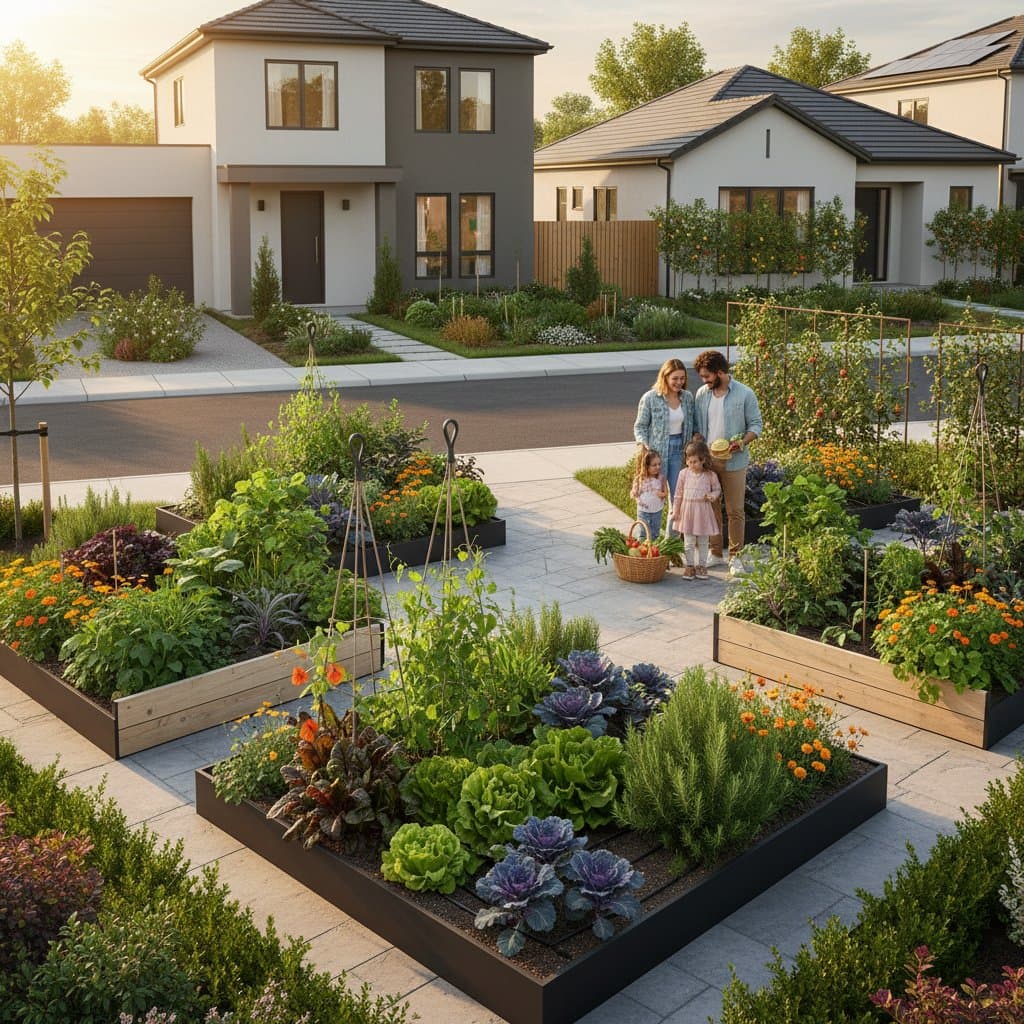
Edible Front Yards Gain HOA Approval in 2026
Front yards evolve beyond traditional lawns and ornamental beds. In numerous neighborhoods, homeowners cultivate these prominent areas with vegetables, herbs, and fruit-bearing shrubs. This approach merges visual allure with practical benefits, yielding nourishment for families and sparking community interest. Homeowners associations increasingly revise policies to permit such food-producing installations, accelerating this trend toward integrated landscapes.
At a Glance
Location: Suburban and urban residential areas
Size: Compact to moderate lot dimensions
Climate Zone: Versatile through strategic plant choices
Project Goal: Integrate aesthetic enhancement with edible yields
1. Establish Structure and Order in Design
An organized framework ensures an edible front yard integrates seamlessly into its surroundings. Neighbors and association committees favor designs that appear deliberate over haphazard arrangements.
Incorporate raised beds, boundary hedges, and defined walkways to impose clarity. Select enduring materials such as corten steel, cedar wood, or natural stone for stability and presence.
A landscape designer observes, "Structure prevents an edible garden from resembling a disjointed collection. It integrates the space with the home's architecture."
Functional benefit: Precise borders simplify upkeep and contain soil within designated areas.
Design insight: Orient beds to align with the residence's architectural lines. Rectangular configurations that parallel window placements promote harmonious visuals.
Example: Position two 3-by-6-foot cedar raised planters on either side of the entry path to accommodate lettuce, kale, and assorted herbs, thereby accentuating the entrance.
Visual callout: A precise array of raised beds reflects the front porch railing's linear pattern.
2. Integrate Ornamentals and Edibles for Balance
Weaving vegetables into ornamental displays preserves neighborhood aesthetics. Edibles coexist with blooms and shrubs to produce a verdant, equilibrated environment.
Pair purple basil alongside lavender, or position rainbow chard amid decorative grasses. Employ blueberry shrubs as foundational elements.
A horticulturist notes, "The key lies in viewing edibles as decorative features. Hue, form, and foliage configuration hold equal importance to productivity."
Functional benefit: Diverse plantings attract pollinators and mitigate pest issues.
Design insight: Employ recurring motifs to cohere the composition. Duplicate specific lettuce varieties or marigolds across multiple locations to establish cadence.
Example: Arrange sage, echinacea, and compact peppers within a sunlit border to combine aromatic qualities with vivid tones.
Visual callout: Vibrant chard stalks interlace through coneflower groupings adjacent to the pathway.
3. Control Height and Proportion
Public visibility demands attention to scale in front yards. Position taller specimens proximate to the structure or boundary, reserving shorter options for street-adjacent zones.
Utilize corn stalks or supported beans to afford seclusion without obstruction. Compact selections like lettuce, beets, and strawberries suit sidewalk proximity.
A landscape architect advises, "Layer thoughtfully. Elevate the tallest elements as a rear screen, position mid-level edibles centrally, and deploy ground covers to temper boundaries."
Functional benefit: Tiered arrangements optimize air circulation and light exposure.
Design insight: Gradually diminish plant elevations from the building base toward the curb to facilitate smooth progression.
Example: Install climbing cucumbers upon a cedar lattice behind tiers of bush beans and thyme.
Visual callout: Upright trellises impart framework while preserving unobstructed vistas across the yard.
4. Incorporate Pathways for Visual Direction
Walkways serve dual purposes of navigation and artistic guidance. Options like gravel, decomposed granite, or laid brick introduce tactile variety and shield against dampness post-irrigation.
Subtle curves in paths evoke discovery, even within confined spaces.
A designer comments, "Strategic pathways elevate a vegetable area to a composed garden. They draw visitors closer rather than isolating the space."
Functional benefit: Designated trails minimize soil compression near root systems.
Design insight: Harmonize pathway substances with the property's existing surfaces for cohesive appearance.
Example: Construct a straightforward gravel route bordered by thyme, linking the driveway to the veranda and traversing beds of verdant produce.
Visual callout: A narrow gravel trail separates balanced beds brimming with herbs and rotating vegetables.
5. Prioritize Year-Round Visual Appeal
Front yard installations require sustained attractiveness across seasons. Select species that deliver form, coloration, or texture throughout the calendar.
Evergreen herbs such as rosemary or bay laurel offer contour and aroma during winter. Features like ornamental kale, red-twig dogwood, and miniature fruit trees sustain dynamism amid dormancy.
A horticulturist emphasizes, "Effective edible landscapes maintain completeness annually. Anticipating winter silhouettes proves essential."
Functional benefit: Persistent frameworks lessen replanting efforts and uphold tidiness.
Design insight: Combine persistent evergreens with shedding perennials for multifaceted engagement.
Example: Align rosemary hedges behind rotating lettuces to generate profundity and scent year-round.
Visual callout: Persistent herbs encase a resting vegetable plot, upholding form during cooler periods.
6. Implement Efficient Water Management
Targeted irrigation sustains edible setups while promoting conservation. Drip mechanisms channel water to root zones, curbing excess and fungal risks.
Apply mulch from fragmented foliage or straw to retain hydration and enrich earth. Integrate rain barrels or storage units to capture precipitation for reuse.
A garden consultant states, "Hydration efficiency supports both utility and elegance. A vitalized garden garners neighbor approval."
Functional benefit: Diminished consumption cuts expenses and ecological footprint.
Design insight: Bury conduits and lines beneath mulch layers for streamlined presentation.
Example: Outfit a forward bed with subsurface drip tubing linked to a rain barrel, ensuring steady moisture for tomatoes and herbs.
Visual callout: A unobtrusive rain barrel positioned behind foliage supplies a drip network to adjacent containers.
7. Introduce Discreet Lighting for Nighttime Enhancement
Low-voltage illumination prolongs garden usability into evenings. It bolsters security and accentuates compositional elements.
Opt for warm white sources at approximately 2700 K to complement greenery and emit inviting radiance. Site fixtures along trails, below seating, or under fruiting specimens.
A lighting expert remarks, "Gentle illumination renders an edible front yard purposeful at dusk, not overlooked."
Functional benefit: Enhanced sightlines improve safety and discourage intruders.
Design insight: Deploy louvered units to avoid brightness and direct beams toward surfaces.
Example: Install modest uplights at the roots of trained apple espaliers to form subtle highlights.
Visual callout: Trail illuminations outline the garden perimeter, illuminating elevated beds and supports.
Sustaining and Refining Your Edible Front Yard
Association policy relaxations expand opportunities for edible front installations. These spaces reimagine aesthetic standards by demonstrating harmony between utility and ornamentation.
Intentional planning allows even modest areas to produce sustenance, support wildlife, and deliver charm. Balance through framework, patterns, and maintenance forms the foundation.
Begin with modest implementations; subsequent seasons reveal refinements in selections and configurations. The outcome nurtures physical well-being and communal bonds alike.
Forward-thinking front yard cultivation avoids wholesale lawn elimination. It embeds edibles thoughtfully into daily vistas. Through foresight, diligence, and refined execution, these landscapes appreciate in merit and embrace.