
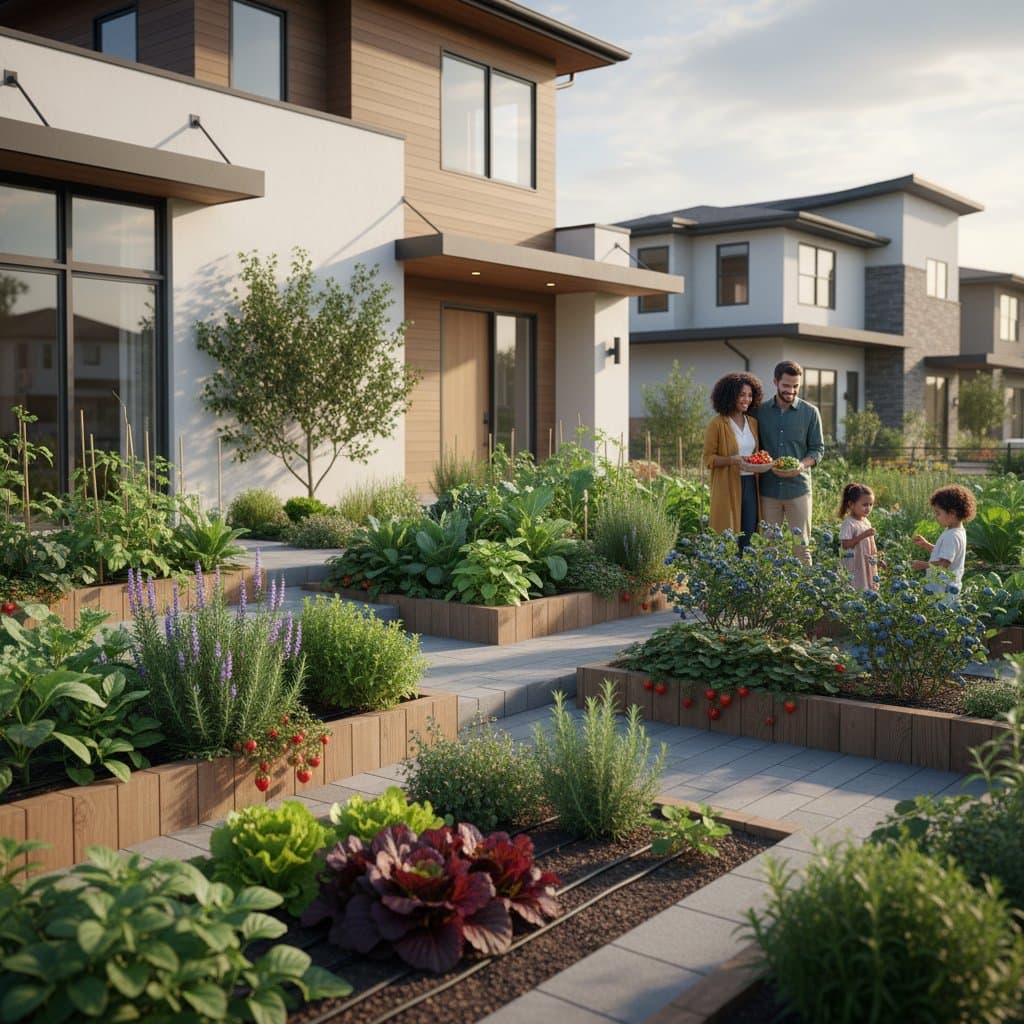
HOA Rules Shift: Edible Front Yards Greenlit by 2026
When homeowners Maya and Daniel Flores purchased their suburban house, they knew the tidy lawn out front did not match their preferences. Both lifelong gardeners, they dreamed of growing herbs, berries, and vegetables where most neighbors maintained grass. Their vision of a low-maintenance edible landscape had long been off-limits under their homeowners association rules. Now, with new HOA policy updates allowing edible front yards, their plan is finally taking shape.
Their project represents a growing movement across communities. Ornamental lawns are giving way to productive, sustainable gardens that feed both people and pollinators.
Reimagining the HOA Landscape
For years, HOA rules restricted front yards to turf and ornamental shrubs. The goal was uniformity, yet the result often meant high water use and limited biodiversity. Recent policy revisions are changing that standard. Homeowners can now replace grass with edible planting, provided designs meet maintenance and aesthetic guidelines.
Designer Rhea Voss said the shift opens possibilities for creativity. "Communities are realizing that productivity and beauty can coexist. A well-planned edible garden looks intentional, not messy," she said. The Flores project became one of the first in their neighborhood to apply the new rules. It sets an example for what compliance and design harmony can achieve.
A Guided Tour Through the New Front Yard
The front walk now winds through raised cedar planters filled with herbs and greens. The old concrete path was removed and replaced with crushed limestone, bordered by low thyme groundcover. From the sidewalk, the view feels tidy and layered. It offers a mix of texture and color rather than a traditional block of turf.
Entry Zone
Closest to the street, drought-tolerant ornamentals blend with edible species. Lavender, rosemary, and sage form the foundation plantings. Their silvery foliage ties the garden into the neighborhood palette while serving culinary purposes. Terracotta pots with strawberries line the walkway. They add structure and a touch of red during fruiting season.
Central Beds
The heart of the garden includes three rectangular cedar planters, each three feet wide and ten feet long. One holds a rotation of lettuces, radishes, and kale. Another supports peppers and eggplants. The third is planted with bush beans, surrounded by marigolds for pest control. Between each bed, gravel paths provide clean walking zones and help with drainage.
A low trellis made of powder-coated steel divides the vegetable area from the ornamental border. Climbing beans and cherry tomatoes use the trellis for support. This creates a soft green screen that maintains privacy from the street.
Porch Transition
Closer to the house, the plant palette shifts again. Blue-green artichokes frame the porch steps. Their sculptural leaves give a modern feel. A small olive tree in a glazed ceramic pot anchors one corner. It is balanced by a planter of edible flowers on the other side. The porch rail now supports a series of vertical planters for basil, thyme, and mint. Together, they bring the scent of fresh herbs right to the entry.
Materials and Finishes That Ground the Design
Every choice in the Flores garden was made for visual cohesion and practicality. The raised beds are built from untreated cedar sealed with natural tung oil for longevity. The gravel paths use crushed limestone sourced locally. It is compacted over landscape fabric to prevent weeds. The irrigation is a low-flow drip system with programmable timers. This reduces water waste and keeps foliage dry to minimize disease.
Lighting, another HOA requirement, was handled subtly. Low-voltage LED path lights with bronze finish sit flush to the gravel edge. They provide just enough illumination to highlight texture without drawing attention away from the plants. A motion sensor light at the porch adds security while maintaining the calm evening look.
Voss explained, "We wanted every element to feel permanent, like it belonged. Materials had to match the architecture, not fight it. The house has warm siding and stone trim, so we echoed those tones in the planters and gravel."
Meeting HOA Requirements Without Compromise
The updated policies come with clear design standards. Gardens must appear maintained, with defined borders and no exposed compost piles. Taller crops should stay closer to the home, while lower plants line the street-facing areas. This structure helps preserve neighborhood consistency while allowing individual expression.
To stay within guidelines, the Flores team submitted a detailed plan with elevations and plant lists before breaking ground. The HOA review committee approved it on the first pass. They were impressed by the professional layout. "We treated it like any landscape project," Voss said. "Neat edges, balanced height, and intentional geometry go a long way."
The couple also agreed to seasonal maintenance inspections, a new feature of the policy. The goal is to prevent overgrowth or neglect that could draw complaints. Daniel said, "We already love tending the garden daily, so upkeep is not a burden. The inspections just keep everyone accountable."
Color, Texture, and Yield
At peak season, the garden reads as a tapestry of greens, silvers, and subtle blooms. Lettuce and kale fill the lower layers with crisp texture. Sage, lavender, and oregano add muted color and fragrance. Tomato vines introduce height, while edible flowers like calendula and nasturtium punctuate the space with orange and yellow.
The Flores family harvests enough for daily salads, herbs for cooking, and occasional extras for neighbors. The garden productivity has become a conversation starter. "People stop by to ask what variety we are growing or how we built the beds," Maya said. "It has made us more connected to the community."
The Broader Movement Toward Edible Landscapes
Across many neighborhoods, similar transformations are underway. Homeowners are recognizing that edible gardens can look as refined as ornamental ones when designed with structure and rhythm. The change in HOA rules responds to growing interest in sustainability and self-sufficiency.
Modern edible landscapes rely on principles of proportion and repetition, just like decorative planting. Designers use consistent materials and color themes to tie everything together. Edible species such as chard, kale, and herbs provide both form and function. Fruit trees, once rare in front yards, appear again as small varieties that fit compact spaces.
Voss noted, "The stigma around food gardens in front yards is fading. People see how thoughtful design turns practicality into curb appeal."
Tips for Planning Your Own HOA-Compliant Edible Yard
For homeowners eager to follow suit, preparation is key. Every HOA has its own application process and design standards, so start with communication.
-
Review your community guidelines. Check height limits, setback rules, and approved materials. Some associations require a professional landscape plan.
-
Keep a clear structure. Raised beds, borders, and paths make the garden look deliberate. Avoid sprawling plantings without edges.
-
Choose plants with visual appeal. Mix foliage types and colors. Artichokes, rainbow chard, and herbs offer strong form and beauty.
-
Prioritize irrigation and drainage. Use drip systems, mulching, and level grading to prevent runoff and maintain neatness.
-
Maintain consistently. Harvest often, trim dead leaves, and refresh mulch. A tidy garden earns neighborhood approval.
Harvesting Benefits in Everyday Life
Months after completion, the Flores family garden has become both a source of food and joy. The couple spends early mornings harvesting greens and evenings walking the paths with their children. The once plain lawn is now alive with bees, butterflies, and birds.
The new HOA flexibility has redefined what front yards can be. Instead of uniform expanses of turf, communities are beginning to embrace diversity, creativity, and ecological purpose. As more homeowners convert their lawns into edible landscapes, the suburban streetscape evolves into something richer and more resilient.
For the Flores family, this change means nourishment in every sense. Their front yard no longer just adds curb appeal.