
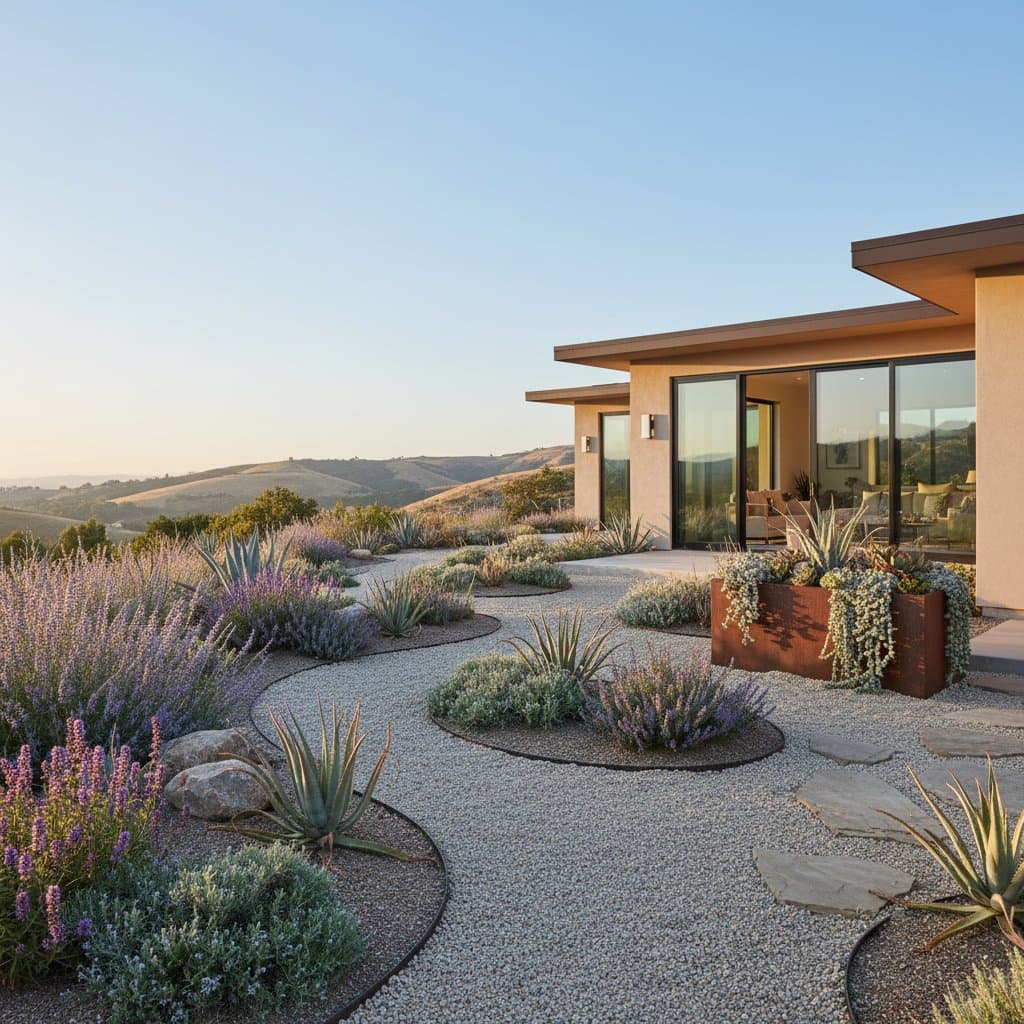
Gravel Gardens: Drought-Resistant Savings Exceeding $1,000 Annually
California landscapers redefine outdoor aesthetics amid escalating water rates and prolonged summer droughts. A verdant lawn frequently burdens finances and natural resources. Gravel gardens present an intelligent, elegant, and eco-conscious option that delivers substantial cost reductions over years while fostering a peaceful, undemanding exterior area. These designs transcend utility; they embody the subtle allure of California's Mediterranean summers.
Gravel gardens integrate creative flora with rugged stone elements to form landscapes that flourish with scant watering. Homeowners pair resilient vegetation with porous substrates to slash irrigation demands, minimize upkeep time, and cultivate a dynamic, stratified environment that evolves elegantly through seasons.
Planning Your Gravel Garden: Essential Preparation Steps
Effective gravel gardens originate from meticulous preparation. Prior to procuring stones or vegetation, evaluate the area and clarify its intended role. Follow these foundational actions:
-
Evaluate site characteristics. Examine sunlight patterns, wind patterns, inclines, and soil composition. Gravel gardens excel in direct sunlight paired with free-draining earth. Amend dense clay soils using coarse sand or decomposed granite to avert water accumulation post-rainfall.
-
Determine the garden's objective. Aim for a water-efficient entryway, a contemplative sanctuary, or a sleek gathering area? This purpose shapes vegetation selections, arrangement, and components.
-
Draft the design. Incorporate walkways, resting areas, and foliage clusters. Winding borders impart gentleness, whereas straight edges convey modernity. A defined plan prevents haphazard or overcrowded visuals.
-
Select appropriate gravel. Consider particle size, hue, and grain. Fine gravel, approximately 3/8 inch, yields even treading paths. Coarser aggregates enhance visual drama and facilitate drainage. Subdued shades such as beige, slate, or cream harmonize with arid-adapted flora.
-
Estimate expenses accurately. Account for digging, weed suppression fabrics, borders, gravel transport, and botanical acquisitions. Professional setups prove more economical than conventional turf installation, with dramatically reduced ongoing care.
Selecting Plants for Depth and Vibrancy
Vegetation animates gravel gardens. These elements temper the stone's rigidity, introduce motion, and provide evolving focal points. California's environment favors Mediterranean and indigenous varieties.
Recommended Plants for Gravel Gardens
- Lavandula (Lavender): Aromatic, robust, and beneficial to pollinators. It suits structured and relaxed compositions alike.
- Salvia: Delivers extended flowering periods and draws hummingbirds. Opt for Salvia clevelandii to achieve vivid azure blossoms.
- Agave and Aloe: Bold, structural forms that endure establishment with remarkable tenacity.
- Artemisia: Gray-green leaves offer striking juxtaposition against earthy gravel.
- Thyme and Dymondia: Low-growing covers that tolerate aridity and moderate trampling.
- California Poppy: Delivers effortless, intermittent floral displays.
Cluster species sharing hydration requirements. Subsurface drip lines beneath gravel aid initial rooting, with gradual reduction as systems develop. Numerous types rely solely on ambient precipitation after one year.
Irrigation, Upkeep, and Enduring Financial Benefits
Gravel gardens earn acclaim for minimal demands, yet initial care remains vital.
-
Irrigation practices: Provide thorough soaking weekly or biweekly during rooting phases. Subsequently, most flora manage with sparse supplementation. Automated drip networks optimize delivery for precision.
-
Weed control: Perform intermittent manual removal to preserve tidiness. Thick planting and adequate gravel layering curb invasive growth.
-
Gravel renewal: Apply a light topping every several years to revive pigmentation and conceal wear. This routine sustains vibrancy with little effort.
-
Trimming and tidying: Shear perennials post-flowering. Clear faded stems or withered leaves to uphold order while retaining organic character.
Such duties pale against the rigors of lawn aeration, nutrient applications, or turf replacement. Cumulative reductions in effort and inputs materialize swiftly. California residents often halve their yard care commitments. The outcome yields a domain that economizes, maintains allure across seasons, and aligns with regional ecology.
Environmental Advantages and Lasting Worth
Gravel gardens extend beyond visual and fiscal merits to promote ecological stewardship. They diminish surface runoff, curb hydration usage, and bolster species diversity. Indigenous and arid-suited flora summon beneficial insects, as porous bases permit precipitation to recharge aquifers rather than divert to sewers.
Endurance further elevates their profile. Gravel withstands settling earth and thermal shifts absent the fractures of pavement or discoloration of artificial grass. Property owners prioritizing durability gain substantial returns.
Constructed with premium aggregates and discerning botanical choices, gravel gardens constitute enduring assets. They enhance real estate desirability, trim recurrent outlays, and resonate with California's ethos. This fusion of form, ease, and function proves unparalleled.
Nurturing Your Gravel Garden's Evolution
Post-installation, gravel gardens develop with poise. Foliage expands, pigments intensify, and the setting attunes to its innate cadence. Seasonal shifts reveal nuances, from the metallic gleam of dryland grasses to the lively petals luring pollinators. Paramount is the liberation afforded to residents.
A gravel garden signifies intentional harmony with environs, honoring climatic constraints while honoring elegance. For California dwellers, it charts a seamless route to green living that appears eternal.