
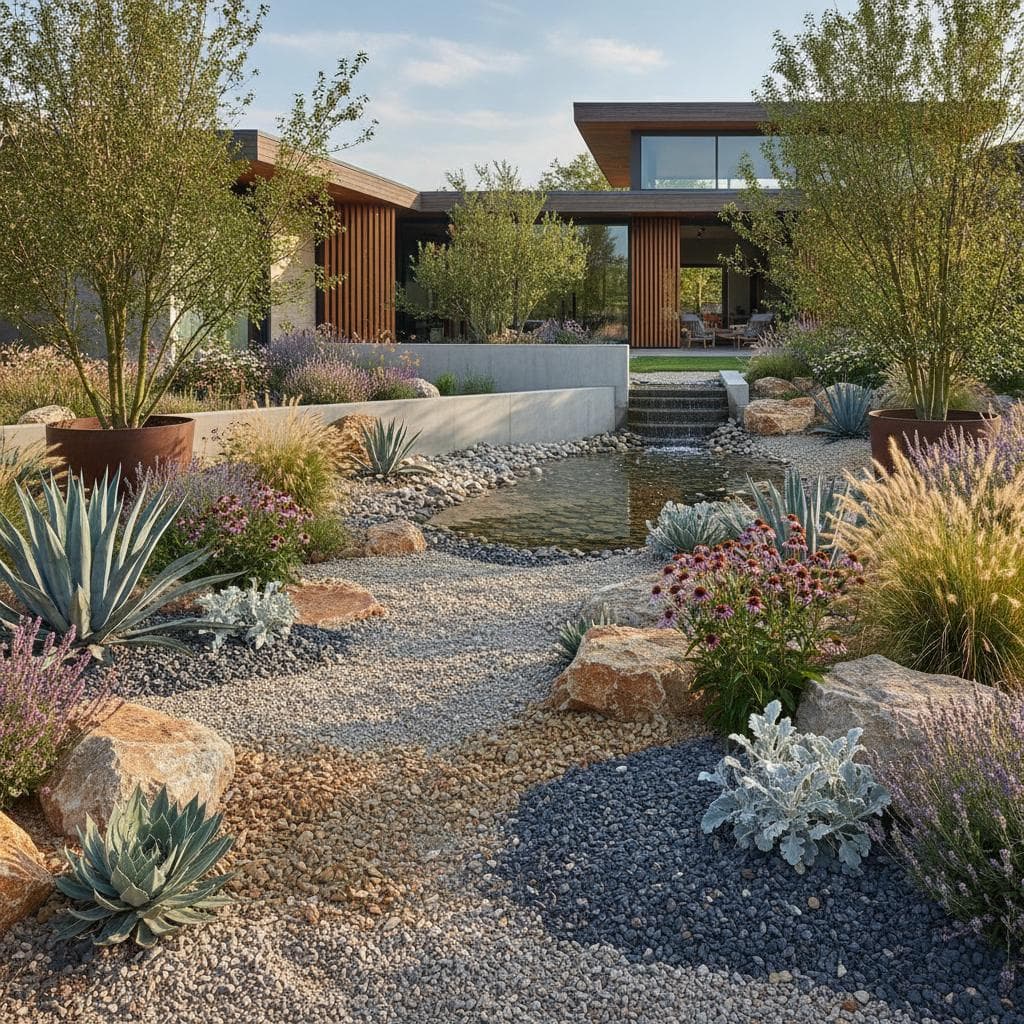
Gravel Gardens Offer Year-Round Elegance With Reduced Water Use
Gravel gardens combine visual appeal with practical water savings. They suit regions with dry summers and limited rainfall. Homeowners gain a structured landscape that requires less irrigation than traditional lawns.
This approach replaces high-maintenance turf with drought-tolerant plants and a gravel surface. The result supports local ecosystems while cutting long-term costs.
Factors Driving Gravel Garden Adoption
Several practical advantages explain the growing interest in gravel gardens.
-
Water Conservation
Gravel reduces soil evaporation and moderates temperature. Watering needs can decrease by half compared with conventional beds once plants establish. -
Reduced Upkeep
No mowing is required. Weeding stays minimal after the first season. Fertilizer applications become unnecessary for most selected species. -
Long-Term Stability
Gravel resists breakdown and maintains coverage. It limits erosion during storms and prevents soil compaction from foot traffic. -
Design Flexibility
Available gravel types range from 3/8-inch pea gravel to 1-inch crushed stone. Colors include warm tan, cool gray, and mixed river rock that coordinate with hardscape elements. -
Ecological Benefits
Native plant selections attract pollinators. Reduced irrigation lowers municipal water demand and supports regional conservation goals.
Plant Selection Guidelines
Choose species that tolerate dry, well-drained conditions. Group plants by mature size to avoid overcrowding.
Recommended Species
- Lavandula angustifolia: Provides fragrance and evergreen structure. Space plants 18 inches apart.
- Salvia greggii: Produces repeated bloom cycles. Cut back spent stems in late fall.
- Agave attenuata: Adds sculptural form. Requires no supplemental water after year one.
- Artemisia californica: Offers silver foliage contrast. Prune lightly in early spring.
- Echinacea purpurea: Delivers summer color. Divide clumps every three years.
- Sedum spurium: Fills gaps between larger plants. Tolerates light foot traffic.
- Muhlenbergia rigens: Creates soft movement. Cut to 6 inches in winter.
Position taller plants toward the center or rear of beds. Place lower-growing varieties along edges to maintain visual layers.
Routine Care Practices
Gravel gardens need attention mainly during establishment. After the first year, tasks become seasonal.
Regular Tasks
- Remove weeds by hand before seed set. Focus on edges where seeds collect.
- Water deeply once every two weeks during the first summer. Reduce frequency after roots extend below 12 inches.
- Shear perennials to 4 inches after flowering ends. This encourages compact regrowth.
- Rake gravel annually and add fresh material to thin spots.
- Clear fallen leaves to avoid moisture pockets that promote weeds.
Seasonal Adjustments
In winter, allow natural rainfall to suffice. In summer heat, a brief surface rinse cools gravel without wetting plant crowns.
Design Errors to Prevent
Common oversights reduce performance and appearance.
- Excessive early irrigation leads to root rot in succulents. Apply water only when the top 2 inches of soil feel dry.
- Landscape fabric traps debris and creates weed mats. Prepare soil directly and rely on 3-inch gravel depth for suppression.
- Incorrect gravel scale disrupts proportion. Use 3/8-inch material in small courtyards and 3/4-inch or larger in expansive areas.
- Dense initial planting leaves no room for natural spread. Allow 12 to 24 inches between specimens depending on mature width.
Implementation Steps
Begin with a single border or courtyard section. Observe plant response and gravel behavior through one full year. Expand successful patterns across larger areas once familiarity increases.
California residents gain a landscape aligned with local water regulations and climate patterns. The combination of durable materials and adapted plants produces reliable results with modest ongoing effort.