
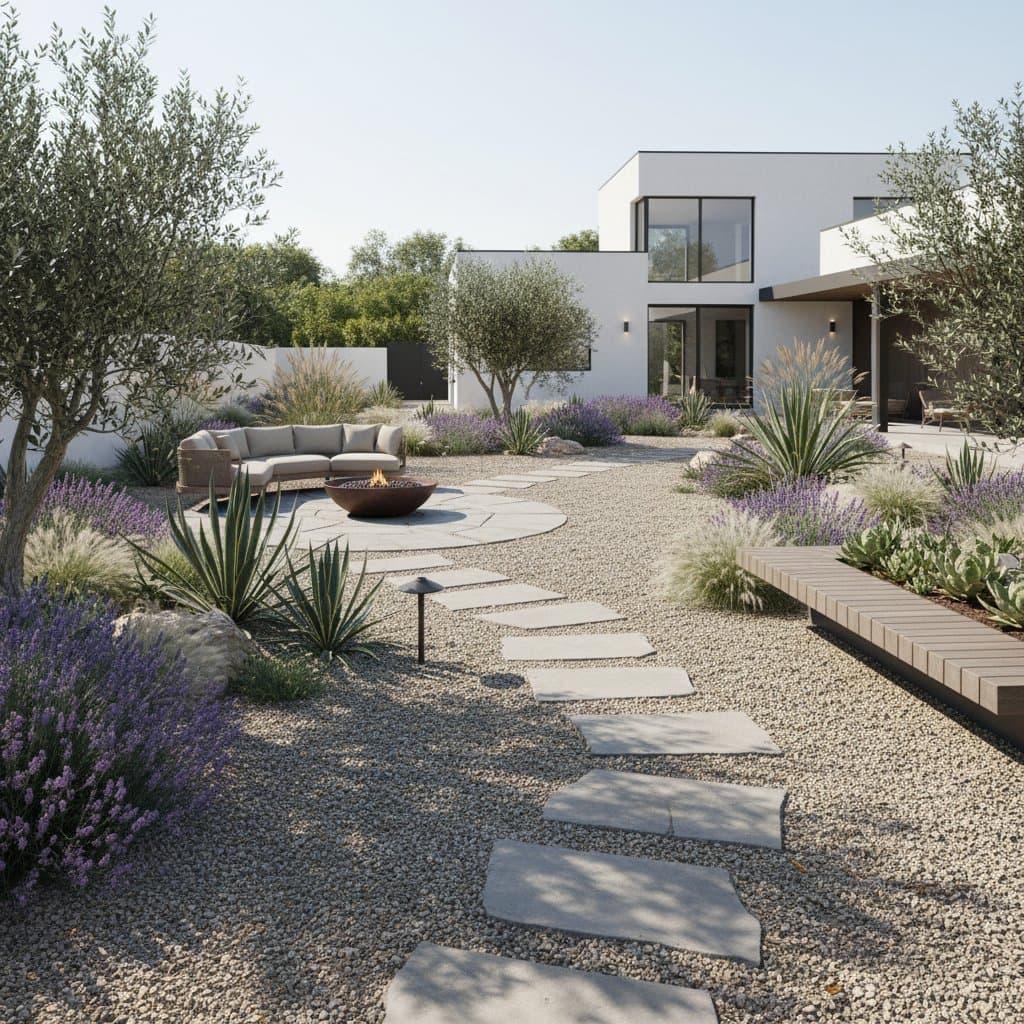
3. Incorporate Low-Maintenance Plants for Texture and Vitality
Gravel lawns thrive with strategic plantings that introduce softness and variety without demanding extensive care. Drought-tolerant groundcovers such as creeping thyme, blue fescue, or silver carpet endure heat reflection and need minimal watering after rooting.
Accent with upright elements like ornamental grasses, lavender, or agave to draw the eye and introduce subtle motion. These selections align with the water-efficient ethos.
Horticulturists observe that gravel's warmth benefits the roots of Mediterranean herbs. Combine fine-textured foliage with broader succulent forms to sustain visual interest minus regular pruning.
Visual Tip: A cluster of little bluestem undulating over light gravel delivers movement and hue during arid periods.
Strategic plant pockets fragment expansive surfaces, mitigating glare and moderating temperatures. Such integrations bolster pollinator habitats and ecological variety.
4. Select Gravel Colors Aligned with Regional Conditions
Gravel hue influences thermal comfort and aesthetic harmony. In warmer climates, pale stones reflect sunlight to maintain cooler surfaces. In milder areas, deeper shades absorb heat and integrate seamlessly with local earth tones.
Neutral palettes of beige, gray, or tan complement diverse building styles. Vibrant choices like rust or black basalt add drama, though they may retain more warmth.
Landscape architects highlight how stone selection can redefine a space's ambiance, from serene coastal vibes to bold desert statements.
To unify the design, echo the gravel shade in containers, stepping stones, or retaining walls. This cohesion prevents the surface from appearing isolated.
Functional Consideration: Lighter gravels reveal debris more readily, prompting frequent clearing, whereas darker varieties conceal it effectively between sessions.
5. Incorporate Strategic Lighting for Extended Enjoyment
Low-voltage systems prolong usability into the evening, accentuating gravel's subtle patterns. Position path lights at ground level to outline routes without overwhelming brightness. Concealed uplights on key plants or rocks add dimension and intrigue.
Designers recommend layered illumination to foster relaxed outdoor evenings free from stark shadows.
Choose energy-efficient LED bulbs at 2700 K for a warm glow. Solar alternatives suit spots without easy access to power. Focus on directing light to enhance forms rather than illuminating broadly.
Visual Tip: Gentle light pools along a gravel trail guide visitors to a shaded seating alcove under olive branches.
Such setups improve navigation and safety. They also amplify the gravel's natural luster, bridging daytime and nighttime experiences seamlessly.
6. Designate Areas for Relaxation and Socializing
Gravel surfaces encourage informal gatherings. Establish dedicated spots for lounging, meals, or contemplation with straightforward furnishings or integrated elements.
Adirondack chairs, teak seats, or stone blocks suit the terrain, as they distribute weight evenly to prevent sinking. For fixed installations, place small concrete footings under supports or embed pavers discreetly.
Contractors appreciate gravel's adaptability, allowing seasonal rearrangements without landscape disruption.
Demarcate these areas with variations in gravel grain or encircling pavers. This approach imposes subtle structure while adhering to a unified material scheme.
Visual Tip: A circular fire pit ringed by coarser gravel serves as an inviting focal point amid the broader expanse.
These configurations promote extended stays. They evolve a basic gravel area into a versatile venue responsive to varied activities.
7. Implement Straightforward Upkeep Routines
Gravel demands far less attention than grass, yet periodic care sustains its appeal. Rake periodically to smooth traffic marks and reposition stones. Clear airborne litter promptly to avoid staining from decay.
Prevent weeds through quality underlayment, such as permeable fabric over the base, which inhibits growth while permitting water passage. Some opt for a firm soil subbase sans fabric for a more organic feel, accepting minor weeding tasks.
Maintenance experts affirm that tools like a leaf blower extend the pristine interval with minimal effort.
Replenish the top layer every few years to offset losses from wear, restoring vibrancy affordably.
Practical Benefit: Consistent practices ensure stability and cleanliness. Aesthetic Outcome: They uphold the precise lines characteristic of gravel compositions.
8. Blend Gravel with Complementary Permeable Surfaces
Pair gravel with options like permeable pavers, decomposed granite, or flagstone to enrich functionality and appeal without elevating resource demands.
Employ stone slabs for zone transitions or to stabilize features such as artworks or containers. Permeable pavers at entrances minimize dirt transfer and offer firmer footing.
Designers value these combinations for imparting a sense of intentional curation over mere utility.
Visual Tip: A flagstone route connects to an informal lounge encircled by finer gravel.
Mixed elements optimize water flow on inclines or high-traffic zones. They introduce organic rhythm, echoing varied natural landscapes.
Embracing the Enduring Appeal of Gravel Landscapes
Transitioning to gravel reorients focus from relentless maintenance to intentional ease. It endures dry conditions, withstands pressure, and responds well to light tending.
As the material integrates, it molds gently around vegetation and amenities, with rake marks or trails lending unique patina unattainable by artificial alternatives.
For those confronting water shortages or escalating care expenses, gravel lawns offer an elegant, forward-thinking resolution. Thoughtful execution and plant selections yield expansive, habitable realms that honor sustainability without compromise.