
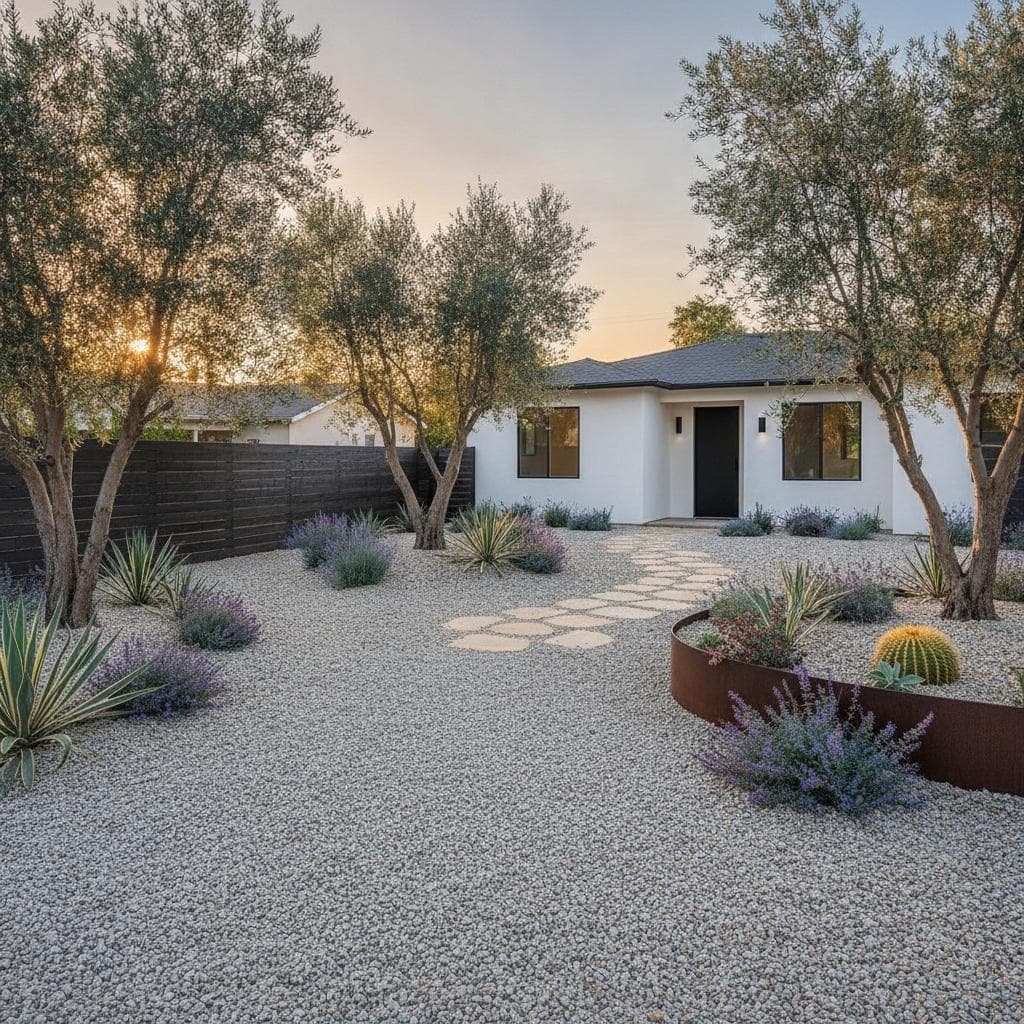
Gravel Lawns: The Drought-Proof Grass Alternative for 2026
California gardeners have faced the same challenge for decades. They seek to maintain a beautiful outdoor space without excessive water use. As drought restrictions tighten, the traditional green lawn has become more of a liability than a luxury. A gravel lawn delivers texture, visual calm, and year-round usability with a fraction of the maintenance of turf grass.
Why Gravel Lawns Are Rising in Popularity
A gravel lawn is not simply a patch of pebbles. It is a carefully engineered surface designed for comfort, drainage, and durability. The concept takes cues from Mediterranean and desert landscapes where water scarcity has long influenced design decisions. In these regions, gravel creates open, walkable areas that mimic the function of a lawn but require virtually no irrigation.
The appeal lies in its low water demand and minimal upkeep. Once installed, a gravel lawn stays tidy with only occasional raking and weeding. It resists pests, does not brown under heat, and never needs mowing. For homeowners balancing aesthetics with responsibility, gravel lawns offer an elegant solution that fits California climate realities.
Planning and Preparation
A successful gravel lawn begins with proper planning. The base must be graded for drainage, compacted, and layered correctly. Skipping these steps often leads to uneven surfaces or weed problems later.
Key preparation steps include:
- Assess the site. Identify sun exposure, existing soil conditions, and how you plan to use the area. A dining patio, play space, or quiet retreat may each call for slightly different gravel types.
- Excavate and level. Remove existing turf or debris, then contour the soil for natural drainage. Aim for a subtle slope to prevent pooling during rain.
- Add a base layer. Spread a few inches of compacted decomposed granite or crushed stone to create a stable foundation. This base supports the surface gravel while allowing water to percolate.
- Install a weed barrier. A breathable landscape fabric helps reduce unwanted growth. Choose a quality product that allows moisture and air exchange.
- Top with decorative gravel. Pea gravel, decomposed granite, or crushed limestone all work well. The right size and color will depend on your design style and intended use.
Selecting the Right Gravel
Gravel choice influences both function and appearance. For walking areas, pea gravel with rounded edges provides comfort underfoot. Crushed stone creates a firmer surface that stays put under furniture or foot traffic. Decomposed granite offers a fine, compacted texture that reads almost like a solid surface but still drains effectively.
Color also matters. Warm tans, soft grays, and mixed earth tones blend naturally with native plantings. Lighter shades can brighten shaded spaces, while darker gravel grounds a sun-drenched courtyard. Many California designers mix gravel sizes and hues for a more organic, natural feel.
Integrating Gravel Lawns into the Landscape
A gravel lawn works best as part of a larger composition. Think of it as a neutral canvas that highlights surrounding plants and architectural elements. Border it with low-water shrubs such as lavender, rosemary, or manzanita. Add visual rhythm with succulents, ornamental grasses, or drought-tolerant perennials.
Hardscape accents like flagstone paths, boulder groupings, and low retaining walls can add structure and interest. Lighting plays a vital role as well. Subtle path lights or uplights on sculptural plants will transform the space after sunset.
For a touch of softness, consider placing a few outdoor rugs or potted plants on top of the gravel area. This approach keeps the space inviting and flexible for entertaining.
Maintenance and Longevity
Ongoing care is refreshingly simple. Occasionally rake the surface to even out footprints and redistribute gravel. Pull or spot-treat any stray weeds. Every few years, add a thin top-up layer to refresh the surface and maintain depth.
If the installation was properly compacted, gravel lawns can last for decades without major renovation. They handle foot traffic, resist erosion, and allow rainwater to recharge the soil below. Compared to turf or artificial grass, gravel surfaces stay cooler, require no chemicals, and adapt easily to seasonal changes.
Living with Your Design
A gravel lawn invites a slower rhythm of outdoor living. You will never hear the whir of a mower or worry about water bills climbing after a heatwave. Instead, you can listen to the crunch of gravel underfoot, watch the movement of light across textured stones, and enjoy a landscape that works in harmony with its environment.
For homeowners considering updates before the next drought cycle, gravel lawns deliver both beauty and practicality. They blend seamlessly with California native plant palette, respect limited water resources, and offer long-term value with minimal upkeep. With thoughtful planning and quality materials, this approach can transform the modern yard into a sustainable outdoor retreat that endures through dry seasons and beyond.