
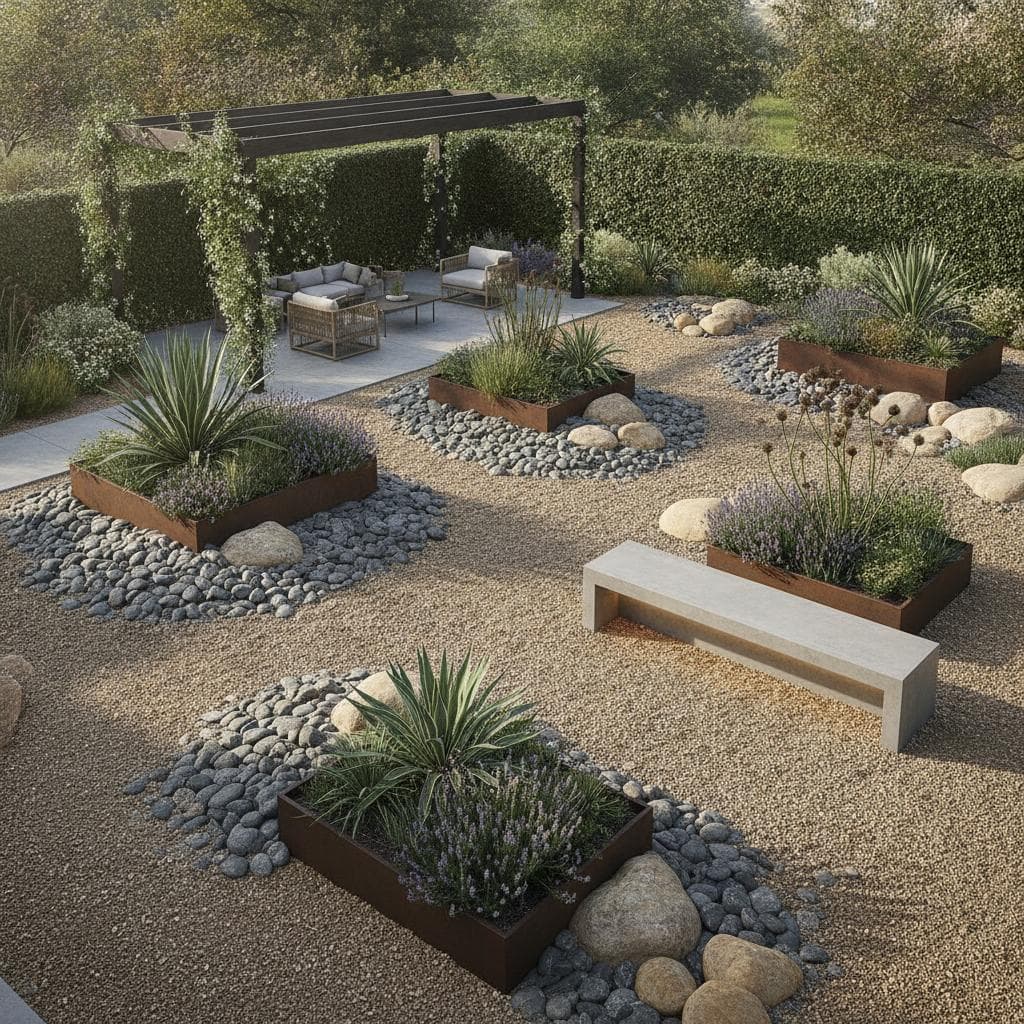
Gravel Replacing Mulch: The Low-Maintenance Garden Trend Redefining Outdoor Living
A quiet revolution is taking place in gardens across California and beyond. Homeowners who once relied on bark mulch now choose gravel as their primary ground cover. Gravel delivers the same refined appearance and moisture retention as mulch yet requires far less upkeep and lasts much longer. Anyone seeking a garden that stays sharp through every season with minimal attention finds gravel a smart, stylish, and sustainable option.
This change reflects a broader shift in how people view outdoor spaces. Gardens function as integrated living environments focused on enjoyment, efficiency, and lasting value rather than high-maintenance displays.
Why Gravel Outperforms Mulch
Traditional mulch retains soil moisture, suppresses weeds, and creates a finished look. Yet it requires seasonal replacement, fades under sunlight, compresses over time, and can attract pests. Gravel addresses these limitations while providing design options mulch cannot offer.
Durability That Lasts for Years
Gravel stays stable and attractive without regular replenishment. It resists wind, sun, and rain while keeping its texture and color. In regions with dry summers and mild winters, properly installed gravel weathers well and can remain functional for decades.
Fewer Pests and Fungal Problems
Wood mulch often harbors termites, beetles, or fungal spores. Gravel eliminates these risks because it is inorganic. Stone discourages insect nesting and prevents rot, making it suitable near foundations, decks, and patios.
Reduced Maintenance
A correctly installed gravel bed needs only occasional raking. A light top-up every few years restores depth. This approach frees homeowners from the repeated spreading and renewal mulch demands.
Improved Water Efficiency
Gravel supports water-wise gardening by allowing irrigation to reach roots while slowing surface evaporation. When combined with drip systems and drought-tolerant plants, it forms part of an efficient water management plan suited to conservation-focused regions.
Design Benefits That Extend Beyond Function
Gravel offers visual versatility through varied sizes, textures, and colors. It blends with modern minimalist courtyards as readily as with rustic Mediterranean terraces.
Texture and Color Options
Shades range from pale ivory to deep basalt gray, including warm earth tones and cool blues. Crushed granite provides a matte finish, while polished pebbles add reflective quality. Designers use these choices to create contrast or harmony as needed.
Defined Pathways and Planting Areas
Gravel defines space effectively. It edges beds, forms pathways, and frames focal points such as succulents or sculptures. A narrow gravel strip separates planting zones from patios and gives the overall design clear structure.
Compatibility with Hardscaping
Gravel pairs naturally with concrete, stone, and wood. It softens retaining walls and patios while creating smooth transitions between built surfaces and planted areas.
Long-Term Aesthetic Value
Mulch fades and decomposes, leaving gardens looking tired. Gravel maintains a crisp appearance and develops a subtle patina that enhances the landscape over time.
Selecting Gravel for Specific Needs
The right gravel depends on garden goals, soil type, and visual preferences.
Crushed Granite
This material compacts slightly underfoot to form stable yet permeable pathways. Its muted tones complement native plants and ornamental grasses.
Pea Gravel
Rounded pea gravel feels comfortable underfoot and suits seating areas or fire pits. It works best in low-traffic zones where edging can contain it.
Decomposed Granite
Decomposed granite compacts into a firm surface ideal for walkways and patios. Warm gold and brown tones match many California homes. A stabilizing binder increases durability in high-use areas.
River Rock and Decorative Pebbles
Larger river rock and polished pebbles create strong visual contrast around water features and architectural plants. They also serve well in dry creek beds for erosion control.
Installation Steps for Lasting Results
Gravel performs best when installed over a prepared base. Careful layering prevents weeds, shifting, and uneven settling.
Clear and Grade the Area
Remove weeds, roots, and debris first. Level the ground or create a gentle slope to avoid water pooling.
Lay a Weed Barrier
High-quality landscape fabric blocks growth while permitting water and air movement. Avoid plastic sheeting that traps moisture.
Choose the Right Depth
Two to three inches of gravel suits most beds. Driveways and paths may require four inches for stability.
Compact and Contain
Lightly compact the surface with a tamper. Install metal or stone edging to keep borders defined and prevent migration.
Integrating Plants with Gravel
Gravel serves as a backdrop that highlights plant form and texture.
Pair with Drought-Tolerant Plants
Succulents, lavender, rosemary, and ornamental grasses thrive in gravel. Their forms and foliage complement the stone while benefiting from improved drainage.
Create Layered Visual Interest
Combine fine gravel with larger stones and boulders. Add height with tall grasses or agaves to maintain visual movement.
Integrate Seasonal Change
Introduce plants with blooms or shifting foliage to provide contrast against the permanent gravel surface throughout the year.
Respect Drainage Patterns
Incorporate swales or permeable borders to direct runoff. This protects both the garden and nearby structures.
Sustainability Advantages
Gravel supports sustainable practices through reduced waste and better water management.
Reduced Material Waste
Gravel does not decompose, eliminating repeated applications and associated disposal.
Better Water Management
Permeable surfaces allow rain to recharge soil rather than run into storm drains.
Local Sourcing Options
Regional quarries supply many gravel types, lowering transport needs and ensuring colors match the local environment.
Lower Long-Term Energy Use
Gravel requires less production, transport, and labor over its lifespan compared with annual mulch replacement.
Planning a Gravel Conversion
Approach the switch from mulch as a phased project to test performance and refine design.
Start Small
Convert one section first, such as a side path. Observe drainage, weed control, and appearance before expanding.
Consider Color Harmony
Select tones that match exterior finishes. Warm beige stones suit stucco and wood, while cool grays complement concrete and steel.
Budget for Quality Materials
Invest in proper fabric and edging from the start. Quality components deliver better long-term results.
Consult with Professionals
Landscape designers familiar with local conditions can recommend gravel types and installation methods suited to specific sites.
Watching Your Garden Thrive
Once installed, a gravel landscape continues to improve with minimal intervention. Plants establish strong root systems, surfaces remain clean, and the overall design retains its intended character through changing seasons.