
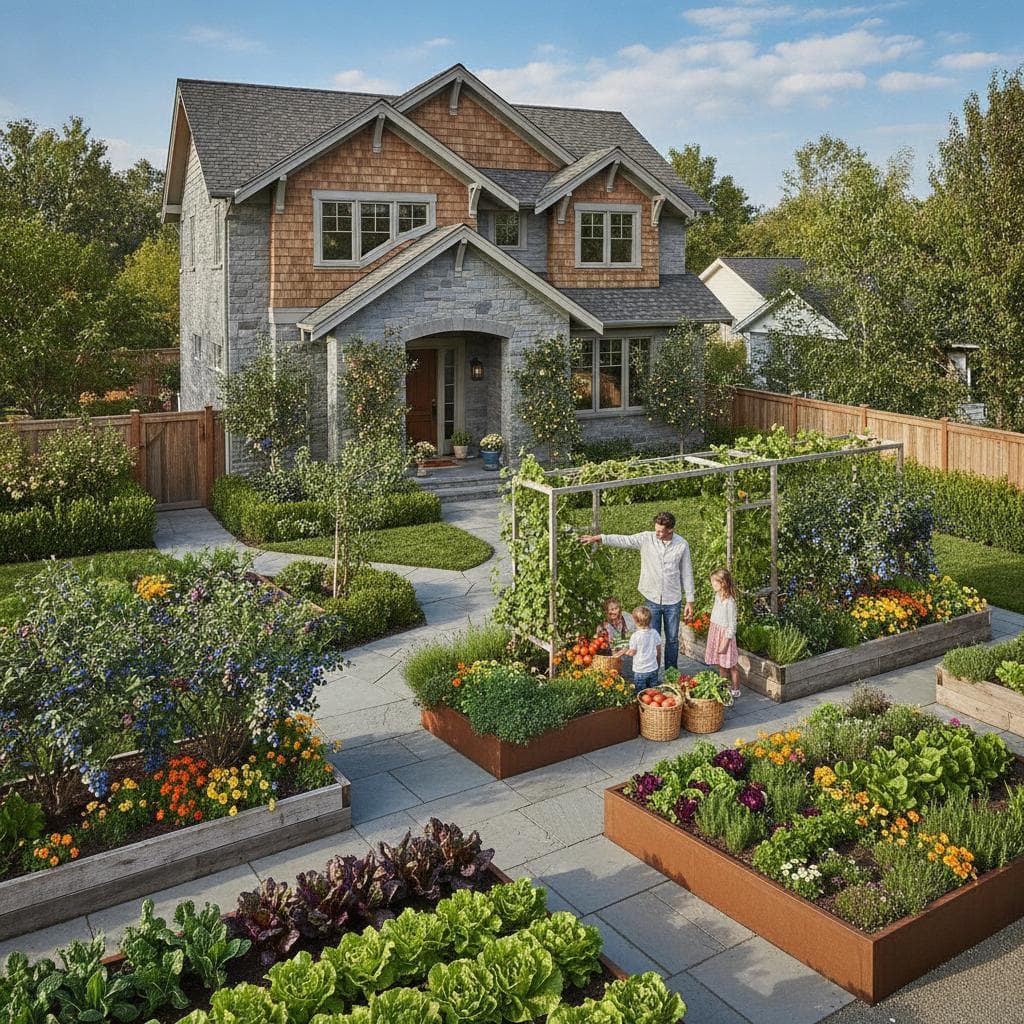
Grow Food in Your Front Yard With Strong Curb Appeal
A front yard can do more than frame your home. It can feed you too. Edible landscaping blends beauty and productivity, turning traditional lawns into thriving gardens that fit right into a neighborhood. The result is a space that feels generous, abundant, and full of life.
This approach to design invites people to rethink what curb appeal means. Instead of a static patch of turf, you get a living landscape that changes through the seasons and offers fresh herbs, fruit, and vegetables just steps from your door.
At a Glance
Location: Front yard, residential
Size: Adaptable from small lots to large properties
Climate zone: Suitable for most temperate and warm regions
Project goal: Combine food production with aesthetic planting for year-round appeal
1. Design for Structure First
Start with the same design discipline you would use for ornamental landscaping. Paths, edges, and focal points anchor the layout and keep the garden tidy. Raised beds, low retaining walls, or gravel paths define planting areas and make maintenance easier.
A designer might say: Structure keeps an edible garden from looking like a farm. It reads as intentional and well-kept.
Choose materials that match your home. Brick edging works well with traditional facades, while corten steel or cedar suits modern architecture. Keep sight lines open so the garden feels inviting rather than hidden behind tall plantings.
Visual callout: A gravel path lined with thyme leads to a small seating area surrounded by berry bushes.
2. Mix Ornamentals and Edibles
Blending food crops with ornamental plants creates a lush, layered look. Many edible species have impressive texture and color. Swiss chard adds glossy leaves in red and gold. Purple basil brings contrast to silvery sage. Strawberries make a dense, attractive groundcover.
Mixing types also helps balance the design through the seasons. When vegetable beds rest between plantings, evergreen shrubs or ornamental grasses keep the garden looking full.
A landscape contractor might say: Think of edibles as part of your palette, not a separate section. The mix keeps the space cohesive.
3. Choose Scalable Crops
Not every edible plant suits a front yard. Focus on species that look neat, grow predictably, and offer visual interest. Compact fruit trees like dwarf apples or figs add height and structure. Blueberries, rosemary, and lavender give form and fragrance. Kale, parsley, and lettuce fill gaps with texture.
Plant in repeating clusters for rhythm. Repetition makes even a diverse garden feel intentional. For example, alternate rosemary and lavender along a walkway, or repeat chard and kale in several beds for a consistent pattern.
Visual callout: A row of rosemary shrubs defines the path while providing fresh sprigs for cooking.
4. Add Seasonal Color with Edible Flowers
Flowers that are both beautiful and edible bring charm and variety. Nasturtiums spill over edges with bright orange blooms. Calendulas glow in early summer light. Chive blossoms and violas add color to salads.
These flowers attract pollinators, which support fruiting plants nearby. They also soften the geometry of raised beds or stone borders.
A horticulturist might say: Edible blooms blur the line between ornamental and edible. They make people smile before they realize the garden is productive.
5. Plan for Water and Maintenance
Front-yard gardens need thoughtful irrigation. Drip systems and soaker hoses keep water low and efficient. Mulch pathways with gravel or bark to reduce runoff. Compost topdressing improves soil structure and reduces the need for chemical fertilizers.
Design for easy access. Keep taller plants at the back of beds, lower ones near walkways. This makes harvesting and pruning simple. Regular trimming and replanting keep the garden neat, which helps neighbors appreciate the transformation.
Visual callout: Drip lines hidden under mulch deliver water directly to the root zone, keeping leaves dry and healthy.
6. Include a Gathering Spot
A small patio, bench, or bistro table turns the garden into a lived-in space. Sitting among edible plants reminds you that this landscape is not just for looks. It is for sharing, tasting, and relaxing.
Even a narrow front yard can host a compact seating area framed by low herbs or espaliered fruit trees. Lighting adds evening charm. Soft white string lights or low-voltage path fixtures extend use into twilight.
A designer might say: When people sit in the space, they connect with it. That connection makes the garden part of daily life, not just background scenery.
7. Keep the Neighborhood Context in Mind
An edible front yard should respect its surroundings. Use tidy edges, clear pathways, and balanced plant heights to match the scale of nearby homes. If your neighborhood values uniform lawns, start small with herb borders or a fruiting hedge to introduce the idea gradually.
Invite curiosity instead of controversy. Signage explaining the plants can turn a potential question into a conversation starter.
Visual callout: Small garden markers identify each edible species, turning the front yard into a quiet learning space.
Living with Your Design
Over time, an edible front yard becomes a reflection of its caretakers. Seasons bring new crops and small adjustments. A once-experimental patch of basil might turn into a permanent border. A young fig tree matures into a centerpiece.
Maintaining this type of garden means staying engaged. Prune, harvest, and replant as the year unfolds. The reward is more than fresh produce.
Growing food in the front yard adds depth to curb appeal. It proves that practical and attractive can coexist.