
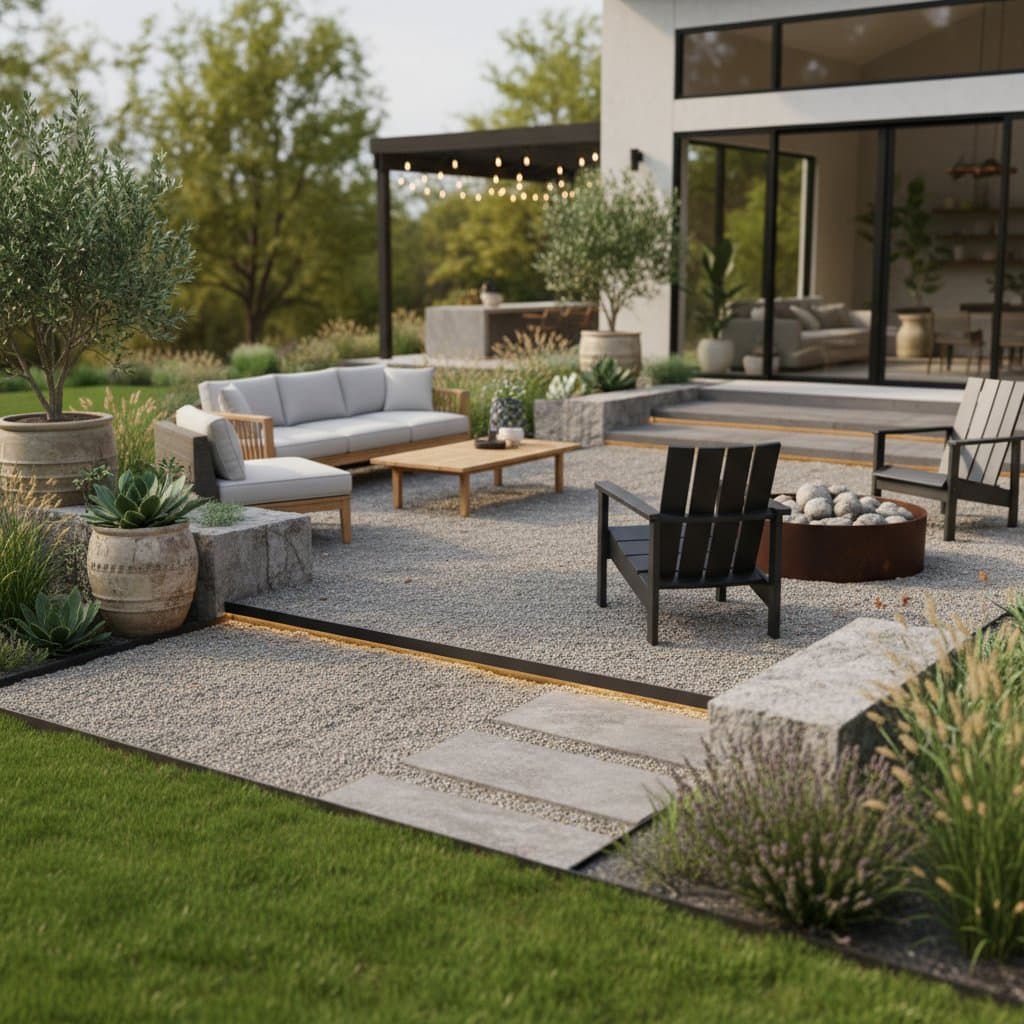
Gravel Patios: The 2026 Budget Alternative to Concrete
Gravel patios deliver a natural texture, superior drainage, and versatile design options that concrete often lacks. They provide a relaxed surface underfoot while accommodating various budgets and styles. For homeowners seeking to enhance outdoor living spaces affordably, gravel stands out as a practical choice that combines simplicity with enduring appeal.
These patios adapt to modern, rustic, formal, or casual aesthetics through careful planning. Proper installation ensures they perform as well as pricier options, offering low maintenance and seamless integration with surrounding landscapes.
Establish Clear Boundaries with Edging
Start by defining the patio's edges to create a polished, contained space. Edging prevents gravel from migrating into adjacent grass or garden beds and simplifies upkeep. Select materials that harmonize with your home's architecture and yard design.
For a sleek, contemporary edge, install steel or aluminum strips, which secure the gravel and form smooth transitions to lawns or mulch. In more traditional settings, opt for timber logs or brick borders to add warmth while providing sturdy containment. As one landscape architect notes, edge detailing elevates a simple gravel area into a refined feature.
Well-defined edges also facilitate routine maintenance, such as raking, and deter weed intrusion from nearby soil. On expansive patios, incorporate a low retaining curb using concrete pavers or limestone blocks. This approach frames the area effectively and supports uniform gravel compaction across the surface.
Visual suggestion: Steel edging defines a circular gravel patio adjacent to swaying ornamental grasses.
Build Layers for Durability and Water Management
Construct the patio in distinct layers to ensure long-term stability and effective drainage. First, excavate the site to a depth of 4 to 6 inches, removing sod and topsoil completely. Lay down a geotextile fabric to suppress weed growth, then add 2 to 3 inches of base material, such as crushed limestone or gravel.
Compact the base layer using a plate compactor until it forms a firm foundation. Top it with 2 inches of decorative gravel, such as pea gravel or river rock, and compact again for a stable finish. This method promotes quick water runoff, minimizes settling, and prevents the surface gravel from blending with subsoil.
Compared to pouring a concrete slab, this process demands less equipment and skilled labor. A construction expert emphasizes that a solid base layer is key to gravel's value, delivering a permeable surface suitable for furniture and regular use without compromising functionality.
Incorporate Lighting to Extend Evening Enjoyment
Strategic lighting transforms a gravel patio into an inviting evening retreat, accentuating its textured surface and prolonging usability after sunset. Integrate a mix of path lights, uplights for nearby foliage, and overhead options for key zones like seating areas.
Install solar-powered stake lights along the perimeter for effortless, wire-free illumination. Hang string lights or place lanterns to cast a soft, reflective glow on the gravel. Around a central fire pit, pair its warmth with low-voltage spotlights to achieve balanced, glare-free ambiance.
Gravel's light-reflecting qualities amplify even basic setups, fostering a cozy atmosphere. Select fixtures with a 2700K warm white tone to enhance the neutral hues of the stones and integrate with plantings.
Combine Materials for Enhanced Visual Interest
Elevate the patio's design by integrating gravel with complementary elements for added depth and functionality. Embed concrete pavers as stable stepping stones through the gravel field, or intersperse flagstone slabs for a rugged, natural pathway.
Use wood decking sections to support lounge areas, with gravel filling the surrounding paths for fluid movement. This hybrid approach stretches your budget, as gravel handles broad coverage economically while accents add targeted elegance.
In contemporary designs, pair dark basalt gravel with pale concrete for striking contrast. For classic vibes, surround crushed limestone with brick edging and terracotta accents. A design professional advises balancing contrasts through repetition to maintain unity, ensuring the composition feels intentional rather than disjointed.
Select Furniture That Complements the Surface
Choose outdoor furniture that interacts well with gravel to maximize comfort and stability. Prioritize pieces with broad, flat bases or sled-style legs to avoid sinking into the loose material. Durable options include powder-coated metal, weather-resistant teak, or all-weather wicker.
Position heavier items like dining tables or sofas to visually and physically secure the space. Layer in outdoor rugs crafted from UV-resistant polypropylene to define zones and contain stray stones. An interior stylist observes that grounded furniture placements make the patio feel integrated with the yard, rather than imposed upon it.
For dining setups, install a small concrete or stone pad under the table to steady chairs during meals. The encircling gravel then provides a forgiving, drainable surround for inevitable spills or weather exposure.
Adapt for Seasonal Versatility
Design the patio to thrive through changing seasons, leveraging gravel's inherent flexibility. During summer, install retractable shade sails or a pergola with climbing vines for dappled sunlight. In fall or winter, incorporate freestanding heaters or a stone fire bowl to warm gatherings.
Gravel's permeable nature allows it to dry rapidly after precipitation, outperforming solid surfaces that retain moisture. Place removable mats or rugs beneath seating to manage stone displacement during high-use periods. A seasoned contractor highlights gravel's adaptability as its core strength, enabling the space to harmonize with environmental shifts rather than resist them.
Visual suggestion: A fire bowl centers a gravel seating arrangement, accented by wool blankets and flickering lanterns.
Embracing Gravel's Enduring Appeal
Gravel patios merge cost savings with aesthetic versatility, creating outdoor havens that evolve naturally over time. They integrate effortlessly with gardens, supporting plantings that mature along the borders for a lived-in charm.
This material forgives adjustments, allowing redesigns without major disruption or added expense. Beyond initial economies, gravel fosters sustainable spaces that invite year-round engagement, rooted in the landscape's rhythms.