
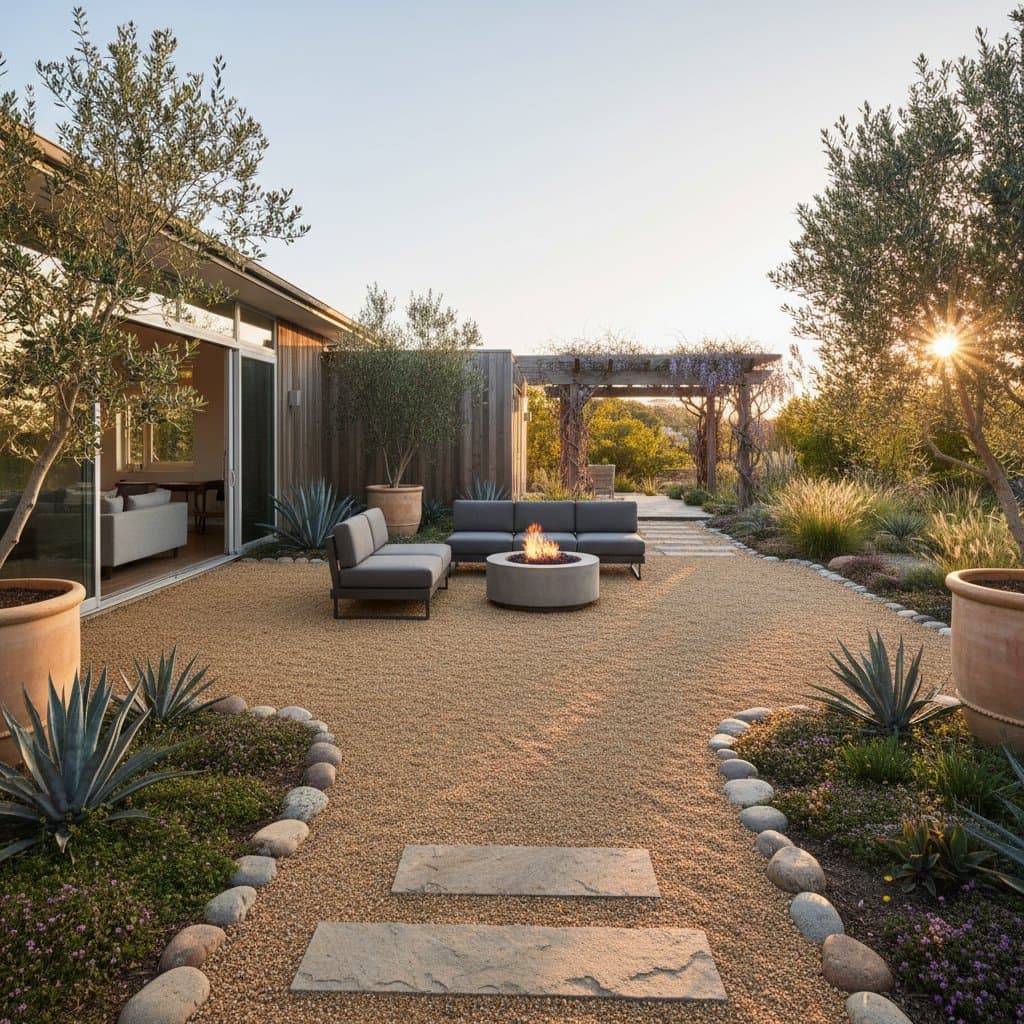
Gravel Patios Emerge as the Leading Alternative to Wood Decks
A well-crafted outdoor area promotes relaxation without demanding ongoing labor. Homeowners in California and other regions find that gravel patios offer the warmth and utility of conventional decks at a lower price and with less effort. Their natural appearance, water permeability, and design versatility position gravel patios as the preferred choice for creating an elegant, low-maintenance haven.
The Attraction of Gravel in Contemporary Outdoor Spaces
Homeowners often first appreciate the subtle refinement of gravel patios. This material aligns with California's relaxed aesthetic, blending organically with water-efficient plantings and adapting to yard topography. Gravel provides a foundation for innovative layouts that enhance the site's inherent features.
Unlike wood decks, which demand sealing, sanding, and eventual replacement, gravel patios maintain their integrity with basic care. The material withstands environmental exposure effectively. Proper installation, including compacted sub-layers and borders, ensures longevity spanning many years. Stone varieties, from earthy decomposed granite to polished pea gravel or jagged crushed rock, deliver distinct textures and drainage properties. Select based on intended activities, such as lounging or walking.
Reasons Homeowners Shift from Wood Decks
Wood decks represent classic outdoor enjoyment, yet their care requirements clash with preferences for sustainable, hassle-free options. Pressure-treated wood or composites still require substantial attention over time.
Key issues include:
- Exposure to elements: Ultraviolet rays and humidity degrade finishes rapidly.
- Material degradation: Planks may twist, crack, or decay, particularly near water or in moist climates.
- Ongoing labor: Staining, sealing, and repairs generate repeated costs.
Gravel patios address these challenges directly. The surface avoids decay, requires no coatings, and manages water efficiently. With a firm foundation and perimeter restraints, these patios endure for decades, needing only occasional redistribution or replenishment.
Creating a Refined Gravel Patio Design
Intention transforms a gravel patio into a sophisticated extension rivaling wood or paver terraces. Focus on precise elements to achieve polish.
1. Select appropriate gravel variety and hue
- Pea gravel offers a soft tread, suitable for seating or relaxation zones.
- Crushed stone yields a stable base for tables and routes.
- Decomposed granite forms a dense, earthy layer perfect for contemporary or Mediterranean motifs.
Hue influences ambiance and heat retention. Opt for pale tones to minimize warmth in sunny areas, or deeper shades to contrast with foliage and structures.
2. Establish clear borders
Containment prevents gravel spread. Install metal, rock, or wood borders to maintain tidiness and avoid intrusion into adjacent soil or turf. Such framing imparts a professional finish, shifting the area from basic to bespoke.
3. Build layered stability
Effective gravel patios feature a compressed underlayer of larger aggregate covered by finer particles. This setup promotes drainage and reduces movement. For zones supporting substantial weight, incorporate a mesh stabilizer below the top layer.
4. Incorporate greenery and functional areas
Gravel accommodates diverse integrations. Encircle a fire pit with radial gravel, position a table beneath an arbor, or intersperse drought-hardy plants like agave or lavender for texture. Combine with pavers or timber accents to introduce variety and focal points.
Sustainability and Functional Advantages
Gravel patios appeal beyond aesthetics through environmental merits. Their porous nature permits water infiltration, aiding aquifer recharge and curbing runoff. This quality mitigates soil loss on inclines.
In California, gravel supports conservation by complementing low-water flora, embodying eco-conscious habits while preserving usability. Compared to impervious surfaces like concrete, gravel moderates temperatures, fostering cooler environments.
The material conforms to irregular landscapes readily. Rather than extensive grading or rigid pours, gravel follows terrain contours. This adaptability lowers installation expenses and preserves established vegetation.
Analyzing Costs and Endurance
Gravel patios typically cost less than wood decks in materials and labor. Long-term upkeep savings amplify the value.
Basic installations run at a small fraction of composite alternatives, with no recurring treatments or part swaps. Refresh the surface through raking and periodic additions as needed.
Endurance favors gravel as well. Wood deteriorates progressively, whereas gravel consolidates with use. Address any low spots through simple redistribution, appealing to those seeking straightforward maintenance.
Insights from Actual Landscapes
California gardens showcase gravel patios across diverse aesthetics. Coastal properties employ pale pea gravel to bounce light and harmonize with coastal plants and aged timber pieces. In vineyard regions, decomposed granite mirrors earthy palettes, forging unity with the terrain.
City dwellings leverage dark crushed stone to ground modern fixtures like steel chairs and flame features. For households with children, blend gravel with durable pavers for defined paths or motifs. The material dampens noise, softens reflections, and engages senses with its subtle sound, encouraging leisurely use.
Steps to Construct Your Patio
Plan meticulously before starting a gravel patio. Assess dimensions, usage patterns, and compatible materials. Engage a landscaper for complex grading, water management, and bordering on expansive or tilted properties.
For self-guided efforts, prioritize site prep. Clear vegetation, establish a robust sub-base, and compress layers methodically. Position permeable geotextile underneath to block weeds without impeding flow.
Post-installation, maintain ease prevails. Redistribute gravel periodically or supplement as seasons progress. Introduce cushioned furniture, ambient illumination, or a compact hearth to elevate the area as a home annex.
Embracing the Lasting Value
A gravel patio extends beyond utility to embody mindful, unhurried existence. It nurtures local ecosystems, demands little oversight, and sustains allure with sparse adjustments. Homeowners favoring resilience over wood's rigors discover in gravel a harmonious mix of utility and grace attuned to California's open-air ethos.
Transitioning from decks to gravel yields adaptability, ecological gains, and perennial sophistication. The outcome is a venue that ripens organically, facilitates gatherings, and merges fluidly with its surroundings.