
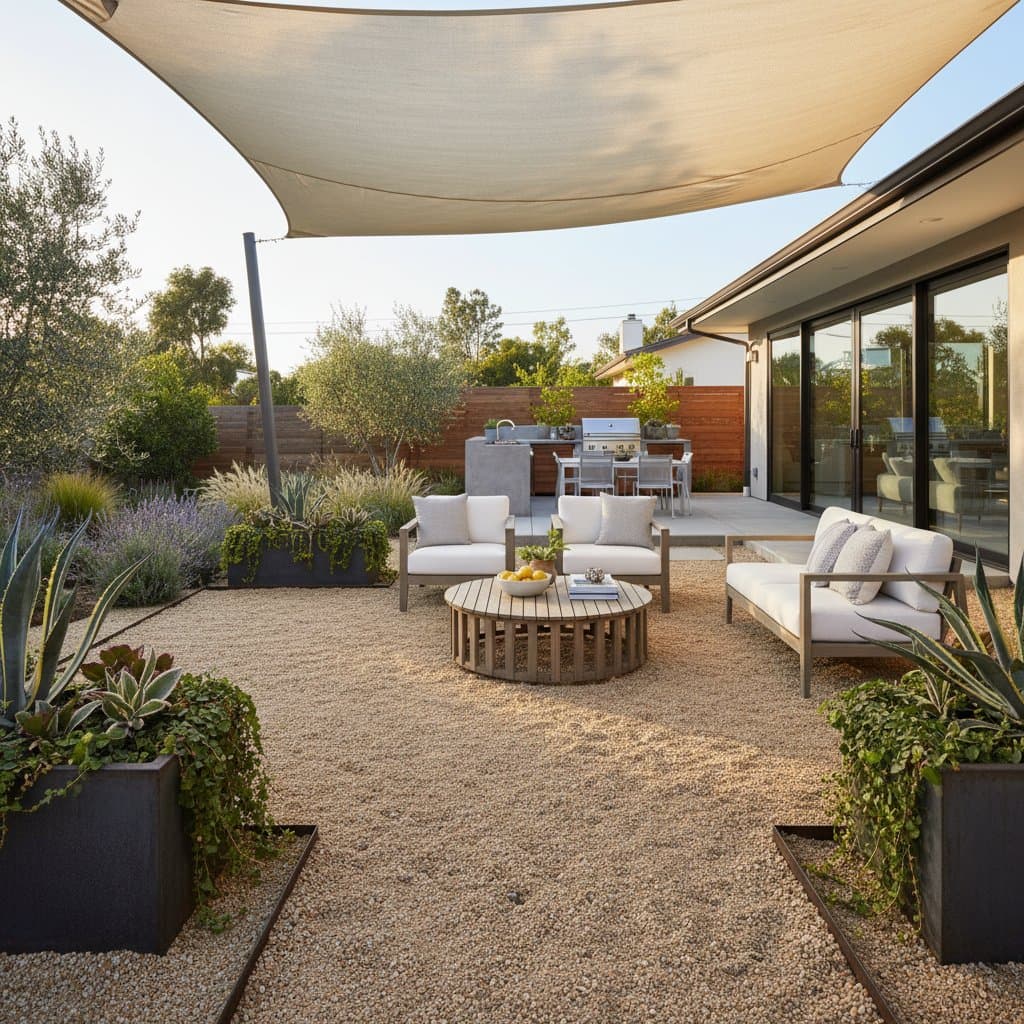
Gravel Patios: A $3,000 Option Outshining Concrete Costs
A thoughtfully designed patio extends living spaces seamlessly into the outdoors. Homeowners frequently encounter high expenses with poured concrete or stone pavers. Gravel patios present an elegant, budget-conscious choice that aligns with California's casual outdoor lifestyle. For approximately $3,000, these surfaces provide comfort, adaptability, and a warm aesthetic without the high price or fixed nature of concrete.
The Rising Popularity of Gravel Patios
Gravel attracts attention through its straightforward appeal. The material offers a natural sensation underfoot and excels at water drainage. It integrates well with contemporary and traditional garden designs. In California's coastal and interior regions, gravel remains cooler than impervious surfaces, ensuring comfort on warm afternoons. Its subtle texture minimizes reflective light, fostering a relaxed setting for social events.
Property owners find that gravel patios achieve a polished appearance rather than a rough one. Proper installation, including defined borders, strategic vegetation, and sturdy accessories, allows these areas to compete with more expensive paved options in terms of refinement.
Steps to Plan an Effective Gravel Patio
Approach the gravel patio project with the discipline of a minor building endeavor. This preparation promotes endurance and ongoing enjoyment.
1. Identify the intended function. Determine if the area will function as a dining zone, fire feature location, or serene retreat. The purpose shapes the configuration and material thickness. For example, dining spaces require a more solid substructure, whereas relaxation areas tolerate a softer composition.
2. Outline and dimension the area. Draw the layout on graph paper, then delineate it on-site using string lines or marking spray. These actions help assess movement patterns and accessory arrangements prior to excavation.
3. Build a solid foundation. Remove at least four inches of topsoil and compact the subgrade thoroughly. Incorporate a two-inch layer of angular crushed rock or decomposed granite for stability. Place geotextile fabric over this layer to suppress weed growth while preserving permeability.
4. Select appropriate gravel types. Consider pea gravel for its gentle, rounded pebbles that suit barefoot walking. Opt for decomposed granite when a compact, stable surface supports heavier items like tables. Crushed limestone provides a bright, uniform finish, though it might require periodic replenishment. Choose hues that harmonize with the residence facade and surrounding flora.
5. Install robust edging. Use metal strips, such as galvanized steel or aluminum, or natural stone to confine the gravel and avoid spillover into adjacent turf or planting beds. Effective edging enhances visual boundaries and contributes to a professional finish.
Practical Durability and Upkeep
Gravel patios demand periodic care, but this proves less demanding than repairing fractured concrete. Employ a rake to level the surface and even out displaced stones weekly in active zones. Replenish gravel annually or biennially to sustain depth and vibrancy. The permeable quality prevents water accumulation, minimizing erosion risks.
In zones with heavy use, integrate plastic or composite stabilizing grids under the gravel to maintain evenness. This measure benefits households with animals or young children by preserving a flat profile. Landscape professionals often suggest encircling the patio with indigenous shrubs or water-wise perennials to create smooth edges and mitigate thermal gain.
Strategies for Integrated Design
Gravel patios harmonize with California's gardens that prioritize varied textures and illumination. Combine gravel with organic elements like timber benches, boulder accents, or patinated iron features for unity.
-
Incorporate elevated planters. Position sizable pots in terracotta or corten steel, planted with agaves or feather grasses, to introduce vertical interest and seasonal hues.
-
Integrate shading solutions. Install a wooden pergola, fabric shade sails, or allow established oaks to filter sunlight, enhancing usability during peak heat.
-
Enhance with illumination. Deploy solar-powered LED fixtures along pathways or hanging globes to accentuate the gravel's gentle luminescence at dusk.
-
Choose stable furnishings. Select items with broad bases or pads to distribute weight evenly, such as eucalyptus dining sets, aluminum frames, or resin-woven chairs suited to local weather variations.
Cost Analysis and Endurance
Gravel installations represent a modest fraction of concrete slab expenses, particularly if owners contribute labor. Professional services still yield considerable economies. The adaptable design permits future adjustments or enlargements with little disruption. Should tastes evolve, gravel relocates easily, reducing environmental impact.
Longevity hinges on initial groundwork. A firmly packed subbase paired with secure perimeters withstands years of exposure. Routine adjustments preserve aesthetics, and refresh expenses stay modest relative to concrete overhauls or paver resets.
Maximizing the Benefits of Your Gravel Patio
Upon completion, the gravel patio delivers a fulfilling outdoor haven. It promotes relaxed routines, from dawn beverages to evening conversations. The distinctive crunch and yielding surface underfoot add a tactile dimension absent in rigid pavements, inviting frequent use throughout the seasons.