
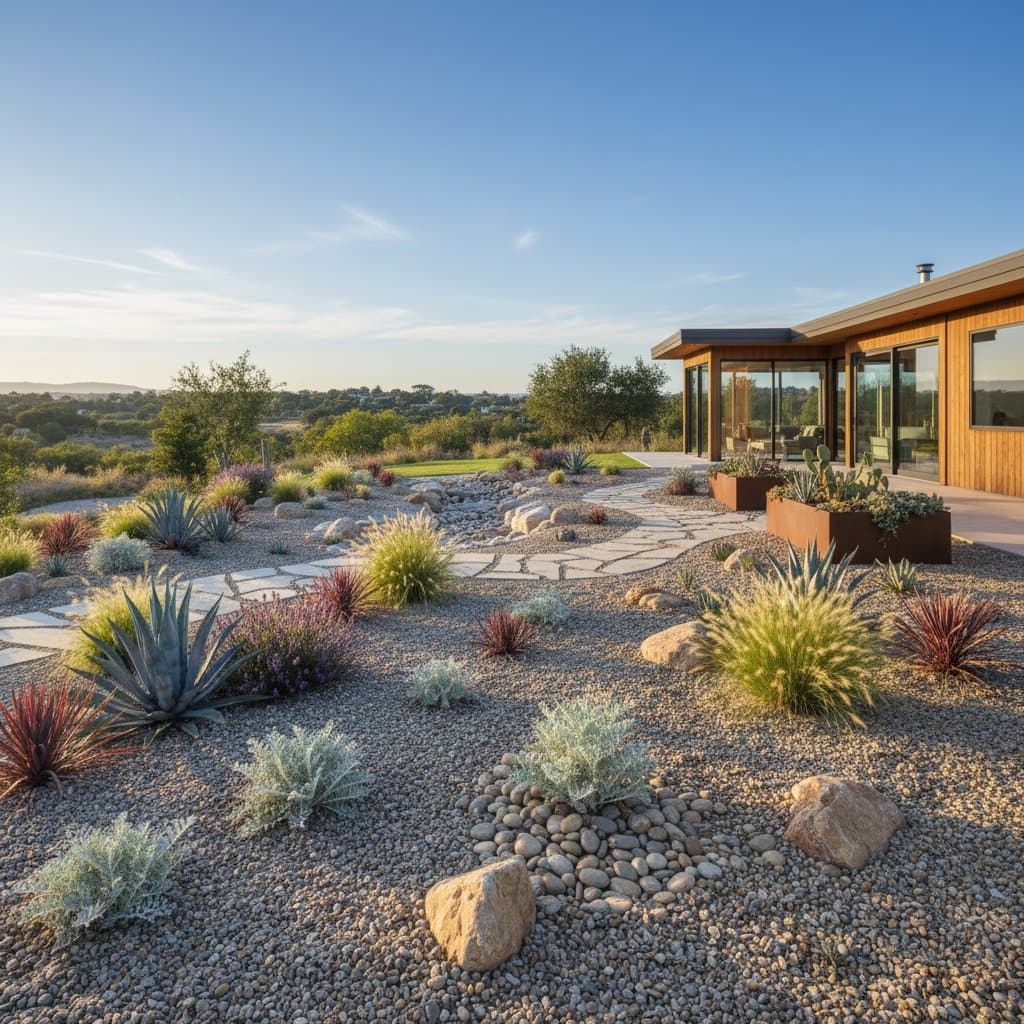
Why Gravel Gardens Reduce Lawn Care Costs by 70 Percent
A well-designed gravel garden offers more than a stylish alternative to turf. This practical, budget-friendly, and ecologically balanced landscape choice reduces water use, eliminates frequent mowing, and keeps maintenance costs to a fraction of those required by traditional lawns. Homeowners in California and other dry regions report savings of up to 70 percent on lawn care while enjoying texture, color, and visual warmth.
This landscaping approach preserves greenery and charm. It creates a landscape that thrives in natural conditions, respects local water restrictions, and remains inviting throughout the year.
Breaking Down the Cost Savings
The 70 percent savings arise from reductions in water, labor, and material expenses. Examine the primary factors below.
Water Usage Reduction
Grass lawns demand substantial water. Even drought-tolerant varieties require regular irrigation to remain green during dry periods. Gravel gardens eliminate this need. Select plants like lavender, agave, yarrow, or sedum to achieve a lush appearance with minimal watering. Install a drip irrigation system on a timer to reduce water consumption by more than half compared to sprinkler systems for lawns.
Elimination of Mowing and Edging
Mowers, trimmers, and blowers require fuel, electricity, and significant time. Gravel gardens remove these expenses entirely. The surface maintains neatness without mechanical tools. An occasional rake to reposition gravel or clear debris provides sufficient upkeep.
Decreased Need for Fertilizers and Chemicals
Lawns frequently rely on fertilizers and pesticides to sustain their appearance. Gravel gardens depend on healthy soil and resilient plants. Once established, native or adapted species form a stable micro-ecosystem that naturally resists pests. This approach eliminates chemical expenses and safeguards local groundwater.
Minimized Replacement and Repair Expenses
Lawns develop bare spots, diseases, and compaction issues. Costs for re-seeding, aerating, and patching accumulate rapidly. Gravel installations with a weed barrier and properly graded base remain stable for years. Refresh the gravel periodically, but the foundation endures without major repairs.
Broader Environmental and Lifestyle Advantages
Financial benefits represent only one aspect. Gravel gardens foster healthier outdoor spaces.
- Water Conservation: Each gallon conserved aids regional sustainability and eases pressure on municipal supplies.
- Soil Protection: The gravel layer prevents erosion and moderates soil temperature variations.
- Biodiversity Support: Native and drought-tolerant plants draw bees, butterflies, and birds.
- Noise and Emission Reductions: Removing power equipment lowers both noise pollution and carbon emissions.
- Seasonal Consistency: Gravel gardens retain structure and visual interest during off-seasons, unlike lawns that brown or become patchy.
Homeowners gain freedom from weekend mowing routines. This allows more time for activities such as enjoying morning coffee, hosting evening barbecues, or observing sunlight patterns on the stones.
Sustaining and Enjoying Your Gravel Garden Over Time
After installation, a gravel garden evolves gracefully. Plants adapt to their environment, roots deepen for better resilience, and textures interact more dynamically across seasons. Routine tasks stay simple, ensuring ongoing savings.
Homeowners pursuing landscapes that honor budgets and ecosystems find reliable outcomes in gravel gardens. These designs align with California's patterns of dry summers and mild winters, embracing natural resilience over resistance.
A thoughtfully planned gravel garden elevates outdoor living. Each stone, plant, and pathway element builds a haven for relaxation and resource conservation. Experience the ease of upkeep, and traditional grass may lose its appeal forever.