
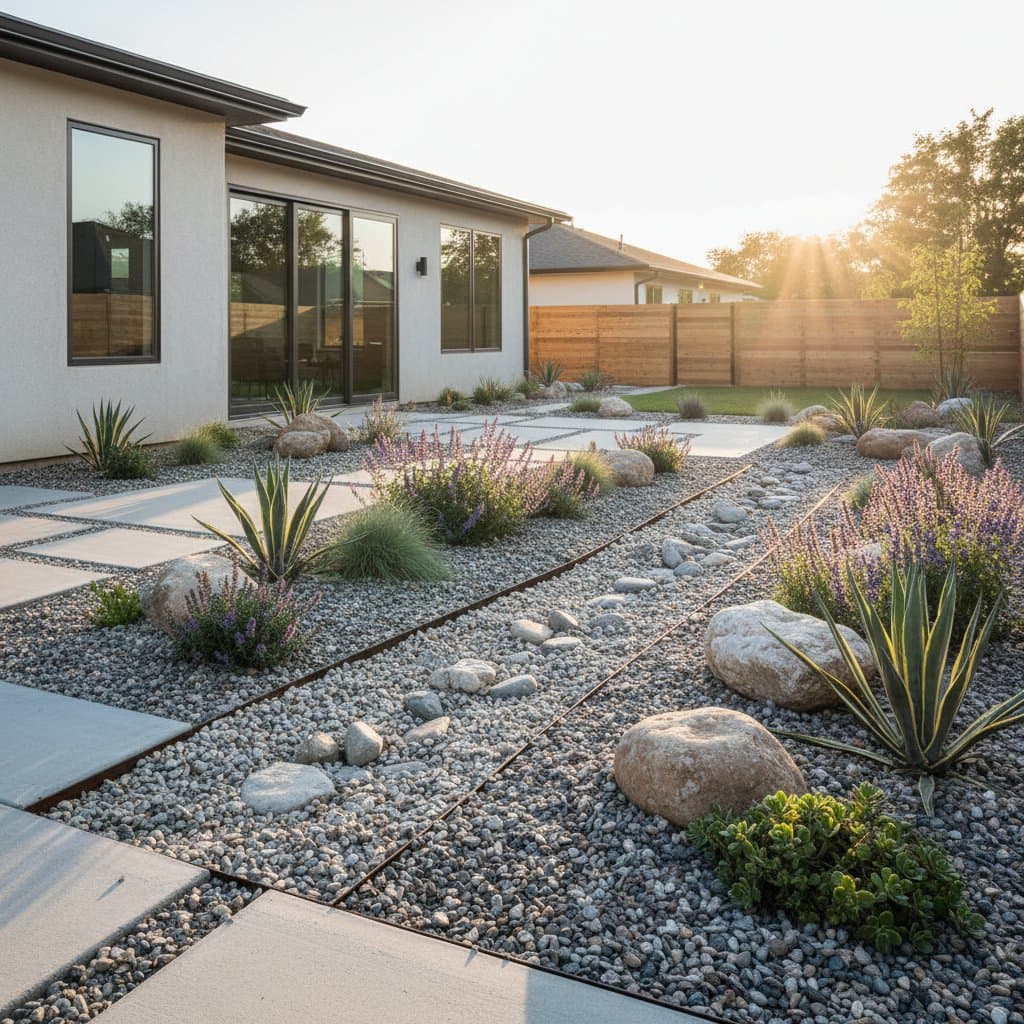
Why Gravel Replaces Mulch in Low-Maintenance Yards
Gravel has transitioned from utilitarian driveway borders to the centerpiece of contemporary landscapes. Homeowners and landscape designers select it for its pristine appearance, extended lifespan, and minimal maintenance requirements. This change surpasses mere aesthetics. It aligns with a broader movement toward outdoor spaces that conserve resources, require less intervention, and maintain visual appeal over time.
Gravel forms a polished, resilient surface capable of withstanding intense sunlight, heavy rainfall, and regular foot traffic. Its understated texture harmonizes with surrounding vegetation, architectural features, and hardscape elements without overwhelming them. For those seeking simplified yard care, gravel emerges as the preferred alternative to mulch in ground cover applications.
Key Considerations at a Glance
- Ideal Locations: Suburban and urban properties
- Suitable Scale: Small to medium-sized yards
- Climate Compatibility: Arid, temperate, or transitional zones
- Primary Objectives: Minimize maintenance while preserving visual dynamism and supporting plant vitality
1. Superior Durability and Longevity
Unlike mulch, which decomposes and requires annual replenishment, gravel maintains its form and function for decades. Natural stone varieties resist breakdown from weather exposure, UV radiation, and biological decay. This longevity eliminates the need for frequent replacements, saving time and resources for property owners.
Landscape professionals often highlight gravel's robustness in demanding environments. One contractor notes, “Gravel stands firm against the elements, providing a stable base that mulch simply cannot match over multiple seasons.”
In practical terms, gravel withstands erosion on slopes and compaction in high-traffic areas. It supports the integration of permeable designs that enhance overall yard resilience.
Core Advantage: Endures without degradation, reducing long-term costs.
Design Tip: Select angular gravel for stability in pathways or rounded pea gravel for softer, decorative borders.
Real-World Application: Install crushed gravel in a front yard border to frame flower beds, ensuring the surface remains intact through winter freezes and summer droughts.
Highlighted Feature: “The enduring solidity of gravel creates a timeless foundation for evolving garden designs.”
2. Efficient Water Management
Mulch retains moisture to benefit plants in arid conditions, yet it risks fostering fungal growth or root rot in wetter scenarios. Gravel, by contrast, promotes rapid drainage while moderating soil surface temperatures. This allows precipitation to infiltrate the earth efficiently, avoiding surface pooling.
A landscape contractor explains, “Gravel functions as a natural filter. It moderates runoff and prevents soil compaction following intense storms.”
Enhanced permeability benefits water-conserving and indigenous plant selections. Gravel mitigates erosion, curbs mosquito breeding in standing water, and simplifies stormwater control in rainy climates without relying on elaborate infrastructure.
Core Advantage: Reduces erosion and optimizes soil hydration.
Design Tip: Pair gravel with permeable pavers to develop driveways or walkways that facilitate water absorption.
Real-World Application: Apply decomposed granite amid oversized pavers in a courtyard setting to capture rainfall and recharge groundwater.
Highlighted Feature: “Loose gravel margins direct water flow toward integrated planting swales with precision.”
3. Effective Weed Suppression
Gravel inhibits weed growth more reliably than mulch, which can break down and create opportunities for invasive plants. A thick layer of stone blocks sunlight to underlying soil, starving potential weeds of essential light. This natural barrier demands less herbicide use and manual weeding.
Garden experts emphasize its preventive role. A horticulturist observes, “Gravel establishes a formidable shield against weeds, preserving the intended plant palette with minimal effort.”
To maximize suppression, install landscape fabric beneath the gravel for added protection. This approach suits busy households aiming for pristine, low-intervention gardens.
Core Advantage: Deters weed establishment and proliferation.
Design Tip: Opt for larger gravel sizes to minimize displacement and maintain coverage integrity.
Real-World Application: Surround a vegetable patch with fine gravel to keep pathways weed-free, allowing focus on crop care rather than constant tidying.
Highlighted Feature: “A consistent gravel layer ensures weeds remain at bay, fostering a neat and controlled garden expanse.”
4. Thermal Regulation and Light Reflection
Organic mulches absorb solar energy, potentially elevating soil temperatures in warm months. Gravel reflects sunlight and buffers against extreme fluctuations, protecting root zones from overheating. This creates a more stable microclimate conducive to plant health across seasons.
A horticulturist describes it as, “Gravel serves as a natural thermostat, steadying soil warmth to sustain perennials through varying weather patterns.”
In brightly lit areas, lighter gravel varieties illuminate dimmer sections and accentuate leaf textures in species such as sedum, yucca, or ornamental grasses. The interplay of light fosters a vibrant, evolving surface that responds to daily illumination changes.
Core Advantage: Cools roots and mitigates heat accumulation.
Design Tip: Match gravel hues to site conditions; light tones illuminate shadows, while deeper shades anchor sun-drenched compositions.
Real-World Application: Encircle a fire pit with crushed granite to distribute warmth evenly without compromising adjacent soil quality.
Highlighted Feature: “Sunlight dances across pale gravel, infusing planting areas with a gentle, radiant glow.”
5. Compatibility with Water-Wise and Native Plants
Contemporary low-maintenance designs frequently incorporate drought-resistant flora. Gravel replicates the arid or littoral environments these plants prefer, offering soil cover without excess humidity. It safeguards against moisture-related issues while permitting natural drying cycles.
A native landscape specialist affirms, “Gravel mulch aligns with the needs of indigenous gardens. It shields soil without retaining unnecessary water.”
Additionally, gravel prevents soil particles from splattering onto foliage during irrigation or rain, thereby lowering disease risks. It integrates effortlessly with bunchgrasses, succulents, and resilient shrubs to achieve ecological harmony.
Core Advantage: Promotes robust root development in moisture-sensitive species.
Design Tip: Incorporate regionally sourced stone to reinforce local aesthetic and environmental ties.
Real-World Application: In a xeric layout, position decomposed granite around desert marigold and penstemon to evoke authentic arid beauty.
Highlighted Feature: “Warm gravel hues mirror the subtle shades of native grasses under evening sunlight.”
6. Seamless Integration with Diverse Materials
Gravel bridges the gap between organic and inorganic landscape components. It occupies spaces between flagstones, delineates patios, and eases shifts from turf to borders. Such adaptability accommodates varied architectural motifs.
A designer points out, “Gravel functions as a subtle unifier. It tempers transitions among concrete, timber, and greenery.”
For example, a gravel strip alongside stepping stones interrupts monotonous hardscapes. Near elevated structures like decks or pergolas, it ensures proper drainage and a refined edge. It proves suitable beneath seating or around focal points where mulch might degrade or disperse.
Core Advantage: Enhances zone transitions and surface firmness.
Design Tip: Employ varied gravel grains to delineate areas discreetly.
Real-World Application: Border a lounge area with smooth pea gravel, contrasting it with coarser crushed stone along access routes.
Highlighted Feature: “A refined gravel edging completes the patio, anchoring it firmly in the landscape.”
Embracing Gravel for Everyday Outdoor Enjoyment
Those who adopt gravel in place of mulch discover yards that demand less attention yet appear impeccably maintained. The material holds steady across weather cycles, resists unwanted vegetation, and adapts to diverse planting schemes. It fits seamlessly into both sleek modern settings and classic garden traditions, responding to local climates and built forms.
The adoption of gravel extends beyond practicality. It alters the sensory experience of a space, from the satisfying sound of footsteps on its surface to the subtle shimmer of light upon it. This enduring, undemanding element elevates routine interactions with the outdoors into moments of quiet satisfaction.