
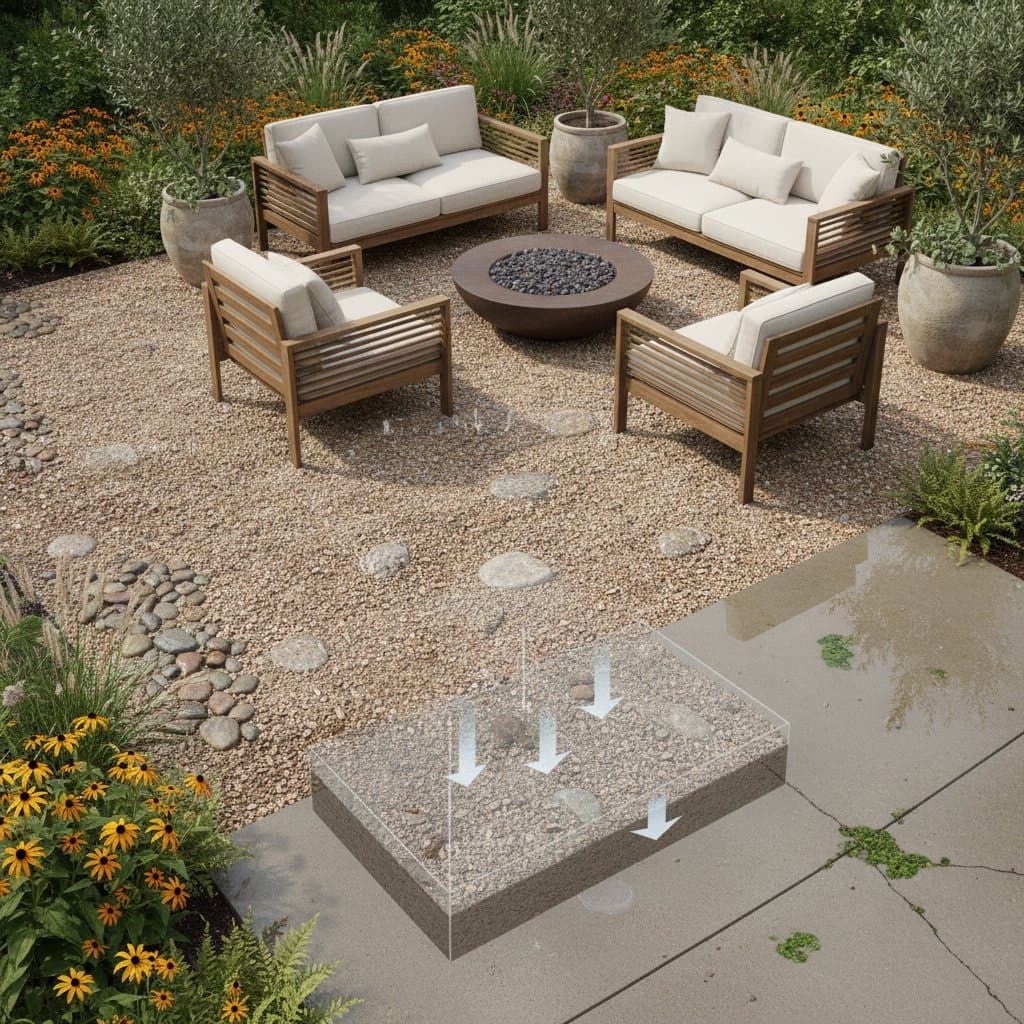
Why Gravel Surpasses Concrete as the Ideal Patio Choice for 2026
Gravel patios gain prominence over concrete in contemporary outdoor design. These surfaces introduce texture, warmth, and simplicity that suit modern and naturalistic environments alike. Property owners select gravel for its pleasant sensation underfoot, water permeability, and stylistic adaptability across diverse climates.
At a Glance
- Location: Residential backyards and courtyards
- Size: Adaptable for compact terraces or vast gardens
- Climate Zone: Suitable for arid, humid, or moderate regions
- Project Goal: Develop a low-maintenance, water-permeable, and visually gentle outdoor area
Gravel patios provide an organic and stable foundation. Water drains naturally following rainfall, surfaces remain cooler in sunlight, and materials integrate with adjacent vegetation. Concrete presents a neat and sturdy appearance, yet gravel delivers a more engaging tactile and visual encounter alongside expanded creative options.
1. Promote Natural Drainage
Gravel facilitates water infiltration into the soil rather than accumulation or surface runoff. This characteristic minimizes soil erosion and nourishes roots of nearby vegetation. In areas with slopes, gravel patios avert the soil displacement common with impermeable concrete installations.
Professionals note that permeable surfaces harmonize with the terrain rather than oppose it. Install gravel over a compacted layer of crushed stone and sand to ensure stability while permitting rainfall passage. Options such as decomposed granite, pea gravel, or crushed limestone prove effective; they form a solid yet yielding base that eliminates standing water and maintains accessibility throughout the year.
Visual Callout
A decomposed granite patio outlined by steel edging permits rain to seep directly into the earth, eliminating any runoff.
2. Provide Comfort and Adaptability
Gravel offers a softer, more accommodating feel compared to the rigidity of concrete. It accommodates soil shifts and thermal fluctuations without developing fractures. Such resilience suits regions prone to freeze-thaw conditions or unstable ground.
Modifying gravel patios requires less labor than altering concrete. Property owners expand, reconfigure, or renew these areas through straightforward methods. Adjustments to furniture layouts or additions like fire pits involve only minor edging realignments.
Experts emphasize that gravel allows spaces to develop alongside evolving requirements. This adaptability positions it as a durable choice that aligns with changing household dynamics over extended periods.
Visual Callout
Rounded pea gravel softens each footfall, forming a serene, shoe-optional route to the lounging zone.
3. Introduce Texture and Warmth to the Design
Concrete often appears severe, particularly amid lush garden plantings. Gravel imparts varied textures and hues that harmonize structural and organic features. The evolving shades of decomposed granite or river rock capture and reflect sunlight, imparting movement absent in concrete finishes.
Designers blend gravel particle sizes and tones to delineate areas without rigid divisions. Pair warm golden granite with drought-resistant Mediterranean flora, or select gray crushed stone for sleek, seaside-inspired aesthetics. The gentle sound of gravel underfoot further enriches the ambiance, fostering a vibrant and authentic atmosphere.
Specialists observe that texture infuses vitality into exterior floors. Gravel achieves this enhancement with ease.
Visual Callout
Golden decomposed granite enhances silver-green sage and lavender, yielding a unified, sun-drenched composition.
4. Streamline Upkeep Requirements
Concrete surfaces develop visible stains, fissures, and fading with age. Gravel evolves gracefully and conceals minor flaws. Proper setup over landscape fabric limits weed growth, and scattered stones return easily with a rake.
Renewing gravel involves applying a fresh layer periodically to restore uniformity. This process demands basic implements and avoids the expense and interruption of concrete repairs or sealants. Homeowners manage these tasks independently, preserving the surface's appeal with routine effort.
Contractors highlight that gravel matures attractively. It tolerates imperfections, simplifying daily coexistence.
Visual Callout
A basic rake restores evenness and order to the surface following seasonal activity.
5. Advance Eco-Friendly Practices
Gravel patios align with environmental priorities through inherent permeability that aids aquifer replenishment. Sourcing from nearby quarries reduces transport emissions, and manufacturing demands lower energy than concrete production and setting.
In water-scarce locales, gravel complements xeriscaping by integrating with resilient species such as agave, yucca, or little bluestem grasses. This combination yields purposeful landscapes that conserve resources effectively.
Consultants affirm that each permeable element enables gardens to function sustainably. Gravel combines utility with ecological benefits.
Visual Callout
Native grasses edge a gravel patio enclosed by aged steel containers, blending form and function.
6. Broaden Creative Opportunities
Gravel extends its utility to walkways, entry drives, and enclosed yards. Consistent use across zones fosters property-wide cohesion. It also facilitates smooth transitions from constructed features to vegetated sections.
For contemporary residences, stabilized decomposed granite with precise steel borders upholds a refined edge. In informal gardens, unbound gravel trails merge fluidly with blooming perennials and culinary herbs. Elements like illumination, seating, and containers integrate more naturally against gravel's understated canvas.
Designers point out that gravel unites built and green elements. It links textures and atmospheres with subtlety.
Visual Callout
Steel borders outline the patio perimeter, enabling gravel to extend seamlessly into the neighboring planting area.
Embracing Gravel in Everyday Outdoor Living
A gravel patio encourages unhurried enjoyment. Footsteps produce a subtle rhythm, light plays across the grains, and minor tweaks enhance usability. These qualities shift rigid exteriors into dynamic, multisensory environments.
Select materials based on desired seasonal sensations. Gravel delivers summer coziness, winter endurance, and patina that grows richer annually. It accommodates structured gatherings and casual repose equally well.
Opting for gravel instead of concrete means selecting a foundation that integrates with the environment. It appears innate, provides ease, and endures dependably. The outcome creates a patio open to evolution yet rooted in timeless, effective principles.