
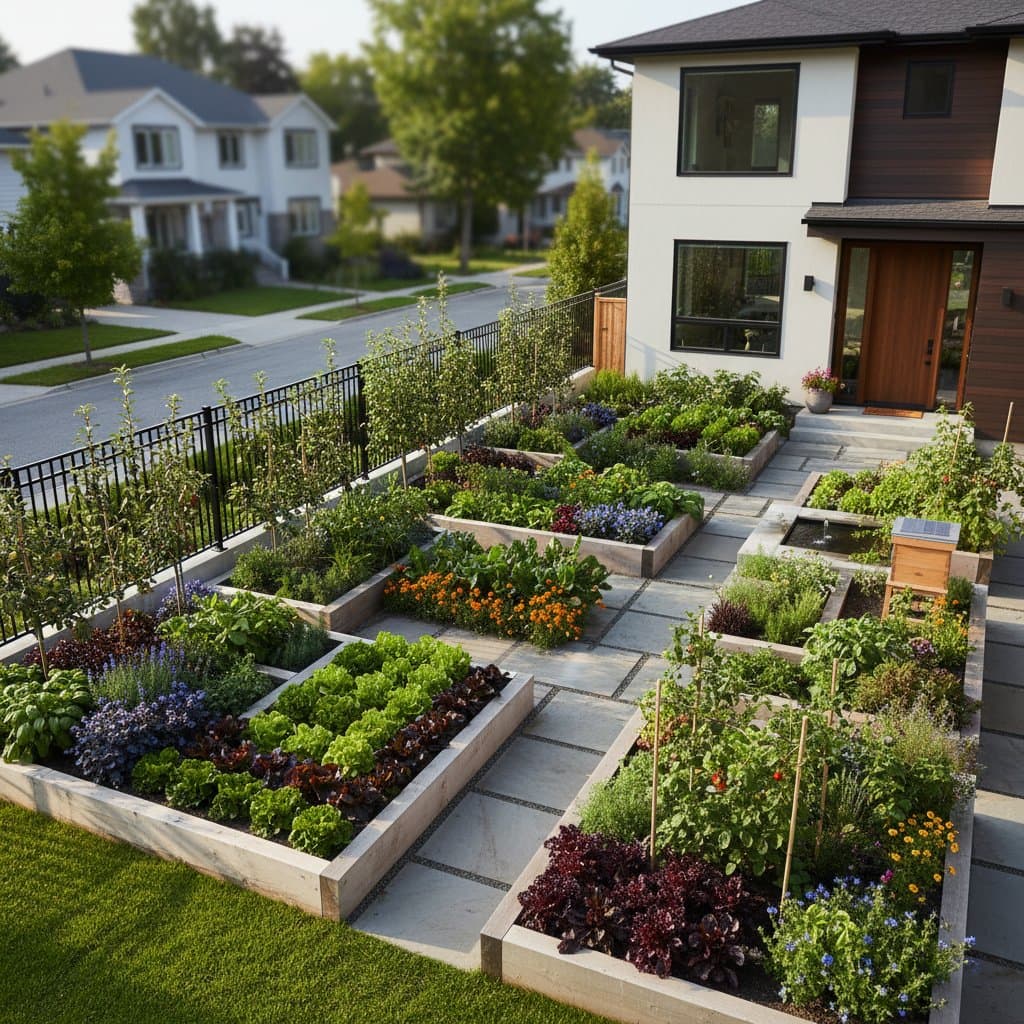
Harvest Fresh Produce from HOA-Approved Edible Front Yards
Homeowners in California's neighborhoods now cultivate food in front yards without violating association rules. Thoughtful design transforms these spaces into attractive landscapes that meet standards, increase property appeal, and supply ongoing fresh yields.
Reasons Edible Front Yards Appeal to Modern Homeowners
Outdoor spaces hold enduring value in California, yet productive front yards emerge as a response to current needs. Water-efficient plants address conservation efforts, escalating food prices encourage self-sufficiency, and growing sustainability awareness drives adoption. These gardens deliver aesthetic pleasure alongside tangible returns.
Integrate edibles with traditional elements for seamless results. Replace boxwood hedges with rosemary for structure and aroma, substitute azaleas with blueberry bushes for seasonal blooms, or use lettuces as patterned groundcover. Such arrangements appear deliberate and refined, avoiding the haphazard look of relocated vegetable plots.
Addressing HOA Restrictions Proactively
Association guidelines prioritize uniformity, value preservation, and scenic consistency over opposition to gardens. Typical issues involve untidy visuals, insect draws, or uneven heights that alter street views. Anticipate these to craft compliant plans.
Preparation steps include:
- Examine covenants and guidelines. Locate specifics on landscaping materials, height restrictions, and approved species.
- Initiate dialogue. Share concepts with committee members or managers prior to formal submission to clarify expectations.
- Supply detailed proposals. Include species labels, scaled sketches, and rendered images to demonstrate professionalism.
Present the garden as an organized feature rather than a functional plot to secure approval.
Selecting Plants for Dual Purpose and Compliance
Success hinges on choosing edibles that offer visual and practical benefits. Prioritize evergreens for backbone, blooms for variety, and compact forms for tidiness.
Proven options encompass:
- Herbs in decorative roles: Lavender provides purple spikes and scent, thyme forms dense mats, sage offers gray foliage, and oregano yields compact clusters. These endure dry conditions and require minimal shaping.
- Small fruit producers: Blueberries feature red twigs and white flowers, dwarf pomegranates display orange blooms, and compact raspberries produce without spreading aggressively. Select cultivars suited to limited spaces.
- Low-growing edibles: Strawberries spread as runners for coverage, while creeping rosemary trails neatly between paths. Both maintain height under six inches.
- Ornamental vegetables: Rainbow chard displays vibrant stems, purple kale adds ruffled leaves, and red-leaf lettuce creates mosaic effects. Enclose in bordered beds for definition.
Steer clear of vining plants, towering stalks, or floppy growers. For tomatoes or squash, employ architectural trellises that align with home lines.
Structuring Designs for Formality and Function
Treat the front yard as a public extension of the home, emphasizing order and scale. Purposeful elements foster visual rhythm.
Effective techniques involve:
- Geometric frameworks. Employ rectangular raised beds or balanced circular groups for controlled appearance and accessibility.
- Clear delineations. Install stone, metal, or brick edges to separate growing areas from walkways, signaling intentional care.
- Layered elements. Combine shiny citrus leaves with soft herb textures and metallic artichoke hues for dynamic interest.
- Seasonal continuity. Incorporate persistent shrubs, rotating annuals, and reliable perennials to sustain fullness year-round.
These methods align with oversight expectations and yield vibrant, usable spaces.
Optimizing Water Use and Soil Health
Water management aligns with regional priorities in California's dry climate. Drip systems target roots efficiently, minimizing evaporation.
Efficient methods feature:
- Low-flow tubing connected to automated controllers for precise delivery.
- Thick layers of bark or straw mulch to hold soil dampness and limit weed growth.
- Resilient selections like figs for sweet fruit, olives for shade, and herbs over water-hungry items such as cucumbers.
Build fertile ground with compost additions at planting and annually. Microbial-rich soil promotes vigor and cuts chemical reliance.
Integrating Edibles with Existing Landscapes
Superior designs camouflage productivity within broader schemes. Achieve unity through echoed motifs, equilibrium, and restraint.
Mediterranean residences suit rosemary borders, olive accents, and lavender paths. Contemporary structures benefit from metal containers holding structured greens and dwarf trees. Traditional homes accommodate berry clusters, globe artichokes, and mixed blooms.
Tailor compositions to architectural cues, positioning edibles as harmonious parts of the whole.
Ensuring Consistent Upkeep
Reliable care upholds standards and fosters goodwill. Regular attention prevents disorder.
Routine tasks cover:
- Weekly trimming of overgrowth and faded parts to preserve outlines.
- Frequent picking to avoid pest issues and decay.
- Swift gap filling through crop succession for uniform coverage.
- System checks for blockages to sustain even hydration.
Stable upkeep reinforces the viability of such gardens in regulated settings.
Securing Approval Through Preparation
Approach submissions with the rigor of formal modifications. Compile inventories of plants, blueprints, watering schematics, and images of established examples. Explain contributions to efficiency and biodiversity.
Engage certified designers versed in protocols for polished advocacy. Thorough documentation assures enduring compliance and appeal.
Fostering Connections via Garden Shares
Productive yards invite interactions. Neighbors may inquire about herb varieties or admire fruit displays, leading to exchanges.
Place modest offering spots or organize brief samplings to encourage participation. These practices build rapport and motivate collective eco-friendly shifts.
Selecting Enduring Materials and Plants
Prioritize longevity in components. Opt for weatherproof stone, durable concrete, or rust-resistant metals for frames. Construct beds from treated lumber or composites.
Favor locally adapted species that establish quickly with low ongoing demands. These reduce costs and amplify ecological merits over time.
Cultivating Long-Term Garden Vitality
Post-approval, observe growth patterns and adapt. As perennials mature, the space yields reliably across cycles.
Experiment with cultivars, tweak watering, and rearrange for optimal output and aesthetics. Persistent nurturing sustains productivity and refinement.
Well-planned edible landscapes exemplify integrated living, yielding nourishment and unity that enrich daily life.