
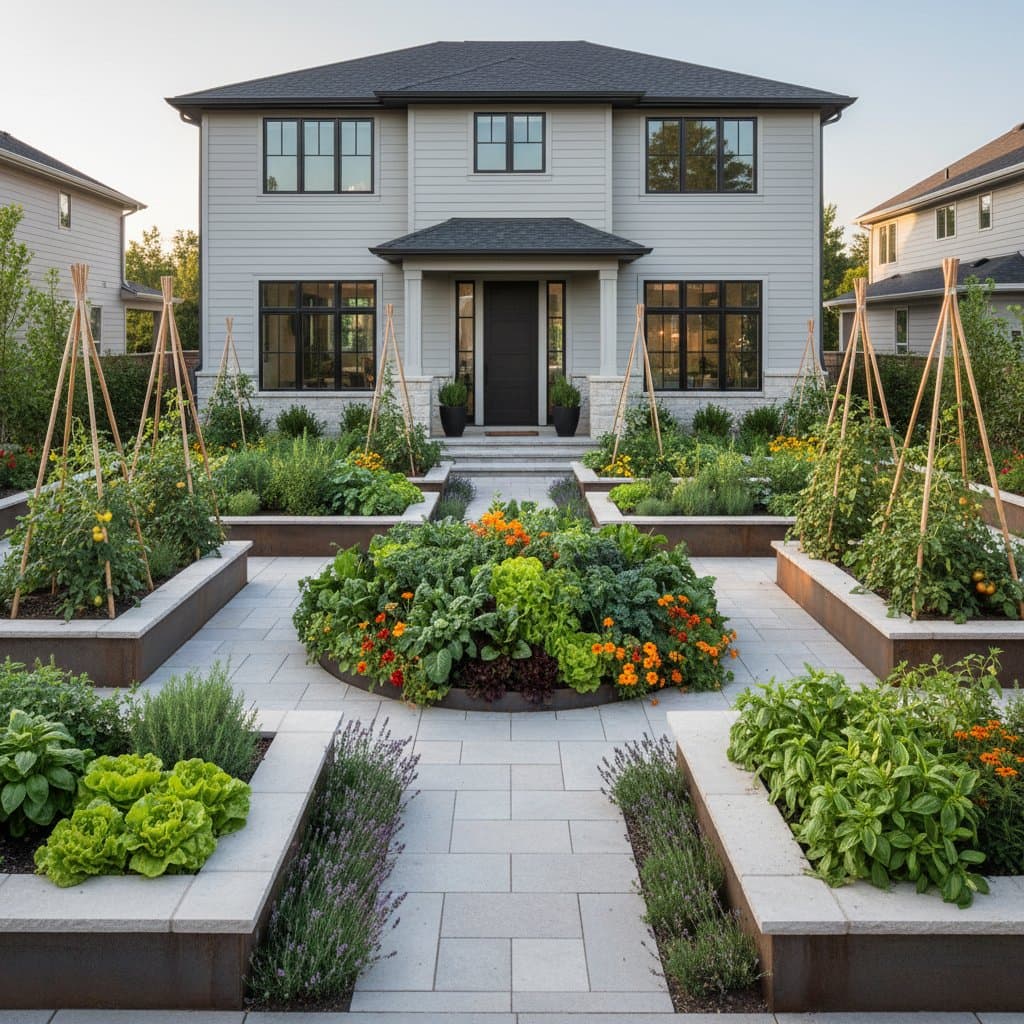
Edible Front Yards: HOAs Embrace Food Gardens
Paul and Maria Langley purchased their suburban home for its tree-lined street, yet they longed for the vegetable beds absent from the limited backyard space. They envisioned a front yard that delivered refined appearance alongside fresh produce for family meals. The primary obstacle involved persuading their homeowners association that a garden featuring kale, tomatoes, and herbs could rival the polish of traditional turf and ornamental shrubs.
At a Glance
- Residents: Paul and Maria Langley, along with their two children
- Location: Planned community near a mid-sized city
- Front Yard Area: 1,800 square feet
- Landscape Designer: Greenfield Landscape Studio
- Construction Firm: TerraBuild Outdoor
- Design Approach: Modern edible garden accented by native plant borders
Redefining Curb Appeal
The Langley front yard formerly hosted a uniform lawn extending from the porch to the sidewalk. Raised cedar beds and low stone planters now occupy the area, brimming with leafy greens, fruiting vines, and aromatic herbs. Symmetry governs the layout to convey formality rather than informality. A central gravel pathway guides visitors to the entrance, while steel edging maintains sharp boundaries for the planting zones.
Julia Benton, the landscape designer, emphasized intentionality in the design process. Structure and premium materials ensure compatibility with surrounding properties. These elements elevate the garden beyond mere functionality.
Transitioning from Lawn to Productive Space
The project commenced with sod removal and soil enhancement using compost and organic amendments. Benton selected cedar for the raised beds due to its rot resistance and warm aesthetic against the house's neutral facade. Alignment of beds with window placements establishes a rhythmic visual connection to the architecture.
Subsurface drip irrigation supports a pea gravel mulch layer, which preserves tidiness and conserves moisture. Current plantings yield lettuce, peppers, strawberries, and dwarf citrus in oversized ceramic pots positioned near the entry stairs. The pots' muted gray-green hue harmonizes with the front door for cohesive color integration.
Strategies for HOA Compliance
The Langleys initiated discussions with the HOA design review board early, submitting comprehensive plans, material swatches, and digital renderings. Board members expressed concerns over potential disorder and upkeep demands. Benton countered these by incorporating evergreen borders of boxwood and rosemary, which provide year-round definition and structural integrity.
Approval followed swiftly upon review of the organized presentation. Maria Langley observed that the proposal avoided the appearance of a casual vegetable plot. Instead, it resembled a premium landscape incidentally yielding edible harvests.
Key components encompass:
- Bed Frameworks: Western red cedar treated with natural tung oil for durability
- Walkways: Crushed granite bordered by steel for clean lines
- Edge Plantings: Boxwood, rosemary, and lavender to supply persistent texture
- Illumination: Low-voltage LED fixtures from Kichler along pathways
Integrating Aesthetics with Yield
Plant selections balance utility and visual appeal across zones. Tomatoes and trellised beans, as taller specimens, form a verdant backdrop adjacent to the porch. Chard and peppers occupy intermediate beds for balanced height distribution. Basil, thyme, and calendula edge the perimeter, contributing vibrant hues and convenient harvesting access.
The configuration enables daily collection without soil disruption. Gravel surfaces remain pristine, and elevated beds facilitate ergonomic tending. Paul Langley reports dedicating about fifteen minutes each evening to plant inspection and herb pruning. He describes the routine as akin to landscape maintenance rather than intensive agriculture.
Evolving Perspectives in Homeowners Associations
Numerous communities witness homeowners associations relaxing mandates for manicured lawns. Factors such as water scarcity, support for pollinators, and pursuits of food independence shape updated policies. Professionals now frame edible gardens as decorative features that align with visual criteria while promoting resource efficiency.
Benton highlights structure and uniformity as pivotal for gaining approval. Employ straight edges, uniform materials, and rotation schedules for seasonal crops to signal deliberate planning. Such approaches mark the shift toward acceptance.
Sustaining and Enjoying the Design
Several months post-installation, the Langleys view their front yard as a social catalyst and emblem of accomplishment. Neighbors inquire about the citrus specimens or exchange ideas for utilizing basil in pestos. Tidiness persists throughout seasons, with cool-weather greens supplanting warm-season varieties.
This initiative illustrates the viability of edible gardens within regulatory frameworks when guided by sound design. Premium materials, precise geometry, and consistent care convert a productive plot into a neighborhood asset that elevates communal aesthetics.