
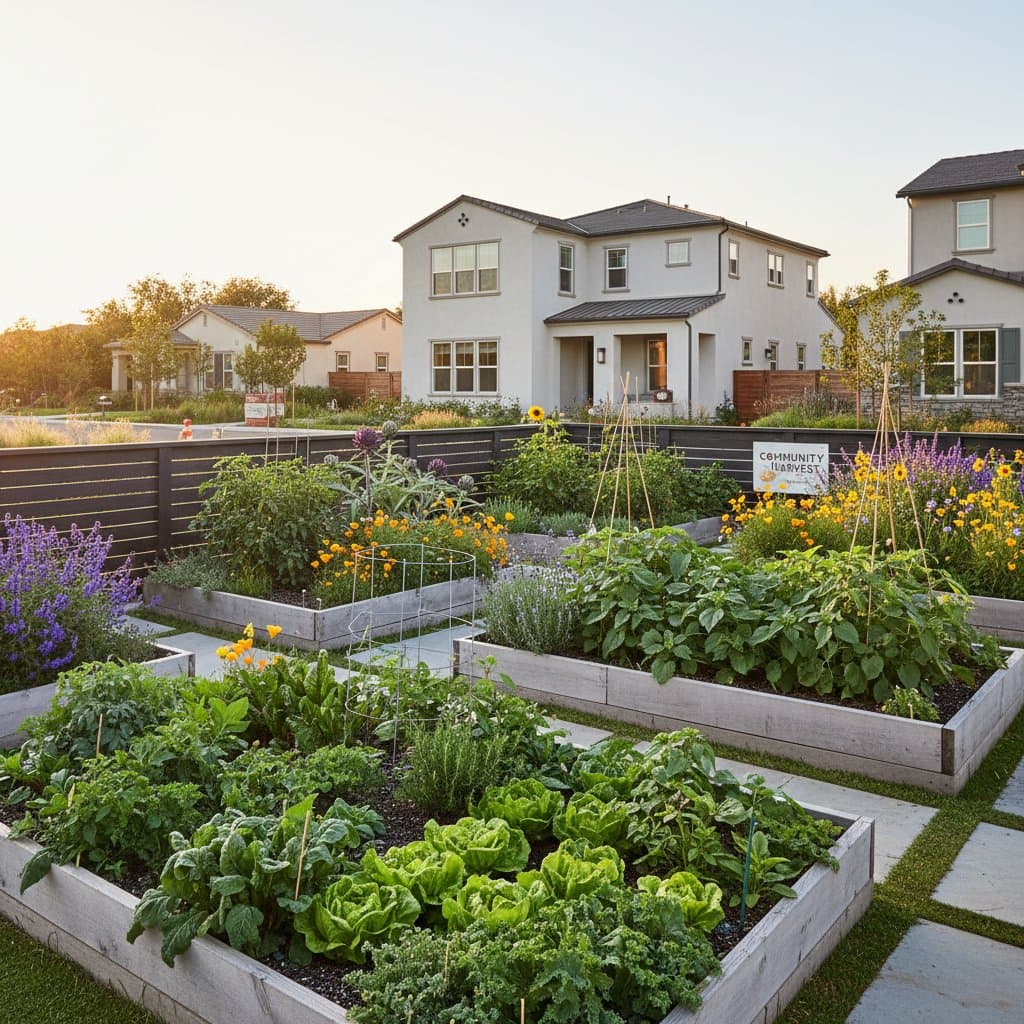
HOAs Embrace Edible Front Yard Gardens
Homeowners in managed communities once encountered strict rules that prohibited vegetables in front yards. A uniform, manicured lawn served as the expected standard, with edible plants restricted to backyards. This pattern is shifting. Associations throughout California and in other areas are updating landscaping policies to permit edible front yards that combine visual appeal, utility, and environmental responsibility.
This change extends beyond surface-level adjustments. It arises from recognition that ornamental and edible plants integrate seamlessly, producing landscapes that sustain humans and wildlife alike. Homeowners gain expanded creative options and the opportunity to convert idle areas into dynamic, productive spaces.
Reasons HOAs Permit Edible Landscapes
Associations historically emphasized consistency and visual uniformity, yet factors such as water shortages, climate challenges, and evolving resident priorities are reshaping expectations. Edible gardens that prioritize water efficiency now align with beauty requirements while lowering consumption. Boards acknowledge that well-planned vegetable plots appear as refined as flower borders.
Key influences include the following:
- Sustainability Objectives. Regulations on water use and programs for native vegetation prompt associations to redefine suitable landscaping. Front yards featuring perennial edibles or elevated beds with targeted irrigation typically require less water than standard grass.
- Evolving Resident Desires. Individuals seek to cultivate personal food sources for nutritional benefits, superior taste, and self-reliance. The emphasis on fresh, home-sourced meals has elevated vegetable gardens to a stylish choice beyond mere functionality.
- Resilience in Economy and Environment. Increasing expenses for groceries and disruptions in supply chains heighten interest in home production. Such gardens bolster local biodiversity and reduce reliance on distant sourcing and excess packaging.
- Advancements in Landscape Design. Professionals craft edible spaces with elegant elements, including varied leaf shapes, vibrant hues, and year-round visual changes comparable to decorative schemes.
Steps to Design an Edible Front Yard Approved by HOAs
An edible landscape within an association setting requires adherence to both growing practices and visual criteria. Success depends on merging output with sophistication.
Develop a Detailed Proposal. Prior to any planting, examine the association's landscaping rules. Numerous groups now address efficient or indigenous gardens, allowing inclusion of food plants. Present a precise sketch illustrating species selection, arrangement, and watering approaches. Images or digital models assist the board in envisioning the outcome.
Incorporate Structural Elements. Defined shapes and purposeful organization convey deliberate intent. Elevated beds outlined in durable stone, metal, or timber provide a structured foundation. Winding trails, flat stones, or compact borders delineate sections while preserving order.
Select Visually Appealing Food Plants. Certain produce fits front yard settings better than others. Opt for options like globe artichokes, multicolored Swiss chard, alpine strawberries, culinary herbs, and bell peppers. Their leaves and yields contribute hues and form. Integrate blooms such as lavender or pot marigolds to draw beneficial insects and temper the prominence of crops.
Integrate Decorative and Productive Plants. Combined arrangements resemble curated gardens rather than basic plots. Associate deep purple basil with flowing grasses, curly kale alongside tagetes, or vining tomatoes near trailing nasturtiums. This approach yields a purposeful, multifaceted scene.
Control Proportions. Prevent dense packing. Proper intervals promote circulation and equilibrium. Varieties reaching heights like corn or towering sunflowers risk obstructing sightlines or seeming unkempt, so position them carefully or reserve for peripheral spots.
Materials and Upkeep Strategies for HOA Approval
In governed areas, presentation carries significant weight. Uniform supplies and steady attention keep an edible front yard favorable among residents and officials.
- Boundaries and Trims. Employ natural stone, fired clay bricks, or treated metal for sharp contours. Clear perimeters indicate diligence and contain earth away from paths.
- Coverings and Suppressants. Organic mulch retains hydration and limits weed growth. Fine gravel or crushed rock trails maintain tidiness with minimal effort. Ground-level herbs including creeping thyme or wild marjoram function as natural covers.
- Precise Water Delivery. Low-flow tubing systems target root zones, cutting evaporation and avoiding wet leaves. Associations often promote these for non-edible areas already.
- Routine Seasonal Tasks. Effective care involves prompt trimming, support structures, and succession planting. Removing faded blooms and clearing spent plants ensures ongoing freshness.
- Discreet Waste Management. Position compost containers and implements behind screens of fencing or dense foliage. Exposed disarray prompts swift complaints from observers.
Effective Collaboration with HOAs
Approach associations through partnership rather than opposition for optimal outcomes. Officials value forthright dialogue and thorough submissions.
- Gather Supporting Examples. Present instances of sanctioned edible yards from similar locales. Tangible visuals reassure that the initiative harmonizes with local aesthetics.
- Stress Advantages. Point out reductions in water use, aid to pollinators, and broader communal gains from food landscaping. Connections to eco-targets often sway decisions favorably.
- Provide Upkeep Schedules. Detail timelines for trimming, refreshing plantings, and system inspections. Documentation alleviates worries about sustained neatness.
- Involve the Community. Encourage adjacent dwellers to visit established examples or sample harvests. Visible elegance and sharing cultivate widespread endorsement.
Examples of Successful Implementations
Numerous California communities feature edible front yards as admired features. One property owner substituted a high-water grass expanse with stepped tiers of evergreen rosemary, crisphead lettuce, and compact citrus. Gravel walkways and a focal water feature produced a balanced, nature-integrated vista.
A different installation merged petite fruit varieties with aromatic herbs and feathery grasses. The arrangement evoked a refined outdoor terrace over a simple grow area. These cases illustrate how intentional choices unite function and form.
Enduring Benefits and Robustness
Edible landscapes represent lasting commitments rather than fleeting trials. Choices in long-lived species and resilient components surpass conventional turf in appeal and performance. Persistent features like blueberry borders, resilient pomegranate bushes, and trained citrus walls offer reliable framework across seasons. Sturdy elevated structures from weatherproof timber or masonry withstand repeated uses.
Benefits manifest concretely and abstractly. Yields from a compact space offset market purchases, while the allure boosts real estate worth. Above all, these areas instill responsibility and rootedness absent in plain sod.
Addressing Typical HOA Objections
Certain boards express reservations about disorder, insect issues, or stylistic mismatches in edible setups. Strategic preparation and expert input resolve these effectively.
- Harmonized Appearance. Select tones and configurations that complement building styles. Earth-toned vessels and regional herbs suit adobe exteriors seamlessly.
- Integrated Pest Control. Use symbiotic plant pairings and natural remedies over synthetics. Beneficial insects like lady beetles, green lacewings, and select blooms counter common invaders such as plant lice.
- Smooth Seasonal Shifts. Ensure ongoing coverage. Follow concluding harvests with successors or blooming fillers. Vacant spaces draw the most criticism.
- Ongoing Communication. Supply progress images and reports to the association. Proof of attentiveness fosters confidence progressively.
Cultivating Lasting Community Impact
After gaining approval and establishing plantings, an edible front yard evolves into a collective asset. It influences surrounding properties, sparking further adoptions that amplify eco-practices and visual harmony.
With associations increasingly adapting policies, front yards brimming with produce, seasonings, and orchard elements emerge as commonplace. Optimal executions honor communal expectations while enabling profound engagement with the environment.