
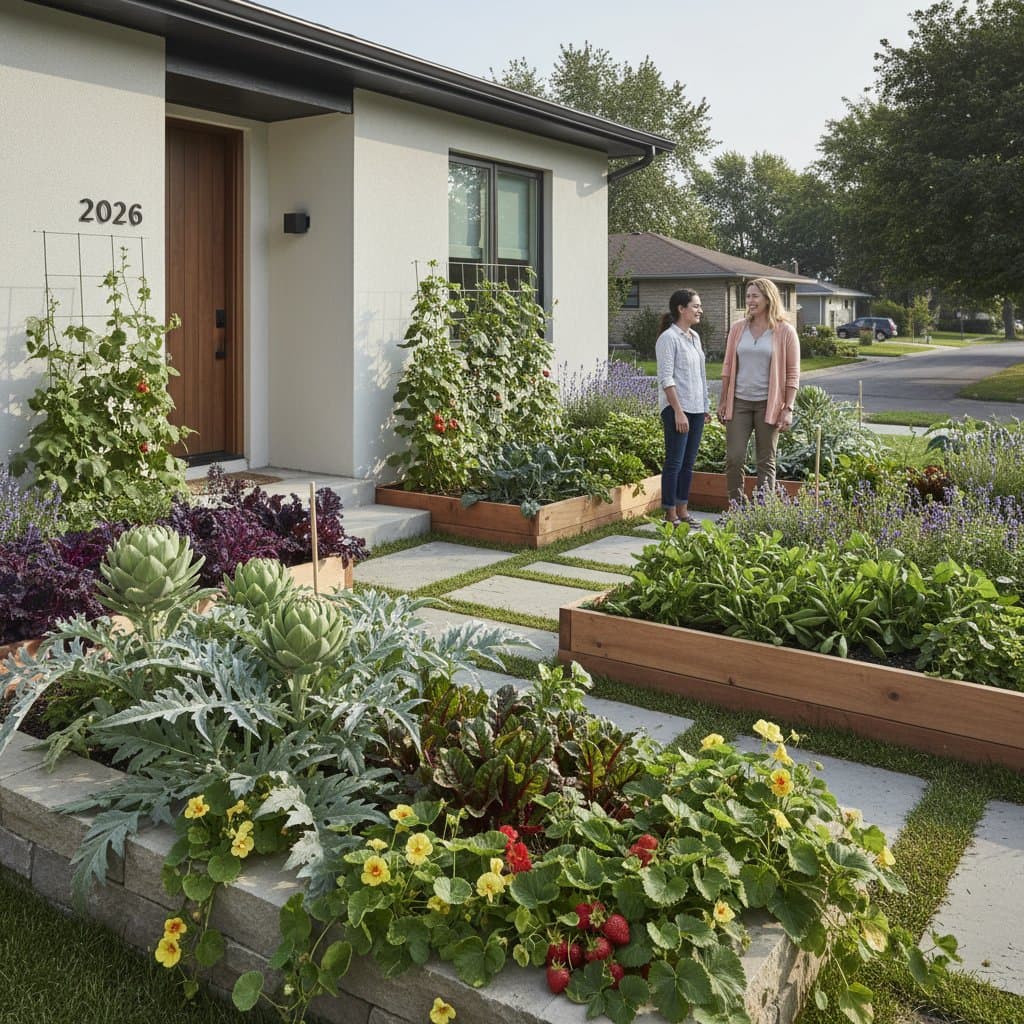
Functional benefit: Tailors the design to site-specific conditions for long-term success.
Design insight: Incorporate pathways and edging to maintain accessibility and order.
Example: In a sunny 10-by-15-foot yard, allocate one-third to raised beds for vegetables and the rest to shrubs for structure.
Visual Callout: Sketch initial layouts to visualize bed placements and plant groupings.
2. Choose Plants That Blend Beauty and Bounty
Select edibles that serve dual purposes as ornamentals through careful consideration of form, hue, and seasonal changes. Prioritize species with sturdy architecture and vibrant foliage to sustain visual interest. Avoid sprawling varieties that demand constant pruning.
Opt for blue-green artichokes, multicolored Swiss chard, and ruby-tinted lettuces that mimic traditional borders. Incorporate fruiting bushes like blueberries or pomegranates for vertical accents and seasonal blooms. These choices ensure the garden remains tidy and appealing across months.
A landscape architect might say: "When edibles resemble ornamentals, they integrate seamlessly into neighborhood aesthetics."
Functional benefit: Delivers ongoing harvests alongside decorative value.
Design insight: Layer plants by height and color for dynamic compositions.
Example: Pair deep purple basil with bright golden oregano and silvery sage in a front border for textural contrast.
Visual Callout: Purple basil and oregano create patterns and depth over neutral gravel mulch.
3. Design Layouts for Curb Appeal and Functionality
Craft arrangements that balance productivity with polished presentation. Position taller elements like fruit trees at the rear to frame shorter plants without blocking views. Use curves or geometric shapes in bed designs to soften rigid lines and invite admiration.
Incorporate hardscape features such as stone paths or low walls to define spaces and prevent soil erosion. Ensure ample spacing between plants to facilitate air circulation and easy access for harvesting. This approach keeps the yard looking intentional and maintained.
A designer might observe: "Thoughtful layouts turn functional gardens into focal points that enhance property values."
Functional benefit: Optimizes space for both growth and daily use.
Design insight: Employ symmetry or repetition to echo architectural styles.
Example: Frame a central herb bed with symmetrical berry bushes and gravel paths for a formal yet productive entry.
Visual Callout: Curved beds with stone edging guide the eye toward the front door.
4. Incorporate Perennial Edibles for Effortless Care
Perennials minimize annual replanting and off-season disarray, suiting prominent front yards. These plants establish deep roots for resilience and provide consistent structure. They demand less intervention, aligning with HOA preferences for low-upkeep landscapes.
Include asparagus beds, rhubarb patches, artichokes, and robust herbs such as rosemary, oregano, and chives. Berry producers like currants or blueberries offer reliable color and form. Train fruit trees into espalier shapes against fences for space efficiency and elegance.
A horticulturist might say: "Perennials introduce stability to edible designs, meeting expectations for year-round tidiness."
Functional benefit: Lowers maintenance while ensuring steady yields.
Design insight: Mix perennials with select annuals for seasonal variety without chaos.
Example: Line a walkway with creeping thyme and dwarf strawberries, reserving a core area for rotating leafy greens.
Visual Callout: Espaliered apple trees create a living barrier behind tidy herb rows.
5. Implement Efficient Irrigation Strategies
Edible plants require steady hydration, but efficient systems address conservation concerns central to HOA policies. Install subsurface drip irrigation to target roots directly, avoiding wet leaves that invite pests. Integrate timers and moisture sensors for automated, precise watering.
Group thirstier crops like tomatoes with similar needs, separating them from drought-tolerant herbs. Apply organic mulches such as bark chips or straw to suppress weeds and lock in soil moisture. These methods promote health without visible clutter.
A landscape contractor might say: "Invisible, smart irrigation underscores a garden's professionalism and sustainability."
Functional benefit: Saves water and fosters vigorous growth.
Design insight: Zone systems by plant requirements to avoid over- or under-watering.
Example: Conceal drip tubing beneath pea gravel to sustain herb beds without surface disruption.
Visual Callout: Mulched areas conceal lines and preserve sharp borders.
6. Secure HOA Approval Through Proactive Dialogue
Initiate discussions with the HOA board before planting to demonstrate respect for shared standards. Frame the proposal as an enhancement to community values like sustainability and aesthetics. Provide evidence of similar successful installations in nearby areas.
Compile a professional packet including site plans, plant inventories, and upkeep schedules. Highlight benefits such as reduced water bills and increased biodiversity. Address potential concerns like pest control or seasonal appearance upfront.
A landscape designer might say: "Proactive presentations transform potential obstacles into collaborative opportunities."
Functional benefit: Accelerates permissions and avoids disputes.
Design insight: Employ visual aids like mockups to convey polished outcomes.
Example: Illustrate brick-bordered raised beds in renderings to assure integration with existing landscapes.
Visual Callout: Renderings depict cohesive final designs for board review.
Harvesting Harmony in Your Community
Edible front yards flourish under HOA approval, merging abundance with neighborhood harmony. These spaces evolve seasonally, offering fresh harvests and ecological perks. Residents cultivate not only crops but also stronger bonds with neighbors through shared appreciation.
Daily routines involve clipping herbs for meals or observing pollinators at work. Such gardens inspire collective shifts toward greener practices. Ultimately, they redefine front yards as vibrant hubs of nourishment and connection.