
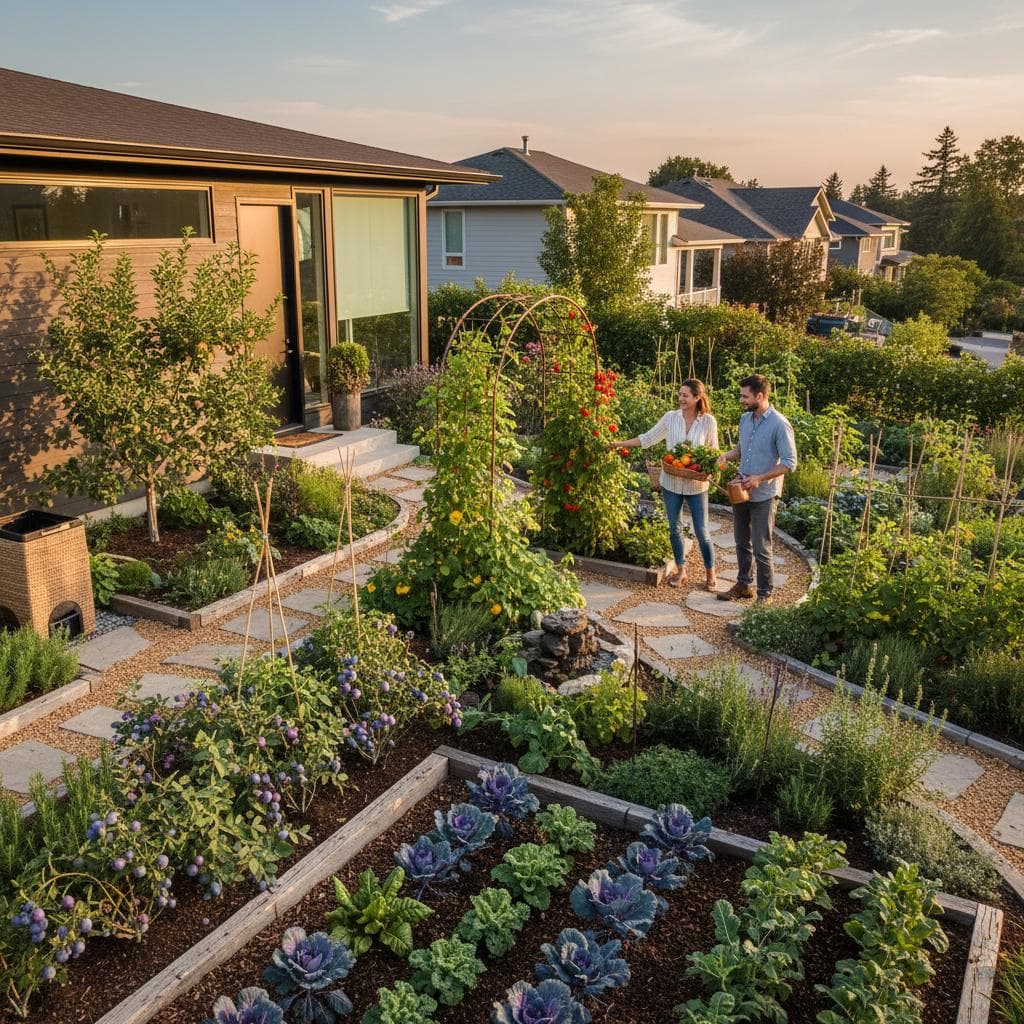
Edible Front Yards: A Revolution in Home Curb Appeal
Imagine stepping outside your front door to encounter not only blooming roses or swaying ornamental grasses, but also clusters of ripening tomatoes, vibrant golden marigolds, and the inviting aroma of fresh basil carried on the wind. This vision captures the core of an edible front yard. Such a landscape combines aesthetic appeal with practical utility, converting the conventional lawn into a productive living pantry. Contemporary edible landscapes move beyond the stereotype of disorganized vegetable patches; they offer elegance, yield, and adaptation to California's diverse climates and daily routines.
This landscaping strategy represents more than a passing fad. It addresses the growing interest in sustainable living, neighborhood interactions, and accessible fresh produce directly from one's property. When executed effectively, an edible front yard increases real estate value, cuts down on water consumption, and redefines curb appeal as an interactive, harvestable feature.
Planning the Perfect Edible Front Yard
Effective planning forms the foundation of a thriving edible front yard. Designers must integrate sunlight patterns, soil conditions, and visual harmony while accounting for crop yields and upkeep demands. The methodology parallels traditional garden layout, yet it prioritizes dual outcomes of beauty and bounty.
1. Assess Sunlight and Soil
Edible plants typically demand a minimum of six hours of direct sunlight daily. Track the sun's path across your yard over several days to identify optimal spots. South-facing sections frequently provide consistent exposure for sun-loving varieties like tomatoes and peppers. Conduct a simple soil test to evaluate pH levels, nutrient content, and drainage capabilities. For compacted or clay-heavy soils, install raised beds measuring 12 to 18 inches in height, constructed from cedar or redwood for longevity and to align with your home's exterior.
2. Define Structure and Flow
Establishing a defined layout prevents an edible yard from appearing haphazard. Incorporate hardscape features like flagstone pathways or pea gravel borders to delineate planting areas. Low-profile retaining walls, built from stacked local stone, add both functionality and charm. Position built-in benches or Adirondack chairs in central spots to encourage relaxation amid the greenery. These elements ensure the space maintains a polished, intentional appearance.
3. Combine Ornamentals and Edibles
Achieve year-round visual interest by blending food-producing plants with decorative ones. Plant dwarf fruit trees, such as Meyer lemon or dwarf apple varieties, alongside pollinator-friendly perennials like echinacea. Include aromatic herbs such as rosemary and thyme, which offer evergreen structure and subtle blooms. Edible flowers like viola or borage provide pops of color along edges and serve as garnishes for meals. This integration creates depth and prevents the monotony of uniform crop rows.
4. Consider Scale and Proportion
Align plant selections with your home's scale to foster cohesion. Use vertical growers like pole beans on trellises or espaliered fruit trees to accentuate architectural lines. Ground covers such as strawberries or creeping thyme suit walkway borders for effortless access during harvest. Employ repeating motifs, like clusters of blue-hued salvia interspersed with blueberries, to establish a rhythmic pattern that echoes formal garden principles.
5. Plan for Seasonal Interest
Select a diverse array of plants to sustain vibrancy across seasons. Incorporate fast-maturing options like radishes and spinach for quick winter harvests, paired with perennials such as rhubarb or established berry bushes. Implement crop rotation every season to bolster soil fertility and introduce fresh textures. During off-peak periods, the skeletal forms of dormant plants, like raspberry canes, maintain skeletal interest until new growth emerges.
Design Tips for Long-Term Success
An enduring edible front yard requires foresight in materials, resource management, and care routines. These considerations ensure the space remains functional and attractive over time.
Use Quality Materials
Opt for durable components that withstand California's variable weather. Install galvanized steel or composite edging to contain beds without rusting. Construct trellises from pressure-treated lumber or metal grids to support climbing vines like grapes or cucumbers. Select finishes that harmonize with your residence, such as sleek metal for contemporary homes or weathered timber for Craftsman styles.
Manage Water Wisely
Implement efficient irrigation to conserve resources in arid conditions. Drip lines, spaced 6 to 12 inches apart, target roots and can reduce water usage by up to 50 percent compared to sprinklers. Apply a 2- to 3-inch layer of bark mulch or straw around plants to suppress weeds and preserve moisture. Zone your layout by grouping drought-tolerant species, like lavender and olives, separately from thirstier ones such as lettuce, to streamline watering schedules.
Keep Maintenance Practical
Design for ease of use to encourage consistent care. Widen paths to at least 24 inches to accommodate wheelbarrows or kneeling during weeding. Set aside a discreet 4-foot-square compost bin near the yard's edge for recycling trimmings into nutrient-rich fertilizer. Schedule annual pruning for trees in late winter, removing dead branches to promote airflow and fruit production, while amending soil with compost twice yearly to sustain vigor.
Balance Productivity and Aesthetics
Resist the urge to overcrowd with solely utilitarian plants; allocate 30 to 40 percent of the space for non-edible accents. Feature specimen grasses or sculptural agaves to frame edible zones during lean harvest times. This measured approach preserves sophistication and invites admiration from passersby.
Experiencing the Rewards of an Edible Front Yard
With time, an edible front yard integrates seamlessly into daily life, enriching routines beyond mere aesthetics. Start your day by snipping chives for eggs or sharing surplus zucchini with neighbors over the fence. Observe bees foraging on squash blossoms, fostering a deeper appreciation for ecological balance.
The design's adaptability allows personalization as preferences shift. Dedicate one season to expanding your herb collection with varieties like oregano and mint, then pivot to root crops such as carrots and beets the next. This evolution keeps the space dynamic and responsive to your lifestyle.
Homeowners gain tangible advantages from this investment. Fresh produce lowers reliance on store-bought items, while diverse plantings enhance local wildlife habitats. Ultimately, the yard evolves from passive ornamentation to an active hub of nourishment and inspiration, demonstrating sustainable principles in action.