
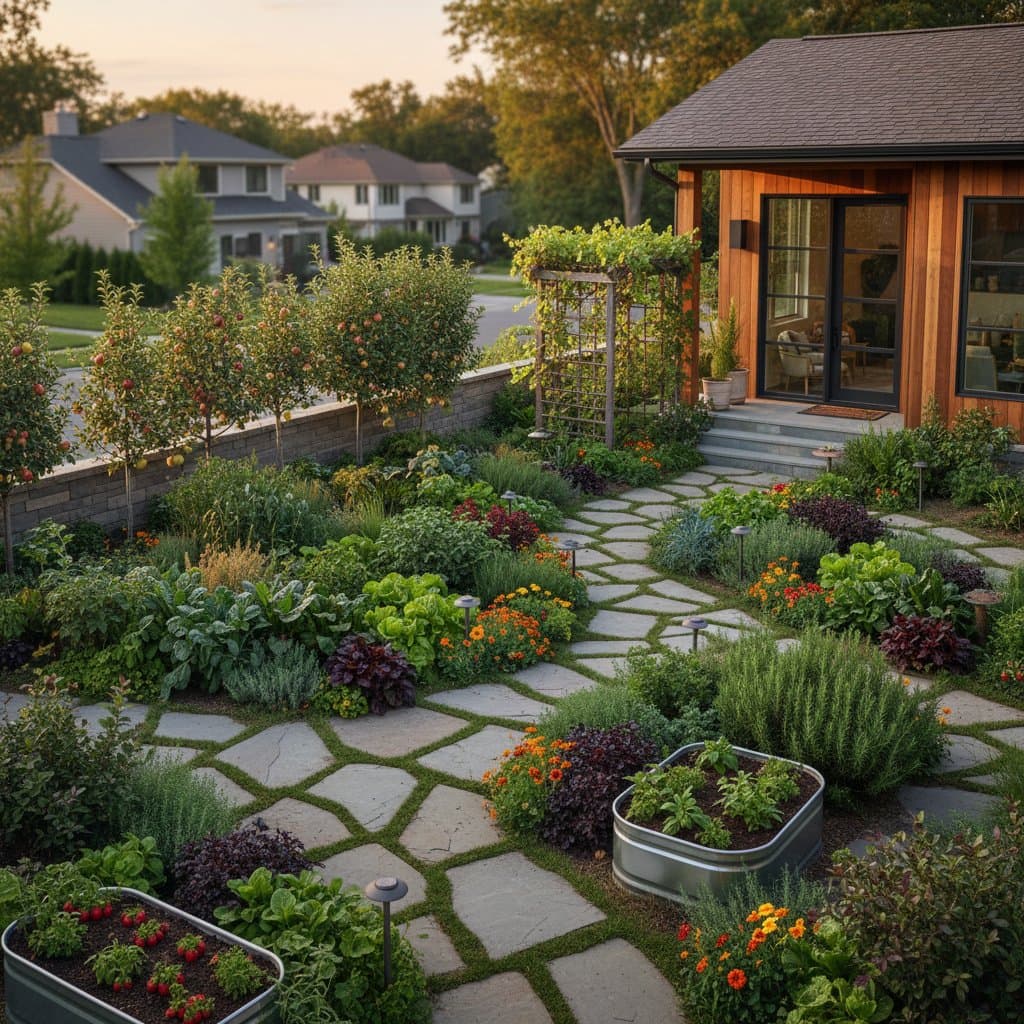
Transform Your Front Yard into a Beautiful Edible Garden
Create a Productive and Inviting Front Yard Landscape
An edible front yard elevates standard curb appeal into a functional and aesthetically pleasing feature. This design approach integrates ornamental elements with food-producing plants, resulting in a refined area that nourishes your family. Beyond yielding crops, such gardens draw in pollinators, greet visitors warmly, and infuse daily routines with freshness.
Thoughtful planning ensures that an edible front yard competes effectively with conventional landscapes. Vibrant herbs, varied lettuces, and berry shrubs coexist seamlessly alongside traditional blooms and grasses. The outcome is an intentional, dynamic space that delivers both culinary bounty and rich visual interest.
Project Overview
Location: Residential front yard
Size: Small to medium suburban lot
Climate Zone: Temperate or warm-season adaptable
Project Goal: Integrate edible plants into a visually compelling, low-maintenance layout that boosts curb appeal
Plan Your Edible Garden Layout
Effective planning forms the foundation of a successful edible front yard. Begin by assessing your space, sunlight patterns, and soil conditions to select appropriate plants and features. Sketch a basic layout that balances productivity with accessibility and beauty.
Consider focal points such as the entryway or driveway edges for high-impact plantings. Allocate zones for perennials like fruit trees and annuals like vegetables to optimize year-round use. Incorporate sustainable elements from the start, such as rainwater collection or native species, to minimize long-term effort.
A landscape expert notes: "Start with a clear vision of flow and function. This prevents overcrowding and ensures every element contributes to the whole."
Practical Tip: Measure your yard and mark sunny versus shady areas. Prioritize edibles that match your local climate for reliable yields.
Design Consideration: Align plant choices with your home's style, using soft curves for cottage aesthetics or clean lines for contemporary looks.
Illustration: Position a central pathway leading to the door, flanked by raised beds for herbs and greens, creating an organized yet organic feel.
Layer Plant Heights for Depth and Productivity
Layering plants by height introduces visual depth and prevents a cluttered appearance. This method also optimizes resource use, allowing each layer to access sunlight and nutrients efficiently.
Establish the upper layer with tall elements like dwarf fruit trees or vertically trained beans on supports. Introduce mid-level shrubs such as blueberries or gooseberries for structure and seasonal color. Complete the design with ground covers including strawberries, mint, or low herbs that fill spaces without overwhelming.
This stratification echoes natural woodland edges, fostering biodiversity and resilience. A professional landscaper observes: "Layering creates abundance without chaos. Every plant has a place to shine."
Functional Benefit: Vertical organization increases yields in limited space and provides natural shading to conserve water.
Design Insight: Mix foliage shapes and colors for contrast; spiky alliums pair well with rounded kale leaves.
Example: Plant a compact apple tree over a bed of raspberries edged with chives, yielding fruit, berries, and herbs in harmony.
Select and Integrate Edible Plants Thoughtfully
Choosing the right plants ensures your front yard remains attractive while producing food. Focus on varieties that offer multi-season interest, disease resistance, and pollinator appeal.
Opt for compact cultivars suited to front yards, such as bush beans, dwarf kale, or espaliered figs. Include evergreens like rosemary for winter structure and flowers like nasturtiums that double as edibles. Group plants by water and care needs to simplify maintenance.
Balance aesthetics with utility by interplanting edibles among ornamentals. A gardener advises: "Select plants that please the eye first, then the palate. Beauty sustains the garden's appeal through lean seasons."
Functional Benefit: Diverse selections extend harvest periods and reduce pest issues through companion planting.
Design Insight: Use color themes, like purples from eggplants and violas, to unify beds visually.
Example: Line the walkway with lavender for fragrance, underplanted with radishes and lettuces for quick, colorful harvests.
Integrate Paths and Access for Practical Use
Well-designed paths facilitate harvesting and upkeep while enhancing the garden's charm. They guide movement, protect soil, and add structure to planting areas.
Choose permeable materials like gravel or flagstone to allow water infiltration and blend with natural surroundings. Incorporate fragrant ground covers between stones, such as creeping thyme, to engage the senses. Connect paths logically from the street to key zones like beds and the entrance.
Curved routes encourage exploration and frame views of standout plants. A designer comments: "A good path invites you to wander, not just walk through."
Functional Benefit: Clear access routes minimize soil damage and streamline tasks like weeding or picking produce.
Design Insight: Vary path widths to create intimacy near seating or openness toward larger beds.
Example: Install a meandering stone path bordered by sage and currants, offering both utility and aromatic delight.
Incorporate Containers and Vertical Elements
In space-constrained or hardscaped front yards, containers and vertical features expand growing options. These additions control environments and serve as decorative accents.
Position oversized pots with tomatoes or herbs near entrances for prominence. Erect trellises or arbors for vining crops like squash or grapes to utilize walls and fences. Suspend planters from porches to cultivate trailing edibles without ground space.
Match containers to your home's architecture for cohesion. A designer states: "Containers let you grow food where soil or space would otherwise limit you."
Functional Benefit: Movable pots enable seasonal repositioning and protect tender plants from elements.
Design Insight: Group containers in odd numbers for asymmetry, or pair them for balanced symmetry.
Example: Flank the front steps with wooden crates overflowing with peppers and basil, adding vertical pop and easy access.
Maintain Soil Health for Sustained Vitality
Vigorous soil underpins thriving plants and enduring landscapes. In visible front yards, healthy soil keeps foliage lush and reduces visible wear.
Apply compost layers topped with organic mulch to nurture microbes and retain moisture. Incorporate kitchen waste or leaf mold annually to build fertility. Sow cover crops such as fava beans in off-seasons to enrich nitrogen and control erosion.
Consistent practices yield resilient gardens. A gardener emphasizes: "Feed the soil, not just the plants. That is how you keep a front yard thriving without constant inputs."
Functional Benefit: Enhanced soil aeration cuts irrigation demands and bolsters plant immunity.
Design Insight: Select uniform mulch like bark chips for a groomed appearance across beds.
Example: Surround berry bushes with woodchip mulch and intersperse with white clover, promoting neatness and natural fertilization.
Add Lighting and Seating for Evening Enjoyment
Strategic lighting and seating extend the usability of your edible front yard into evenings. These features highlight textures and create social hubs.
Install solar-powered path lights to illuminate walkways safely. Place low-voltage spots to accentuate fruit trees or flowering edibles. Add a simple bench amid plantings for rest and observation.
These elements foster connection with the garden. Consider: "Lighting reveals the garden's layers at dusk, turning it into a nighttime sanctuary."
Functional Benefit: Illuminated areas support late-season harvests and deter pests.
Design Insight: Use warm-toned bulbs to complement plant colors without harsh glare.
Example: Line the path with stake lights and position a wrought-iron bench by a herb border for relaxed harvesting.
Embrace Seasonal Cycles and Harvest Rituals
An edible front yard shifts with the seasons, offering evolving beauty and yields. Design for this fluidity to maintain interest and encourage interaction.
Plan successional planting to fill gaps, transitioning from spring peas to summer zucchini. Preserve excess through drying or freezing to extend enjoyment. Create harvest stations with nearby tools and baskets for convenience.
Celebrate changes with family involvement. As one enthusiast shares: "Seasonal shifts keep the garden exciting, like a living calendar of flavors."
Functional Benefit: Rotational planting prevents soil depletion and sustains production.
Design Insight: Use perennials as anchors amid annual changes for stability.
Example: In fall, replace spent tomatoes with kale and garlic, keeping beds productive and visually full.
Sustain and Evolve Your Edible Front Yard
Ongoing care ensures your front yard garden remains a source of joy and nourishment. Monitor plant performance and adjust based on observations, such as adding supports for heavy fruits or dividing perennials every few years.
Engage neighbors through shared harvests or tours to build community. Track successes in a journal to refine future designs. This living landscape rewards patience with deepening rewards in beauty, flavor, and well-being.