
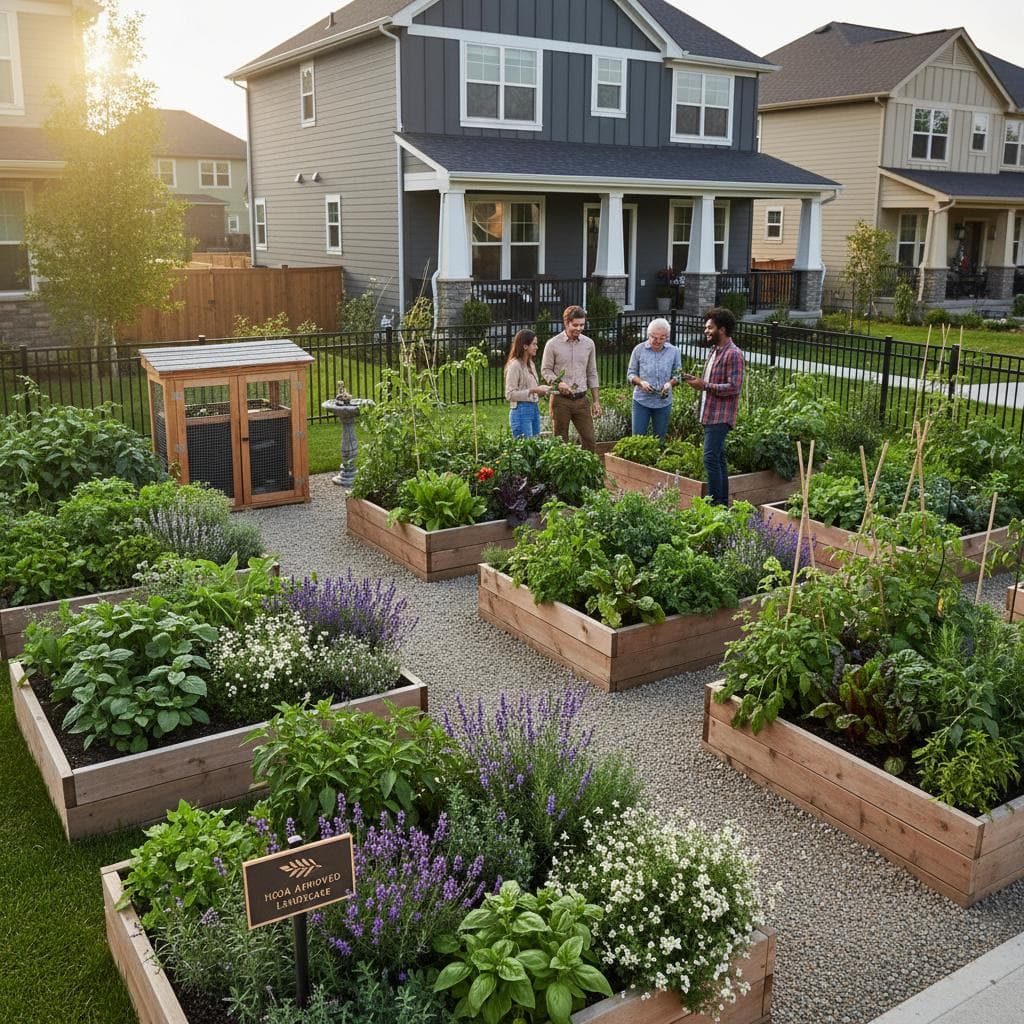
HOAs Embrace Edible Front Yard Gardens
Homeowners often face restrictions from associations that prioritize uniform landscapes. Traditional front yards feature manicured lawns and ornamental plants, leaving little room for vegetable cultivation. Recent changes in guidelines across California and similar regions now permit edible gardens, provided they align with community standards for appearance and upkeep.
This evolution stems from growing emphasis on sustainability and self-sufficiency. Edible landscapes conserve water compared to thirsty grass, while fostering local food production. Homeowners achieve approval by presenting designs that integrate vegetables seamlessly into ornamental settings, ensuring the yard remains visually appealing.
Principles for Designing an HOA-Compliant Edible Garden
Effective design requires balancing productivity with aesthetics to meet association expectations. Focus on structured elements that provide year-round interest and ease of maintenance. Professional landscapers recommend starting with a site assessment to evaluate sunlight, soil quality, and existing features.
Establish a Strong Framework
Install raised beds using durable materials such as cedar wood or corten steel to create defined planting zones. Position beds in patterns like parallel rows or curved clusters to echo the home's architectural lines. This foundation allows for crop rotation, such as planting cool-season greens in winter and warm-season tomatoes in summer, without disrupting the overall layout.
Integrate Edibles and Ornamentals
Select vegetables with ornamental qualities, including purple basil or variegated kale, alongside perennials like salvia or echinacea. Layer plants by height: tall sunflowers at the back, medium-height peppers in the middle, and low-growing lettuces in front. Incorporate edible flowers such as nasturtiums or violas to add color pops that mimic traditional flower beds.
Define Edges and Access
Pave pathways with permeable materials like permeable pavers or mulch to direct foot traffic and prevent soil compaction. Border beds with evergreen shrubs such as boxwood or dwarf yaupon holly to contain growth and provide a polished frame. Regular edging with a half-moon tool maintains crisp lines, signaling commitment to tidiness.
Incorporate Scalable Elements
For tentative approvals, employ modular planters in galvanized steel or fiberglass to house compact edibles like bush beans or patio tomatoes. Group containers symmetrically along driveways or porches to test community response. As confidence builds, expand to in-ground features while retaining pots for seasonal highlights.
Navigating HOA Approval Processes
Association rules vary, so consult the governing documents early to identify permissible plant types and height limits. Recent updates in many communities explicitly allow drought-tolerant edibles as alternatives to turf. If guidelines lag, propose amendments through resident petitions supported by examples from nearby approved installations.
- Develop a Detailed Proposal. Prepare blueprints or 3D models illustrating plant placement, mature sizes, and color schemes. Include a plant list with scientific names, water needs, and growth habits to demonstrate research.
- Emphasize Environmental Benefits. Quantify advantages, such as a 50 percent reduction in irrigation through native edibles versus lawns. Discuss pollinator attraction from herbs like borage, which supports local biodiversity.
- Outline Maintenance Protocols. Detail a schedule: weekly weeding, monthly fertilizing with organic compost, and quarterly pruning. Provide photos of similar maintained gardens to illustrate long-term viability.
- Engage Stakeholders Proactively. Schedule a board meeting presentation and solicit input from neighbors. Adjust plans based on suggestions, such as substituting invasive species with non-spreading alternatives.
Homeowners who approach boards with data and visuals often secure swift approvals, turning potential conflicts into collaborative successes.
Regional Examples and Practical Applications
In California's diverse climates, from foggy San Francisco to sunny San Diego, edible gardens adapt to local conditions. Coastal residents plant fog-tolerant crops like artichokes and fava beans in elevated beds to improve drainage. Inland areas favor heat-resistant options such as zucchini and eggplant, irrigated via subsurface systems to minimize evaporation.
Communities integrate water-harvesting techniques, including greywater diversion to fruit trees or contour berms to direct rainfall. These methods not only sustain plants but also lower utility bills. Beyond savings, such gardens encourage intergenerational involvement, with children learning botany through hands-on harvesting.
Neighborly exchanges of surplus produce, like excess zucchini or herb cuttings, build social bonds. Documented cases show reduced community tensions as shared gardens become focal points for events, enhancing overall neighborhood cohesion.
Sustaining and Evolving Your Edible Landscape
Ongoing management ensures the garden thrives and complies with standards. Monitor for pests using integrated methods, such as companion planting marigolds with brassicas to deter nematodes. Amend soil annually with cover crops like clover to boost fertility without synthetic inputs.
Adapt to seasonal changes by succession planting: sow radishes every two weeks for continuous harvest. Introduce vertical elements, such as espaliered apples on trellises, to maximize space without encroaching on sightlines. Periodically assess aesthetics by walking the property from the street view to confirm harmony with surroundings.
Ultimately, these gardens deliver multifaceted rewards, from nutritious yields to ecological contributions. They transform front yards into productive assets that honor community aesthetics while empowering residents with fresh, homegrown abundance.