
Front Yard Freedom: HOAs Opening Doors to Edible Gardens
Mark and Elena Rivera purchased their suburban home with a vision to replace the water-intensive lawn with raised beds filled with herbs, greens, and fruiting shrubs. Their homeowners association previously prohibited such modifications, requiring uniform turf and neatly trimmed hedges. Following a recent policy update, their front yard now features a productive edible landscape that nourishes their family and captivates neighbors. The project achieves a straightforward objective: landscapes that combine visual appeal with practical utility.
A Walk Through the New Front Yard
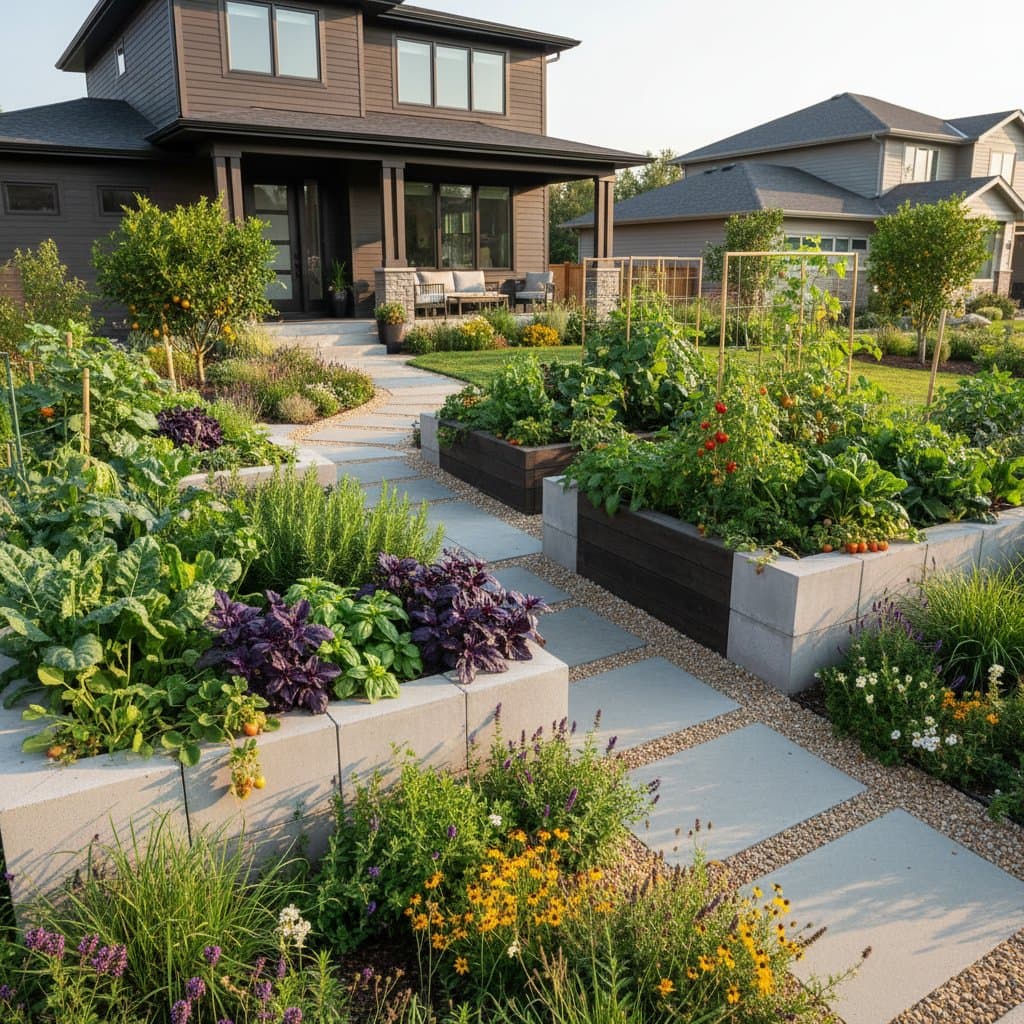
From the sidewalk, the scene appears innovative yet harmonious with the neighborhood. Curving paths lead to the porch, bordered by low planting beds, but the area pulses with diverse textures instead of monotonous grass. Kale leaves sway next to bunches of purple basil, while strawberries create a gentle groundcover beneath dwarf citrus trees. Each element receives careful consideration to harmonize productivity and street-facing elegance.
The design divides the yard into three distinct zones for optimal function. The street-facing border serves a decorative role, easing the shift from public walkway to private property. Central raised beds form the primary cultivation space. Containers near the entrance accommodate herbs for convenient daily access. A consistent visual pattern unites these zones despite varying plant selections.
"Front yards can fulfill multiple roles," explains landscape designer Julia Kent of Greenway Landscape Studio. "We prioritized the garden's aesthetic qualities, with food production as a secondary benefit. The design sparks discussions, and the yields foster ongoing engagement with the space."
Material Choices That Set the Tone
Natural materials form the foundation of the Riveras' front yard, selected for durability and compatibility with the home's architecture. Untreated cedar constructs the raised beds enclosing vegetable areas; its warm hue pairs well with the brick facade and withstands weathering without chemical preservatives. Crushed gravel defines permeable paths that require minimal upkeep, reinforced by hidden steel edging for precise boundaries.
The irrigation system employs low-flow drip lines managed by a timer responsive to weather conditions. Water targets plant roots efficiently, reducing overall consumption. This configuration complies with the HOA's water conservation mandates, implemented concurrently with the gardening policy revisions.
Shredded bark mulches the perennial edges, and straw shields vegetable beds from climate fluctuations. These choices preserve a polished look. The intention ensures that edible features appear purposeful rather than haphazard.
Practical Design Insights
Effective edible front yards begin with a solid framework. Kent's team drafted a detailed, scaled layout prior to planting, balancing open areas with plant density. Beds rise to sixteen inches for ergonomic access, avoiding excessive bending during care. Paths measure three feet wide to accommodate tools like baskets and wheelbarrows.
Lighting enhances usability and safety. Low-voltage path illuminators create an inviting ambiance at night while satisfying HOA visibility standards for walkways. The subtle glow extends the garden's appeal into evenings.
Maintenance integrates seamlessly into daily routines. The Riveras dedicate brief morning sessions to harvesting herbs and monitoring soil moisture. Monthly mulch applications sustain tidiness. "It has become woven into our habits," Elena notes. "Previously, we managed lawn mowing and fertilization. Now, we gather ingredients for breakfast."
Lessons for Homeowners and Designers
The Riveras' initiative provides valuable guidance for those pursuing edible front yards:
- Establish structure first. Outline borders, pathways, and focal points before introducing plants.
- Integrate ornamental and edible plants. This combination generates year-round visual interest and smooths spatial transitions.
- Maintain material harmony. Select wood, gravel, and stone that echo the home's architectural style.
- Anticipate upkeep needs. Opt for straightforward elements that promote endurance and reassure HOA oversight.
- Involve the HOA promptly. Present comprehensive design proposals to committees early to cultivate approval.
Designers in regulated communities can facilitate approvals by emphasizing clear visuals and upkeep protocols. Predictable results streamline the compliance process.
Encouraging Broader Change
As additional HOAs evaluate their guidelines, professionals and residents identify common priorities: landscapes that attract, demand little maintenance, and deliver purpose. Edible front yards satisfy these criteria fully. They conserve water, aid pollinators, and yield fresh produce without disrupting communal harmony.
Communities exploring policy updates can draw from the Riveras' model. Initiate with demonstration sites, define aesthetic criteria, and highlight initial achievements. Visible successes accelerate adoption.
Homeowners previously reluctant to contest rules now reference concrete precedents. A meticulously maintained edible garden demonstrates the compatibility of utility and allure at the property line. It redefines uniformity as collective accomplishment, with each residence bolstering a stronger environmental fabric.
Transforming Neighborhood Landscapes
The developments in Willow Creek mirror nationwide shifts in residential design. With HOAs evolving, front yards emerge as canvases for innovation and interaction. Spaces once defined by sameness now convey personal expression and environmental stewardship.
For the Riveras, the outcomes extend beyond produce to deeper fulfillment. They enjoy homegrown foods, neighborly exchanges, and a landscape aligned with their principles.