
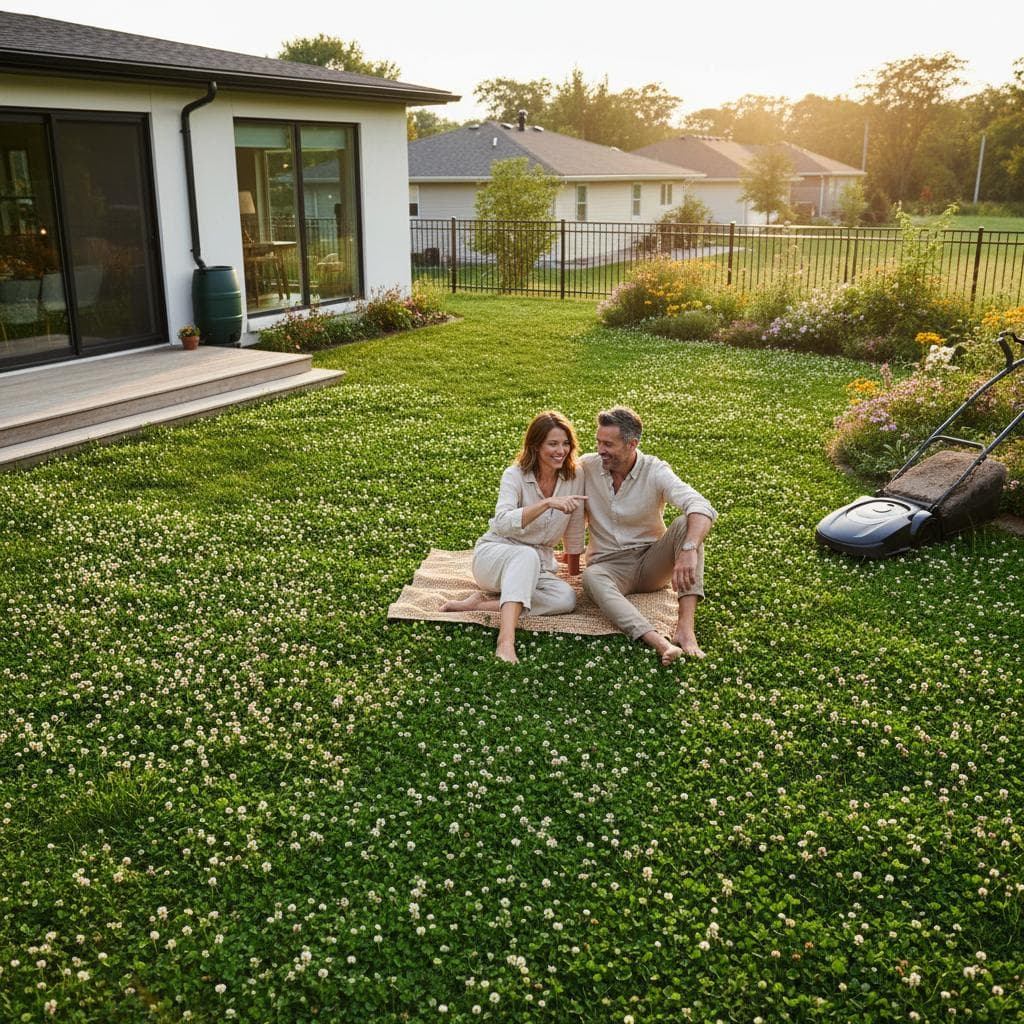
- Reduced Weed Competition: The thick growth pattern crowds out invasive plants, minimizing weed issues.
- Inviting Texture: Its soft surface provides comfort underfoot, suiting areas for relaxation or play.
- Support for Pollinators: Delicate flowers draw bees and butterflies, fostering local biodiversity.
Landscape designer Alex Chen noted, “Clover operates as a self-sustaining system. It obviates the use of chemical treatments and routine interventions. For typical homeowners, this translates to additional leisure time in the yard rather than laboring over it.”
To further illustrate clover's benefits, consider its performance in varying conditions. During hot summers, clover conserves moisture efficiently, often requiring watering only once every two weeks compared to grass's weekly demands. This resilience extends to shaded spots, where clover thrives without supplemental light, unlike many grass types that yellow under tree cover.
Refining the Borders
Effective clover lawns hinge on precise edging. In this installation, sleek steel borders delineate the clover zones from adjacent planting beds. These barriers contain the clover, preventing encroachment into mulched areas and simplifying ongoing care.
A slim gravel pathway runs along the house foundation, aiding drainage and deterring vegetation from contacting the exterior walls. This understated feature maintains a polished aesthetic. Low-voltage LED lights in matte bronze accents illuminate the primary walkway, casting a gentle light that accentuates the clover's velvety texture after dusk and fosters a serene evening ambiance.
Embracing Sustainable Practices
Converting to clover aligns with comprehensive environmental objectives. Such lawns lower overall water consumption, forgo synthetic fertilizers, and enhance ecological diversity. For Maria and Daniel, the change addressed a specific concern: their gently sloped front yard previously suffered from bare, dry spots where grass failed to establish deep roots. Clover secured the terrain and delivered uniform greenery throughout the seasons.
Sustainable selections underpinned the project:
- Compost-based soil amendments in lieu of chemical fertilizers to nurture organic health.
- Recycled steel for edging, ensuring longevity and sharp definition.
- Locally sourced stone for patios and pathways, reducing transportation emissions.
- A manual reel mower to replace gas models, cutting noise and fuel use.
These choices optimize the property's efficiency and diminish future expenses on upkeep. Over a year, the couple reported a 40 percent drop in water usage and eliminated fertilizer purchases entirely, yielding both ecological and financial gains.
Establishing Your Clover Lawn
Patience proves essential in the initial phase following seeding. Clover germinates more gradually than grass, yet it expands quickly once rooted. Maintain consistent soil moisture for the first few weeks to support seedling development. The early uneven patches evolve into a seamless, weed-resistant mat within two to three months.
Many opt to intermix clover with a modest amount of grass seed for a hybrid lawn. This method combines clover's durability with grass's conventional feel. Gradually, clover predominates, amplifying the low-maintenance qualities while preserving a balanced appearance. For optimal results, select clover varieties suited to your region's climate, such as drought-tolerant microclover for arid zones or robust white clover for temperate areas.
Thriving with Clover
Several months post-installation, Maria and Daniel's yard draws admiration from neighbors intrigued by the change. The lawn remains lush and full of life, even amid drier periods. Pollinators flock to the tiny white blooms, while the owners relish a space free from relentless maintenance.
The clover endures moderate foot traffic and pet activity robustly. Spot reseeding in heavily trafficked zones preserves uniform density. The couple intends to incorporate clover into their side yard next year, phasing out the remaining grass entirely.
Maria reflected, “We wanted a yard that felt natural but still looked designed. The clover gives us that balance. It feels alive, and it fits the way we live.”
For those weary of endless mowing and fertilizing routines, adopting clover presents a viable, visually appealing option. This approach demonstrates how environmental responsibility and aesthetic appeal can coexist seamlessly in modern landscapes.