
Moss Lawns Offer a Zero-Mow Alternative to Traditional Grass
When Evan and Riley moved into their hillside home, they appreciated the views yet faced ongoing maintenance challenges. The steep slope made mowing difficult, and the existing grass remained patchy and thin. Their objective was to establish a consistent green surface that required minimal intervention. Moss provided the solution by forming a living carpet across the entire area.
Creating a Forest Floor Effect
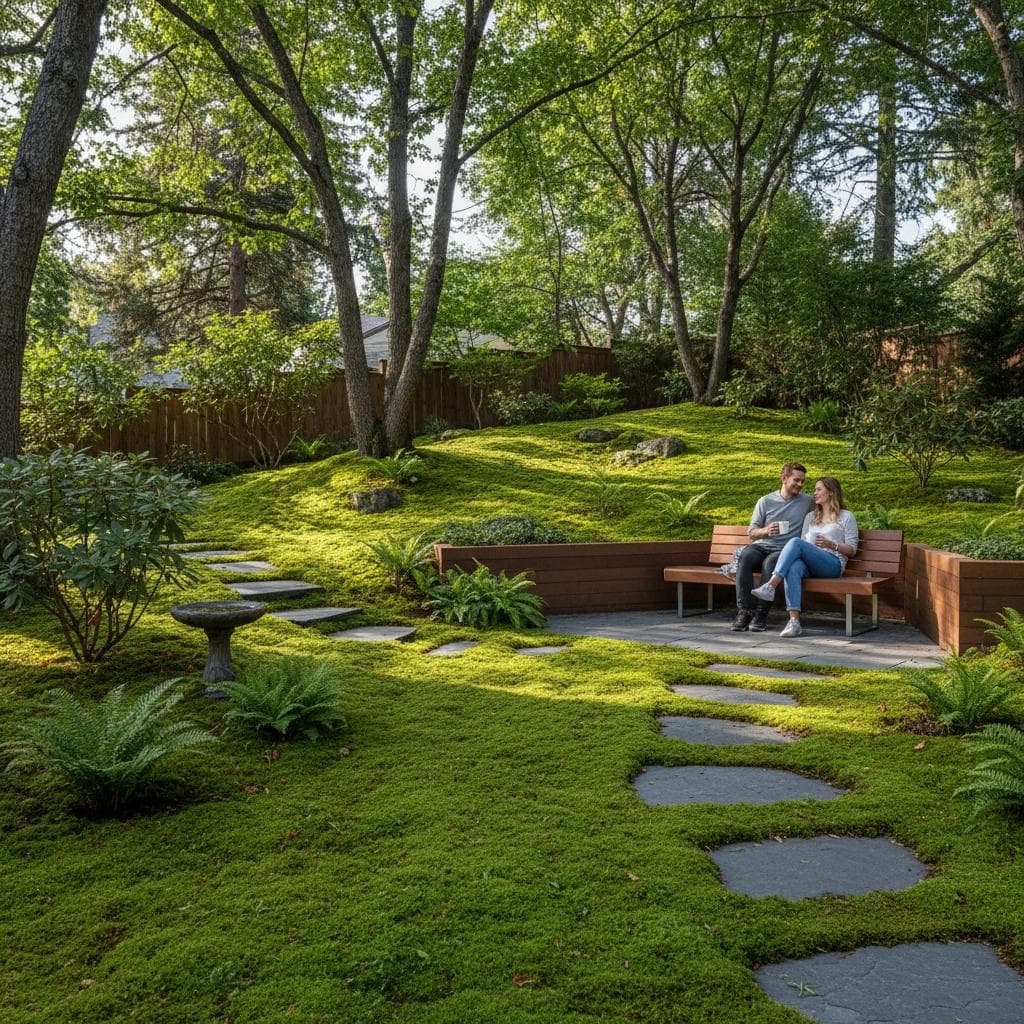
The completed yard presents a continuous layer of soft green growth. Light shifts across the surface throughout the day, and the texture remains even underfoot. No mechanical equipment operates on the site, which allows the space to stay quiet while the moss maintains its coverage.
The transition started with research into site conditions. Riley noted that moss requires no mowing and limited water once established. These characteristics aligned with the goal of reducing regular care. The team from Greenform Landscape Studio evaluated the shade patterns, soil acidity, and moisture levels before proceeding.
Installation Process
Moss arrives in fragments or pre grown mats rather than seed. Installers press each section firmly against prepared soil with flat tools to promote contact. Daily misting for the first two weeks supports initial attachment. Evan observed the pieces joining together within days rather than waiting for germination.
The slope stabilized quickly after installation. Runoff decreased because the moss structure holds soil particles in place during heavy rain.
Key Advantages Over Turf
Moss absorbs moisture directly from rain and dew without supplemental irrigation in suitable climates. It grows without fertilizer applications or pest control products. The dense mat reduces erosion on inclines and creates habitat for small soil organisms.
Designers note that moss suits properties with consistent shade and moderate rainfall. In mixed light conditions, it can be paired with shade tolerant ground covers to maintain coverage. The landscape designer from Greenform emphasized that moss adjusts to local microclimates over time.
Routine Care Practices
Monthly removal of fallen leaves with a soft broom prevents smothering. During extended dry periods, brief misting maintains hydration. An annual application of shredded oak leaves supports microbial activity in the soil layer.
Weeds appear infrequently because moss crowds out most competitors. Any remaining grass shoots lift easily by hand. No mowing schedule or chemical treatments are necessary after establishment.
Visual and Sensory Qualities
Morning light creates a silvery reflection on the surface, while rain deepens the color to a rich green. The material feels cool and cushioned, encouraging barefoot use. Reduced equipment noise allows more bird activity and improves overall quiet in the space.
Evan and Riley now spend time seated directly on the moss. The surface stays comfortable in varying temperatures and does not require protective footwear.
Site Selection and Phased Adoption
Moss performs best in areas with reliable moisture and limited direct sun. Homeowners can test a small section first to observe growth patterns before expanding. This approach reveals how the material responds to specific drainage and light conditions.
Initial installation costs exceed those of seeding grass. Savings accumulate through the elimination of fuel, water, and fertilizer expenses over subsequent seasons.
Long Term Site Performance
The moss surface has remained continuous and stable through multiple seasons. Evan and Riley report that outdoor time now focuses on enjoyment rather than upkeep tasks. The yard functions as a self regulating system that continues to improve with age.